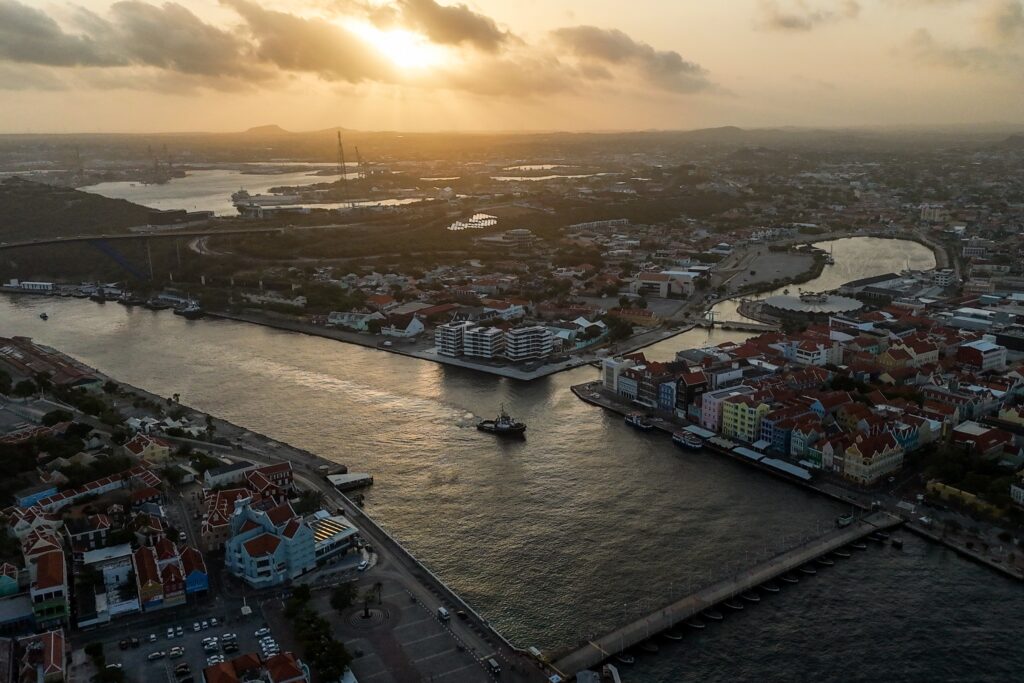
While Curaçao’s players were training for their match against in Ecuador, government officials from the World Cup’s smallest-ever competitor hosted a two-day conference in Kansas City to promote it as a destination for American investment.
The Caribbean island of around 158,000 people located just north of Venezuela is a semi-autonomous part of the Kingdom of the Netherlands. It is not quite a country, but since the sporting world is treating it like one this month, the government is hoping foreign investors will give it a fresh look.
“Curaçao is now on an international stage, while we never thought we would be there … we want more people to know about Curaçao and invest,” Roderick Middelhof, Curaçao’s minister of economic development, told POLITICO.
After the team qualified for a World Cup spot last November, Curaçao’s government quickly began discussing how the tournament could showcase the island’s economic potential.
“When we knew that we would be going to the World Cup, the government sat together and said, ‘okay, we need to take advantage of this moment,’” Middelhof said. “It was actually together with other ministers that we thought, ‘okay, let’s organize meetings and show people what Curaçao is now, and what Curaçao will be in a few years with expansion and investment.’”
The Kansas City conference is one of several in World Cup cities organized by the economic-development ministry in parnership with CINEX, an agency that seeks to promote investment opportunities in Curaçao.
The events target companies interested in sectors ranging from energy and logistics to hospitality.
“[We invite] all companies that are interested in our oil sector and also other companies that are interested in international investment, so hotel owners, energy companies. For example, we had TOTAL; Epson was also there at one of the meetings,” Middelhof said.
“At the events we do a presentation about what Curaçao is and what Curaçao has to offer … to put Curaçao in the spotlight … around the World Cup,” he added.
Diversifying the economy beyond tourism is a key objective for the government, according to Middelhof. While tourism remains one of the island’s main economic pillars, he sees significant potential in Curaçao’s deep-water harbor, which could serve as a storage and logistics hub for international cargo, including oil.
“Our port is now really expanding, so the port of Curaçao is ready to provide storage space for other countries; it’s not just about tourism,” he said, adding: “Curaçao now has the chance to not only rely on tourism, we can strive for more … and show Curaçao is open for various businesses.”
Middelhof does acknowledge that the World Cup presents an opportunity to boost and further “stabilize” his country’s tourism sector, particularly as authorities pursue a target of 1 million stay-over visitors annually. Most tourists currently come from the Netherlands, reflecting the countries’ historical ties. However, Curaçao is increasingly looking to broaden its visitor base.
The island is already seeing increased international interest following its World Cup qualification, said Middelhof, pointing to a rise in Google searches and social media engagement.
“Curaçao is, for a little while, on everyone’s mind,” he said.
The post Smallest team, biggest pitch appeared first on Politico.