Israeli leaders need to “wake up and smell the reality” that they are isolated internationally, Vice President JD Vance said Thursday, responding to Israeli criticism of the deal the Trump administration struck with Iran this week, as the U.S. military said it has lifted a blockade of Iranian ports.
Using unusually sharp language to hit at top officials of Washington’s closest ally in the Middle East, Vance said that “two-thirds” of the weapons that have defended Israel over the past three months were paid for by U.S. taxpayers.
“If I was in the cabinet of the Israeli government, I might not be attacking the only powerful ally that I have anywhere left in the entire world,” Vance said, extending a string of increasingly pugnacious statements from the White House directed at Israel in recent days. He did not name which Israeli officials he was referring to, but several leading members of Prime Minister Benjamin Netanyahu’s government have been sharply critical of the deal since it was announced.
“Anybody in Israel who thinks their biggest problem is the president of the United States needs to wake up and smell the reality of the situation that country is in,” Vance told reporters in the White House briefing room.
“Donald J. Trump is the only head of state in the entire world who is sympathetic to the nation of Israel at this moment in time,” he said.
The warning came as the 60-day clock for negotiations over Iran’s nuclear program started ticking Thursday, after President Donald Trump and Iranian President Masoud Pezeshkian signed the deal a day earlier.
Those talks are scheduled to begin in Switzerland in the coming days. Vance said the timing of the negotiations was uncertain but that they could begin this weekend. On Thursday evening the White House announced that Vance would not be flying to Switzerland right away. Officials gave no date for when he would travel.
The U.S. military said Thursday it had lifted its blockade of Iranian ports, a condition of the deal that will ease the economic crunch on Tehran and allow it to resume selling oil to China and other countries that don’t comply with U.S. sanctions.
“Today, U.S. forces lifted the blockade on all maritime traffic entering and exiting Iranian ports and coastal areas, in accordance with the President’s direction,” the U.S. Central Command said in a post on X. “All U.S. military blockade enforcement efforts have ceased. Our great Naval Ships will remain in the general area to make sure that all aspects of the agreement are adhered to, obeyed and in full force and effect.”
A U.S. official familiar with the blockade said Thursday that 146 vessels were directed over the span of the blockade, with nine disabled. The official spoke on the condition of anonymity to discuss sensitive numbers.
Since the announcement of the deal Sunday, the administration has had to defend against criticism not only from Israel but also from Republican allies who say the agreement makes too many concessions to Iran and ultimately relieves much of the pressure that had built over the course of a military campaign that started in February.
Trump initially called for regime change in Tehran, and he and top allies said that they planned to “obliterate” Iran’s ballistic missile program. The peace deal focuses much more narrowly on reopening the Strait of Hormuz and restarting talks on Iran’s nuclear program that were already underway before the war started.
Trump said Wednesday that the stock market was a major consideration in his decision to halt the war. On Thursday, he bragged about the effects.
“The stock market just hit a new all-time high. The 401ks just hit a new all-time high. And oil is dropping like a rock. Other than that, it’s another day in paradise,” he told a gathering of service members, their families, and senior military officials in the East Room of the White House, ahead of a Medal of Honor ceremony.
Trump said a day earlier that “it’s okay” for Iran to maintain an arsenal including some ballistic missiles.
Vance said the White House felt comfortable with the shift because the U.S. campaign destroyed a “substantial number” of ballistic missile launchers.
“It’s not just the bullets, but it’s the actual gun, and that’s what we were extremely effective at in destroying during the last three months of the campaign. All the president said yesterday is that, of course, countries don’t give up the right of self-defense.”
The U.S. focus was on barring Iran from obtaining nuclear weapons that could threaten the entire world, he said.
Several Senate Republicans have criticized the agreement since its details became public.
Sen. Roger Wicker (R-Mississippi), the chairman of the Senate Armed Services Committee, said he supported Trump’s confrontation of Iran and was concerned the agreement negotiates away the war’s victories “in ways that are completely out-of-step with the President’s goals.”
Wicker, like other Iran hawks, specifically criticized a proposed $300 billion fund that the agreement says would be for the “reconstruction and economic development” of Iran.
That “would make Iran’s payoff under President Obama’s 2015 deal look like a pittance by comparison,” Wicker said in a statement.
Sen. Bill Cassidy (R-Louisiana) called the agreement “the worst foreign policy blunder in decades.”
And Sen. Tom Cotton (R-Arkansas), the chairman of the Senate Intelligence Committee, said that “I do have concerns that certain aspects of this deal are a step in the wrong direction,” in a Thursday interview on Fox News. He said he worried Iran could reap $4.5 billion to $6 billion a month in revenue from oil sales to rebuild its military.
Senate Majority Leader John Thune (R-South Dakota) has reserved judgment on the deal, though he offered a hint of criticism on Thursday.
“I don’t think there ought to be any financial incentives or any financial relief given to Iran absent their commitment to end their nuclear program,” Thune said.
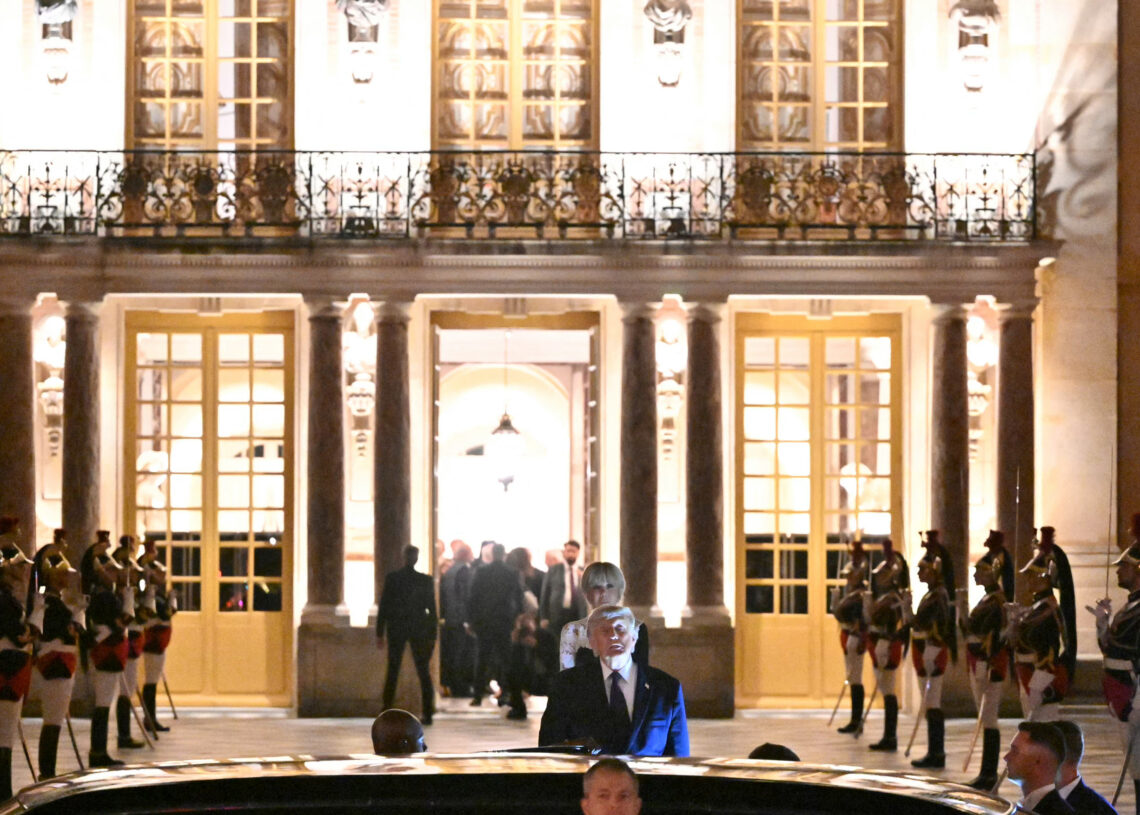
Oil prices fell and gas prices dropped below $4 a gallon for the first time since March after Trump signed the memorandum of understanding during a dinner at the Palace of Versailles on Wednesday night, capping off the Group of Seven summit in France, seated between French President Emmanuel Macron and his wife, Brigitte, with Secretary of State Marco Rubio standing behind him.
Pezeshkian also signed the agreement, known as the Islamabad Memorandum of Understanding, in the early hours of Thursday, Iran’s state media reported. Later Thursday, he posted an image of the signed document on social media, saying that “peace will be achieved under the umbrella of mutual respect.”
U.S. and Iranian saber-rattling has continued despite the memorandum. Speaking Thursday after a visit to NATO headquarters in Brussels, Defense Secretary Pete Hegseth said the U.S. was “more than able to reimpose an ironclad blockade” if Iran does not comply with the terms of the deal.
“We’re going to be the big stick behind the negotiations that never existed under President Obama,” he said, referring to the Joint Comprehensive Plan of Action negotiated under the Obama administration that Trump pulled the U.S. out of in 2018.
Iran’s Foreign Ministry spokesman, Esmaeil Baqaei, said the war has made Iran “MORE #powerful both militarily and diplomatically,” in comments reported by Iranian state media.
The signing of the 14-point memorandum comes after nearly four months of war that has depleted U.S. munitions stockpiles, crippled shipping through the Strait of Hormuz, sent energy prices soaring and proved deeply unpopular in the U.S.
A ceasefire reached in April came under intense strain this month as back-and-forth strikes flared across the region, while Trump veered between threats of further attacks and efforts to end the war.
Trump announced the blockade on April 12 after earlier negotiations with Iranian officials yielded no end to the war. Trump said then that Iran’s efforts to make commercial ships pay a “toll” to travel through the Strait of Hormuz was “EXTORTION” and pledged to stop it.
U.S. forces installed the blockade a day later, relying on warships, fighter jets, drones and about 10,000 personnel, U.S. officials have previously said. The operation focused on restricting Iran’s ability to send oil to global markets and was designed to pressure Tehran to open waterways through the strait.
Enforcement of the blockade took an especially contentious turn last week, after three Indian sailors were killed in a U.S. military strike on a tanker vessel, the MT Settebello, in the Gulf of Oman. U.S. forces struck the vessel after its crew repeatedly failed to comply with the rules of the blockade, U.S. officials said last week in a statement.
On Thursday global leaders welcomed the deal as a way of ending regional instability and reducing inflationary pressure, despite critical issues remaining unresolved.
International Atomic Energy Agency chief Rafael Mariano Grossi praised the U.S. and Iran for signing the memorandum and said that the agency would be represented at the talks.
“All of this depends on the political will of both sides,” he said at a news conference Thursday in Geneva, where he fielded questions about the IAEA’s role under the agreement. “We are at the gates of the decisive phase of the technical conversations. Let’s have them, and then we’ll see.”
The IAEA has been inspecting Iran’s nuclear program for more than a decade, with some breaks and blockages by Tehran, and first reported that Iran was enriching uranium to 60 percent, near weapons-grade, in 2021. It first officially reported Iran had accumulated a stockpile of more than 900 pounds of the highly enriched material in 2025, shortly before the United States and Israel launched a 12-day war to destroy its enrichment and storage facilities.
The highly enriched product is now buried under the rubble from that bombing. Extricating, diluting and removing it will be part of the coming negotiations under what the memorandum says is IAEA supervision.
While Vance said Thursday that Iran has agreed to stop enrichment altogether, even at the very low levels required for civilian nuclear purposes, Iran has publicly insisted that it has both the right and the intention to continue enrichment.
The agreement was initially set to be signed in person Friday by Vance and Iran’s parliamentary speaker, Mohammad Bagher Ghalibaf, in Switzerland.
The deal’s terms include opening the Strait of Hormuz, lifting the U.S. blockade, and U.S. and regional partners developing the $300 billion reconstruction plan. The U.S. Treasury would also waive sanctions on Iranian oil exports and the two countries would “refrain from interfering in each other’s internal affairs” — a far cry from the regime change Trump initially embraced.
Shipping industry officials and maritime experts have said that even if the critical strait is opened, high energy prices and shortages could persist for months.
The strait remains studded with mines Iran has laid since the start of the war, and it could take weeks to clear hundreds of stranded vessels.
Theodoric Meyer and Karen DeYoung contributed to this report.
The post Vance slams Israeli reaction to Iran deal as U.S. military lifts blockade appeared first on Washington Post.