President Trump was triumphant when he announced that his 106-day war with Iran had ended. This initial agreement, which Trump signed at Versailles a few days later, meant the conflict was really “over” — more so than when Secretary of State Marco Rubio assured reporters that it was “over” in the first week of May, or when he again told Congress that it was “over” in the first week of June. More finished than the dozens of times that Trump suggested that a deal was close at hand.
The valedictory messaging has been discordant, given what we know. The administration framed the war as a win, the result of a “decisive military victory.” True, Iran’s arsenal is smaller, its military weaker, its economy battered. But its government is still in place and has not ended its nuclear program or cut off the regional terrorist groups it sponsors. It is now led by the son of its last leader. Trump boasted that, during this 60-day cease-fire, ships could move through the Strait of Hormuz “toll free” — as they could four months ago, before the conflict. And the United States will release frozen Iranian assets, lift sanctions and (with partner nations) commit at least $300 billion for reconstruction. Already, the war is estimated to have cost Washington more than $100 billion — and Trump’s political standing with a national supermajority that thought the adventure was a bad idea.
But beyond those costs is another, potentially longer-lasting one. The toll of the war was felt heavily at U.S. bases across the Middle East, which were thought to offer regional allies a security guarantee, assuring them of their safety under the American protective umbrella. The Iran war has exposed the fragility of that promise. The Navy’s base in Bahrain — one of the few in the region that hosts military families — was hastily evacuated before an Iranian attack damaged it. The Combined Air Operations Center at Al Udeid Air Base in Qatar is now reportedly inoperable. “This chain of bases across the Middle East were really effective — it was like having a string of pearls surrounding Iran,” says Vali Nasr, a political scientist at Johns Hopkins University. But, he adds, “The way in which the U.S. was not able to defend them, and the way that they were damaged, has a nonmonetary cost to it that is quite significant.”
Around the world, at least 51 nations host American military bases. These outposts let the U.S. project power and influence abroad and provide economic and military security to its allies. But after this war, friendly nations are weighing the risks of supporting the American war machine. “For any patriotic citizen of Qatar or any other Gulf country, the question arose over whether hosting U.S. military bases was worth it,” Maryam Al-Kuwari, a scholar of international relations at Qatar University, wrote in a briefing paper for her policy institute, the Arab Center. U.S. diplomats in Bahrain have warned of an emerging perception, fueled in part by Iranian social media bots, that the Americans left the nation alone to defend for itself.
In this respect, the administration’s contradictions and obfuscations about the status, cost, rationale and resolution of the war reveal something different than officials intend. It’s not just that they appear to be in denial about what the conflict means. It has enabled the rest of the world to clearly see what the White House cannot acknowledge: The United States is no longer the world’s unquestioned hegemon, and the promise of its protection is not absolute. The war in Iran marks the end of any lingering illusions of American omnipotence.
Almost every end of empire has been accompanied by a particular kind of wishful thinking — call it self-deception, call it willful misdirection — to process the new reality. The administration’s mixed messaging about the anticlimactic cease-fire was a symptom of a destabilizing and consequential trend: “The back and forth, to me, is the superpower coming to terms with the fact that it lost a very big strategic war,” says Narges Bajoghli, a professor at Johns Hopkins who specializes in Iran. “How do you message a loss?”
Great powers of the past have not immediately registered the fact of their own deaths. The last officials of the Austro-Hungarian Empire experienced the rumblings of collapse with bewilderment and disbelief. The military was overextended and unable to address economic and national concerns within its borders, so the breakup of the union at the end of World War I should not have been a complete surprise. But the historian Natasha Wheatley writes movingly about how an aide to the final minister of war encountered the old man in his office in the middle of the night, still in his dressing gown and unable to comprehend the gravity of what was occurring.
Decline is not always easy to recognize or manage. “An orderly, planned dismantling of empires corresponding to the metropolis’s strategic plans is the exception, not the rule,” Yegor Gaidar, who served as acting prime minister of Russia in the early 1990s, wrote in his study of imperial collapse — part of his attempt to comprehend why the Soviet Union disintegrated. Britain is still juggling the end of its once-vast empire: The country will close 32 military properties over the next 10 years as part of an “optimization” program, and its armed forces are 30 percent smaller than they were at the start of the 20th century.
The British bureaucrats who began this process in the 1960s found themselves swimming in uncertainty. Institutions that had sustained the empire took on new roles that, “crudely put, sometimes made them feel better about themselves,” as the historian Sarah Stockwell puts it. Their country’s demise unfolded over decades and was accompanied by the declining value of the British sterling, the shuttering of airfields and the return of soldiers and administrators stationed abroad. A host of new nations emerged from imperial control and asserted their sovereignty on the international stage.
The Suez crisis of 1956 is often framed as the death knell of British power. That year, Egypt seized the Suez Canal from Britain, prompting the British, French and Israelis to invade. But Britain could not afford to sustain its military operation; the United States pressured the three powers to withdraw from the canal less than a year later, and London soon pulled back a majority of its forces from the Middle East.
Perhaps the Iran war represents something similar: a moment of truth heralding a period of prolonged decline. The former deputy secretary of state Wendy Sherman and others have argued that this conflict is best understood as a form of “superpower suicide” — a deliberate act of self-destruction that has further isolated the United States from its allies, depleted its military stockpile and empowered its adversaries.
In this interpretation, U.S. decline is a fait accompli, unambiguous and irreversible. The truth is more complex. In Iran, the United States has plenty of capability — but an absence of desire. “We are no longer seen as being willing to bear costs to advance our interests,” says Richard Nephew, who served as deputy special envoy for Iran during the Biden administration. Instead, the current administration has seemed desperate to end the war as quickly as possible, even at the cost of its stated objectives. And while the war may have pushed Washington further toward imperial atrophy, plenty of muscle remains.
The United States will remain in the Gulf for the foreseeable future, but nations there may seek other ways to defend themselves. “If you’re in the Gulf right now, you’re not going to run to the Chinese or the Russians, because they aren’t going to get you better security,” Nephew says, “but you will start to hedge your bets.” Iranian forces targeted civilian infrastructure (airports, apartment buildings, hotels, desalination plants) near bases in the United Arab Emirates, Qatar, Bahrain and Kuwait. U.S. defenses repelled most of those attacks, and American protection is likely to have limited Iranian encroachments on some of these tiny nations — a reality that persists even after this war. But those countries absorbed enough damage to elicit a cost-benefit question in the capitals.
Some of the attacks have carried outsize symbolic weight. Over the past three months, Iranian-backed forces have repeatedly bombed the former U.S. Victory Base Complex in Baghdad, the old U.S. command headquarters in Iraq. Images of the base aflame circulated on social media showing the material remains of the “victory” the United States once claimed going up in smoke.
That in part explains why the cease-fire deal takes the form of a memorandum of understanding between the two countries, among the weakest forms of diplomatic accord. “A memorandum of understanding is to a comprehensive agreement as a first Tinder date is to marriage,” says Alan Eyre, an American diplomat who helped negotiate President Obama’s nuclear deal with Iran. “We have also used our big stick — a military attack on Iran — and it has proven insufficient. What are we going to threaten them with in the future?”
Iran’s attacks against U.S. bases haven’t just exposed the vulnerability of the U.S. defensive umbrella. They have also showed that the safety of U.S. allies was not a deciding factor for the administration in contemplating war.
That’s a lesson that nations elsewhere learned quickly. Spain, France, Italy and Turkey have already limited U.S. access to their bases, refusing to be drawn into the conflict. For Britain, which reluctantly agreed to allow the United States to use its military bases for “defensive” missions in Iran, the war has called attention to the nation’s extensive reliance upon the United States and the precarity of its remaining foreign outposts. Ever since March, when an Iranian drone hit a British air base in Cyprus — one of the largest remaining British bases abroad — locals have called for the Britons to leave.
Perhaps a similar fate one day awaits U.S. outposts. For now, Washington is already staging its own kind of managed retreat, even it is couched in the language of efficiency, optimization and prioritization. The Trump administration plans to pull 5,000 troops from Europe and hold off on deployments to the continent; just this month, the United States outlined plans to draw down its air support for Europe ahead of schedule. The recent national defense strategy announced that going forward, the United States would station “critical but more limited” forces on the Korean Peninsula. And Trump has frequently complained about the 60,000 American troops stationed in Japan as a counterweight to North Korea and China. (On the other hand, the United States is building up in the Pacific, in places like Palau and Guam.)
Restricted U.S. access to international bases may have a silver lining. “If Washington can no longer count on wartime access, it may lose its global reach,” the political scientist Rachel Metz recently argued in Foreign Affairs. “But an extra barrier to military action could help keep the United States out of ill-advised wars.” That, too, would be a portent of contraction.
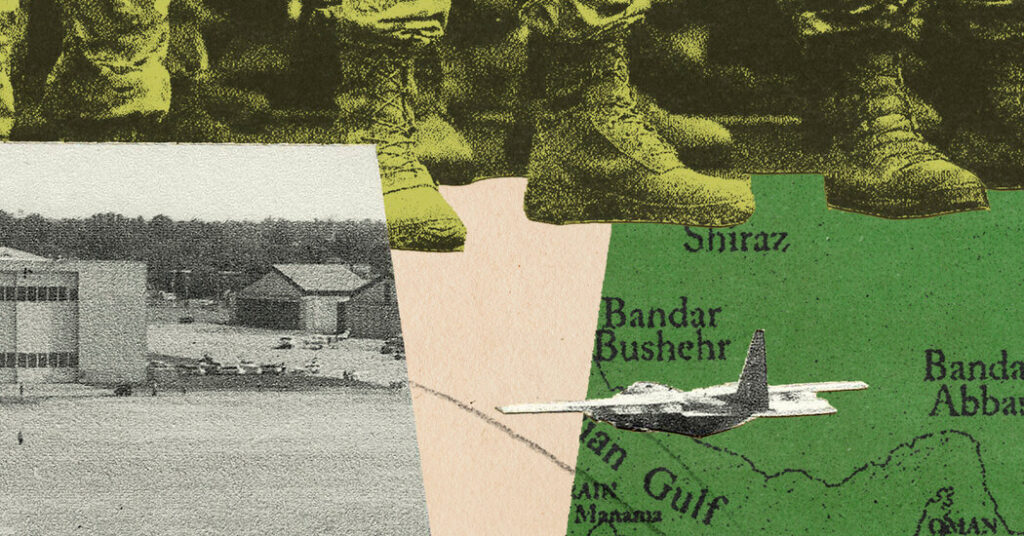
Source images for illustration above: bogdanserban/Getty Images; CatEyePerspective/Getty Images; Stocktrek Images/Getty Images.
The post Our Allies Are Wondering Whether Supporting the American War Machine Is Worth It appeared first on New York Times.