Oil prices wavered on Friday as cracks emerged in the preliminary deal to end the war in Iran.
Talks between U.S. and Iranian officials were postponed, with Vice President JD Vance delaying a scheduled trip to Switzerland for the next phase of talks, highlighting the fragility of the agreement signed this week. Israel launched new strikes in Lebanon, suggesting that the fighting there was far from over.
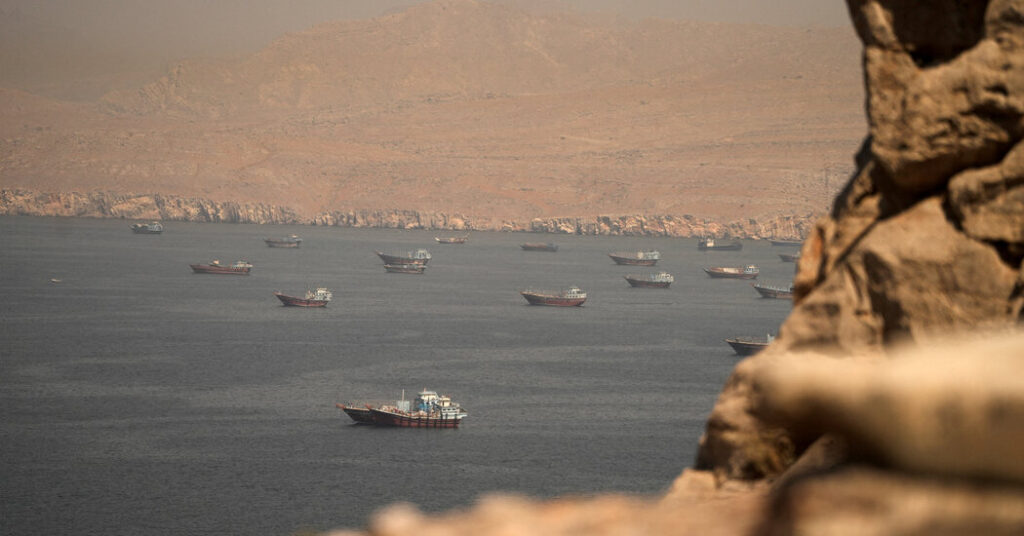
Oil prices remain on track to fall for a second straight week, however, as traders react to apparent diplomatic breakthroughs and anticipate the reopening, eventually, of traffic through the Strait of Hormuz, a crucial passageway for oil and gas in the Persian Gulf.
Oil fluctuates.
-
The price of Brent crude, the global benchmark for oil, shifted between small gains and losses, hovered at about $79 a barrel.
-
West Texas Intermediate crude, the U.S. benchmark, was similarly steady, around $76 a barrel.
-
There is an abbreviated trading session on Friday, for the Juneteenth holiday in the United States.
Gasoline prices continue to fall.
-
Gas prices dipped on Friday, falling a few pennies to a national average of $3.97 a gallon, according to the AAA motor club. The average gallon of gas fell below $4 on Thursday for the first time since the early days of the war.
-
Gas prices don’t move in lock step with crude, usually trailing increases or drops by at least a few days.
-
The average price of diesel slipped to $5.10 per gallon on Friday. It, like regular gas, remains more than 30 percent higher than before the war.
Stocks are subdued.
-
Futures on the S&P 500 were flat, but volumes are low because U.S. markets are closed on Friday for the Juneteenth holiday.
-
Stocks in Asia were mixed — Japan posted a small gain and South Korea a small loss — and markets across Europe were little changed.
The post Oil Prices Firm Up as U.S.-Iran Deal Faces Tests appeared first on New York Times.