Maybe you’ve heard this before. Modern civilization has been transformed — undermined, propelled toward ruin — by a mighty and ubiquitous technology. Widely accessible and endlessly adaptable, this technology has been celebrated for its democratic potential as well as for powers that seem almost magical.
At the same time, it has proved to be a tool of dictators, an instrument of propaganda and the weapon of ruthless, unaccountable corporate interests. With shiny images and seductive phrases, it spreads misinformation and encourages antisocial behavior, feeding billions of consumers a steady diet of lies and distractions.
I’m talking about movies. What did you think?
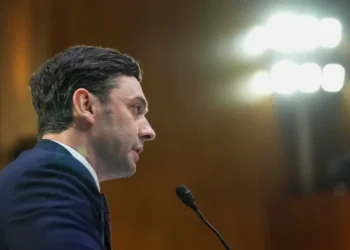
I’m also paraphrasing the main argument of “A Sudden Flicker of Light,” the new book by the prolific film writer David Thomson.
Thomson is hardly the first to worry about the possible harms of movie-watching. Over the 130 years or so of their existence, motion pictures have invited skepticism and alarm along with wonder and delight. Censorious bluestockings, panicked parents, opportunistic politicians and anxious intellectuals have all found reason to find fault with Hollywood and its satellites.
Thomson fits none of those caricatures. He is, on the contrary, among the most ardent cinephiles of the past half-century, a man who has devoted the greater part of his writing life to the exploration and celebration of film. His oeuvre includes monographs on movie stars (notably Bette Davis and Humphrey Bogart); biographies of moguls (David O. Selznick, the Warner brothers); critical histories of Hollywood and world cinema; fictional meditations on film noir, screwball comedy and the western; and, above all, the monumental, indispensable, marvelously idiosyncratic “Biographical Dictionary of Film,” currently in its sixth edition. Not many people have thought as deeply or as passionately about movies.
And now, at 85, Thomson is entertaining second thoughts. “A Sudden Flicker of Light” is subtitled “A Revisionist History of Movies,” and in it he describes himself as “someone who feels more than regret that over the decades he has given time to wondering which film was the greatest ever made, to distinguishing the auteurs and artists … and to treating the enterprise of darkness and light as if it honored society and history.”
From the vantage point of a dystopian present in which “attention has become infernal, hopeless, yet unstoppable,” he chronicles how, under the spell of movies, “we let the lifelike distract us from life.” This isn’t an abstract, philosophical predicament; it’s a political crisis.
Life as “Movie”
According to Thomson, movies — especially American movies — have whitewashed history, glorified violence and made role models out of thugs, narcissists and murderers. The consequences shape our public life. Donald Trump “is our movie man,” Thomson writes, meaning that Trump’s presidency, which Thomson sees as a catastrophe, was foretold and to some extent made possible by Hollywood.
Not just bad movies or “Home Alone 2,” either. Turning our humanity upside down and our values inside out is what good movies do. It’s what movies do best. “A Sudden Flicker of Light” trains its gaze on canonical films and filmmakers: D.W. Griffith, Orson Welles, Francis Ford Coppola, Paul Thomas Anderson. And also on certain indelible characters — Charles Foster Kane, Michael Corleone, Hannibal Lecter — who have become icons of charismatic degeneracy. Their ambiguous collective legacy is summed up in the book’s verdict on “The Godfather”: “So much that is grand — and too much that is a disgrace.”
“We are no longer the selves we hoped to be,” Thomson concludes. “We are not exactly alive any longer.” It’s the movies that condemned us to this limbo.
What if he’s right?
Here I should put my own cards on the table. For most of this century, I was employed by The New York Times as a full-time movie critic, which means that, like Thomson, I had a professional commitment to movies and also a belief in them — in their cultural impact and artistic merit, in their importance as vessels of human meaning.
At a certain point that faith began to falter, for reasons I’ve never been entirely able to articulate. Had the movies gotten worse? Was I too old to appreciate the better new ones?
Maybe it wasn’t just me, or even just the movies. Maybe the shock of the pandemic’s empty theaters and the simultaneous ascendance of streaming platforms had irreparably dented cinema’s durability and tarnished its luster. Attention that had been magnetized by stardom and spectacle was migrating to smaller screens and fragmenting into ever narrower algorithmic niches. The venerable habit of going to a theater to sit among strangers — for Thomson the origin of the modern crowd — was in decline. The saturation of daily life with moving images — in your pocket, on your wrist, on every available surface — had undermined the specialness, the sacredness, of motion pictures as an art.
Of course, interesting movies continue to be made, and now and then crowds of people still leave the house to see them, as recently happened with the low-budget, Gen Z horror hits “Obsession” and “Backrooms.”
But the longstanding habit, among critics and other devotees, of holding movies apart from and superior to all the other screened content may involve a crucial category error. Could it be that, instead of being distinct from television, streaming, TikTok, A.I. slop and all the other screen forms, movies are actually their common ancestor, their home planet, the H.R. Giger alien xenomorph that has replicated itself across the universe of human consciousness?
Thomson’s word for that all-enveloping phenomenon is “movie.” For the most part, when he talks about “movies” in the plural (or, synonymously, about “film” or “cinema”), he’s talking about the medium that evolved through the 20th century as a popular form of entertainment, sometimes rising to the level of art. “Movie,” in contrast, refers not to an individual film but to the mode of cognition, the way of seeing and imagining the world, that the medium has imposed on us. Whether or not we go to the movies, most of us live in what he sometimes calls “the condition of movie,” a state of perpetual fantasy and denial.
An Obsessive Film Cataloger
If in the 21st century we’re facing the decline of movies, we’re also living through the triumph of “movie.” And if Thomson is increasingly suspicious of movie, it’s partly because, for as long as he can remember, he has been in love with movies.
And with the country he discovered through them. “I didn’t realize when I started this book where it was going to go, and I think that it has a lot to do with my lifelong romance with America,” he told me recently. He was born in South London during World War II (his mother told him he’d been conceived around the time of the British retreat from Dunkirk), and his postwar childhood was shaped by the Hollywood productions he saw in the company of his grandmother.
“As a kid,” he said, “I could not credit or understand the immense space, and the light and the cheerfulness, in American movies. I just had an intense, distant love for America.”
That initial childhood enchantment would darken. “The more I learned about the history of America,” he said, “the less plausible it was that the whole thing was delightful. It was brutal, and it was corrupt, and it lied to itself. At the heart of this book is the extent to which Hollywood decided to tell itself delightful, cheerful, uplifting stories and ignored so much of the reality.”
Even after half a century in the United States and more than 40 years in California, he strikes a visitor as unmistakably English. It’s partly his accent, and partly his manner, which is gracious, good-humored and touched with melancholy. He and his wife, the photographer and writer Lucy Gray, have two grown sons and occupy a book-filled empty-nesters’ apartment in the Pacific Heights section of San Francisco, where I met him on a sunny morning this spring.
We had sketched out 36 hours of Bay Area cinephilia: lunch with Philip Kaufman, an old friend of Thomson’s (and the director of “The Right Stuff” and the 1978 remake of “Invasion of the Body Snatchers,” among others), at a restaurant owned by Francis Ford Coppola; a visit to Fort Point at the base of Golden Gate Bridge, near where Kim Novak’s Madeleine disappears into the water in Hitchcock’s “Vertigo” and Lee Marvin’s Walker disappears into thin air in John Boorman’s “Point Blank”; and a drive past the outdoor staircase where Peter Bogdanovich shot a notorious car chase in “What’s Up, Doc?”
There was a lot of movie to talk about.
In 1960, Thomson chose The London School of Film Technique over Oxford University. He haunted the National Film Theater and other London cinemas, and scoured the bookstores of Charing Cross Road looking for copies of Cahiers du Cinéma, the French journal whose critics (many of whom went on to become New Wave auteurs) shared his obsession with Hollywood directors who were only beginning to be recognized as artists.
The early 1960s are now recalled as a golden age of movie love. For people like Thomson, who were there, it was above all a moment of discovery. “The feeling I had,” he said, “that a lot of young people I knew had, was the realization that this whole thing has been going on for decades all over the world and we don’t even know how much there is.” This cataloging impulse would eventually feed “A Biographical Dictionary of Film,” the kind of obsessive, opinionated reference work that used to be more common before the internet. “I wanted the dictionary to say, Why haven’t you seen all these films? They’re all out there!”
The idea that film was a topic worth studying and analyzing fueled the growth of a new academic discipline. Thomson was part of that, for a time. He came to America in the mid-1970s to teach at New England College in New Hampshire (where he met Gray), eventually moving to Dartmouth. But part of his distinctiveness as a writer on movies comes from his independence from both academia and regular reviewing.
He did some of that, briefly, for a Boston alternative weekly. “I was fired because I didn’t like enough films,” he recalled. “I’m not suited to that job because I think I always felt that it shirks the question of what the films are about, what they’re doing to us, what they’re giving us, which has always interested me more.”
In 1981, he and Gray moved to San Francisco because she had found a job there, and he became a full-time writer of books. (“If we’d gone to Los Angeles,” he says, “I would have become a screenwriter.”)
The Dangerous Charms of “Citizen Kane”
On my flight west, I had watched “Citizen Kane,” one of the few pre-2000 movies on United’s in-flight menu, and one that looms large in Thomson’s understanding of film history. Not only his, of course. From 1962 to 2012 it sat atop the decennial Sight and Sound poll of all-time greatest movies, and few films from the studio era are as thoroughly encrusted with mythology.
Back in the ’70s, Thomson wrote that “Citizen Kane” “grows with every year as America comes to resemble it.” He laughed when I quoted the sentence. “Did I say that?”
The portrait — told in newsreels, posthumous interviews and flashbacks — of a fictitious newspaper baron inspired by William Randolph Hearst, “Citizen Kane” is a study in narcissism, ambition and amorality. Its protagonist’s relentless, exuberant pursuit of money, power, pleasure and acquisition seemed outsize in 1941, when the film was released. Perhaps less so now?
“The first time I saw ‘Kane’ I was absolutely bewildered by it,” Thomson said. “Who am I meant to like?”
Is Charles Kane, played by Orson Welles, the film’s 26-year-old first-time director, the villain or the hero? The movie depicts him as a dynamo of ego, alienating the people close to him and corrupting everything he touches before collapsing into a bitter, lonely old age. The story is a kind of psychological whodunit, a search for the key (encoded in Kane’s dying word, “Rosebud”) that would unlock the secret of his personality.
But Rosebud is really a red herring: Kane’s secret is hiding in plain sight, in the energy with which Welles directs himself performing Herman J. Mankiewicz’s script. Kane is the irresistible center of attention, a human magnet monopolizing the audience’s gaze.
“The dynamic of energy onscreen is an extraordinary phenomenon,” Thomson said. “If someone is moving a lot, or doing a lot or just talking very well, you’re with them, in ways that are very complicated and very confounding.”
Kane sits at the head of a line of power-seeking, morally problematic men who have come, in Thomson’s understanding, to dominate the popular imagination. Not just Michael Corleone and Hannibal Lecter, but also peak-television antiheroes like Tony Soprano and Walter White — a roster that is also, not incidentally, a pantheon of great male screen performances.
“You could argue that ‘The Godfather’ is the key film,” Thomson said. “It did everything the medium is meant to do. It had a gang of absolutely brilliant people. That film brought together talents of an incredible nature.” In addition to Coppola and a cast that included Marlon Brando, Al Pacino, James Caan, Robert Duvall and a parade of first-rate character actors, the movie owes its place in the canon to people like Dean Tavoularis, the production designer; the cinematographer Gordon Willis; and the sound editor Walter Murch.
“It was a smash hit,” Thomson went on. “It won all the prizes, and yet what is not talked about very much is what the film is about. For me what the film is about is persuading men that they want to be in the gang and in the family, and they want to do the terrible things the guys do and they want to shut the women out of the room.”
The movie is an operatic love letter to patriarchal power and, especially if you include “The Godfather Part II,” to the seductions of capitalism. Michael Corleone is sometimes described as a tragic figure, but the story the two films tell is of his and his family’s triumph. As with Charles Kane, you’re with them, even at the risk of your own soul.
Still Ravished by Beauty
“The Godfather” was what I watched on the flight back east, its grandeur shrunk to the scale of an economy headrest. I found myself thinking about something Thomson had said not about that movie, but about “The Truman Show,” Peter Weir’s 1998 fable about a man whose entire life has been an unwitting spectacle for a global audience.
Thomson and I watched it together in his living room on the second morning of my visit. I had wanted to see a movie with him, and “Truman” was his choice. I could see why. It turns out to be a vivid illustration of his argument in “A Sudden Flicker of Light” about the ways our entertainment system collapses the boundary between fantasy and reality. Truman, played by Jim Carrey, lives imprisoned within movie, surrounded by actors in a television show (overseen by Ed Harris’s extravagantly sinister auteur) that began with his birth, a situation he is only starting to become aware of.
To some extent “The Truman Show” foreshadows our constantly surveilled present. It also captures a Hollywood tendency to infuse dystopian visions with comforting sentimentality, to tell us that everything will be all right. But in the version of the show we inhabit now, there seems to be no exit, no route back into life, no chance to confront or defy the powers that observe, control and distract us. Thomson offered a bleak summary of our impotence: “The condition of movie has an extraordinary way of telling us we don’t matter.”
But what he wanted me to see in “The Truman Show” was something else. “There’s a moment in the film,” he said, referring to a scene of ordinary street life in Truman’s fake hometown, “when we’re beginning to feel that the whole world it shows has been body snatched. And yet there is a beauty to the way people are moving in the street, which has to do with simple human movement, with space and light.”
That, too, is the condition of movie. To Thomson, “there’s a beauty that is akin to melody or perspective in painting, or just what we call the shape of a sentence in writing. I’m a sucker for it and always have been. Whatever disapproval I may have developed for the medium over the years, I’m still ravished by it.”
And that made me think of something Michael Corleone said — the only line anyone remembers from “The Godfather III.”
Just when I thought I was out, they pull me back in.
The post Did Movies Ruin Everything? appeared first on New York Times.