John Barrasso, a Republican from Wyoming, is majority whip in the U.S. Senate.
Millions of Americans rightly worry about the strained electrical grids and higher energy bills that result from rising demand. Yet many projects that would help lower energy prices remain frozen for years by federal reviews before anyone can break ground.
Washington can make it easier for businesses to grow, and for Americans to prosper, by reforming a federal permitting system that often hampers growth, especially for mines, pipelines and other energy projects. Needless and duplicative bureaucracy has delayed as much as $1.5 trillion in critical infrastructure investments. The biggest culprit is the National Environmental Policy Act.
Signed into law by President Richard M. Nixon in 1970, NEPA was once hailed as the environmental “Magna Carta” and was supposed to balance environmental protection with human flourishing. Environmentalists have weaponized the law to hamper road construction, energy production and other development essential to the nation’s flourishing.
Today, a single environmental review under NEPA takes about four years on average. Construction cannot start without first spending years in the regulatory penalty box.
Surviving the review process is only half the battle. NEPA is one of the most litigated federal environmental laws. Trial lawyers and environmental activists have used the courts to bury necessary projects in further delays. On average, the courts hear more than 100 NEPA-related lawsuits every year. Each case is filed to prevent a project from moving forward. Too many prefer legal molasses to affordable oil and gas.
Last year, such malicious lawsuits earned a sharp rebuke from the Supreme Court with an 8-0 ruling limiting the scope of NEPA environmental reviews. In his majority opinion, Justice Brett M. Kavanaugh wrote that NEPA has become “a blunt and haphazard tool employed by project opponents … to try to stop or at least slow down new infrastructure and construction projects.”
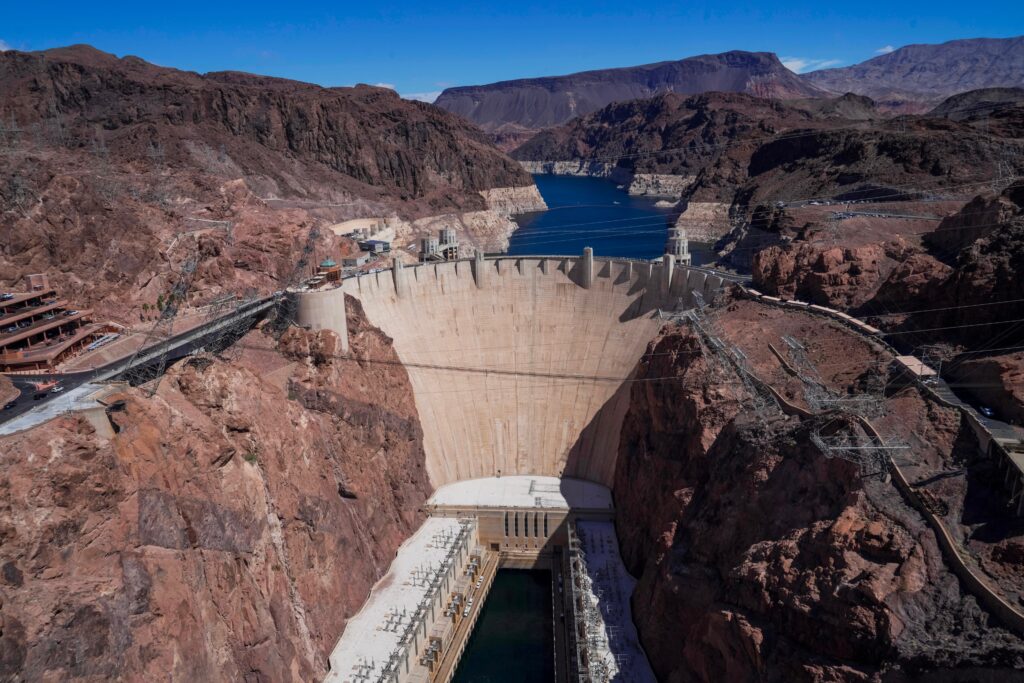
America used to make it easy to build. Construction on the Hoover Dam began in the 1930s and was finished that same decade, ahead of schedule. Since then, the Hoover Dam has provided affordable and reliable hydroelectric power to the Southwest. The nearly 2,000-mile Transcontinental Railroad was completed in 1869 after only six years.
These were not small undertakings. They were some of the largest infrastructure projects of their time. Today, building in America is not slower because projects are harder, but because the process is designed for delay.
A bill I’m sponsoring in Congress, the Let America Build Act, is designed to help break the bottleneck of federal permitting for oil, gas and mining. Based on bipartisan work I did with in 2024 with Sen. Joe Manchin III (I-West Virginia) before his retirement last year, this bill would simplify and speed up the process for such projects. It comes as the Senate negotiates broader permitting reform legislation.
To stop the barrage of unnecessary NEPA-based lawsuits, the Let America Build Act would limit the deadline for filing court challenges to 60 days. Strict deadlines for judicial decisions on energy projects would be paired with strict bureaucratic deadlines. NEPA reviews would be limited to evaluating a project’s direct impacts, curtailing endless reviews based on speculative harm. The bill also would cut red tape to make it easier to build liquefied natural gas export terminals and give states oversight for drilling permits on federal lands.
These commonsense reforms would boost American energy production and help lower energy costs for families. The United States needs to be energy independent and energy dominant. It is already the largest energy producer in the world, but the conflict with Iran has shown the danger of dependency on foreign powers for energy.
Lower energy costs in America require more supply. More supply requires a permitting process that is both respectful of the environment and responsive to the nation’s energy needs. Building faster, better, cheaper and smarter is the path to lower prices.
The post The Hoover Dam let energy flow. Congress should take the hint. appeared first on Washington Post.