Oil prices fell and stocks rose on Thursday after Pakistan’s leader announced that the agreement between the United States and Iran to reopen the Strait of Hormuz would take effect immediately, eliminating any delay in its implementation.
Prime Minister Shehbaz Sharif of Pakistan, which helped mediate the deal, said in a post on X that the memorandum of understanding had been signed electronically by the U.S. and Iranian presidents. As a result, the agreement to begin reopening the strait and lifting the U.S. naval blockade would “enter into force with immediate effect,” he wrote.
Upon signing the memorandum, the United States is expected to issue sanctions waivers, allowing Iran to resume oil sales on global markets.
Oil prices continue to drop.
-
The price of Brent crude, the global benchmark for oil, fell nearly 3 percent to about $77 a barrel, approaching levels not seen since the early days of the war.
-
West Texas Intermediate crude, the U.S. benchmark, was down more than 3 percent to around $73 a barrel.
Stocks rise.
-
Futures on the S&P 500 pointed to a 0.7 percent increase when stocks resume trading in the United States on Thursday.
-
Stocks in Asia, where countries import vast quantities of oil and gas, were mixed. Stocks in Japan and South Korea jumped about 2 percent, while shares in Hong Kong were down more than 2 percent.
Gasoline prices fall.
-
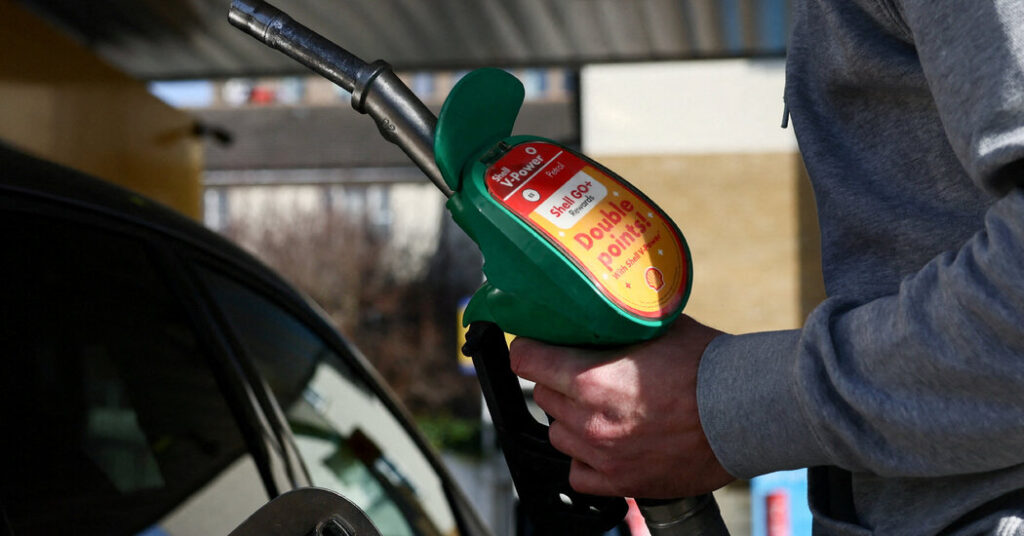
Gas prices fell again on Wednesday, dropping by a penny to a national average of $4.03 a gallon, according to the AAA motor club. The price of gasoline is still up 35 percent since the war began.
-
Gas prices don’t move in lock step with crude, usually trailing increases or drops by a few days.
-
The average price of diesel fell three cents to $5.16 on Wednesday, up nearly 40 percent since the start of the war.
The post Oil Prices Fall as U.S.-Iran Deal to Reopen Hormuz Takes Effect appeared first on New York Times.