At an internal OpenAI policy meeting last month, employees pressed executives on donations that one of the company’s founders had made to Leading the Future, a super PAC that favors lighter regulation of artificial intelligence and has become a powerful force in the midterm elections.
Top policy executives tried to distance OpenAI from the activities of Leading the Future and the co-founder, according to current and former employees who described the meeting as tense but productive. But not all of OpenAI’s employees, who disagree with the super PAC’s tactics and decisions, left feeling reassured.
Now, two Democratic operatives are aiming to leverage the unease within the tech industry over A.I. and harness an agitated work force into a political movement. On Thursday, they unveiled a super PAC, the Guardrails Alliance, with the support of tech workers, labor unions and other groups to push back on deep-pocketed interests like Leading the Future. The group is positioning itself as a populist effort in which small-dollar donations from rank-and-file workers will take on moneyed entities that oppose reining in A.I., while supporting legislation to safeguard the technology.
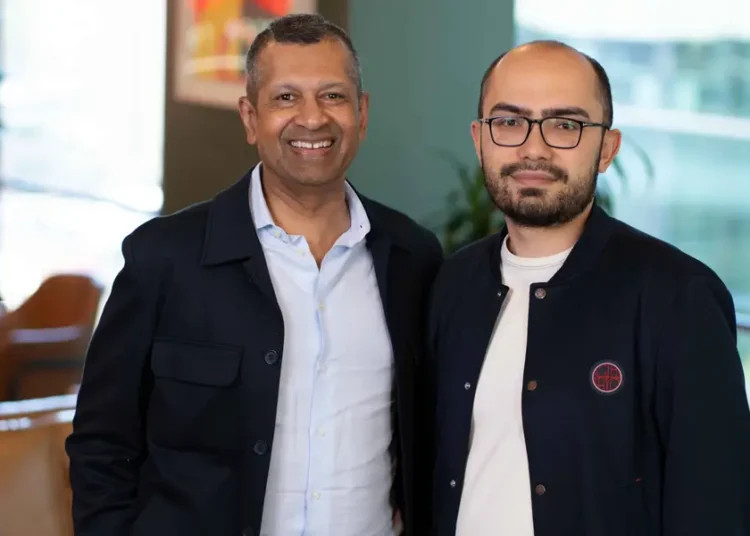
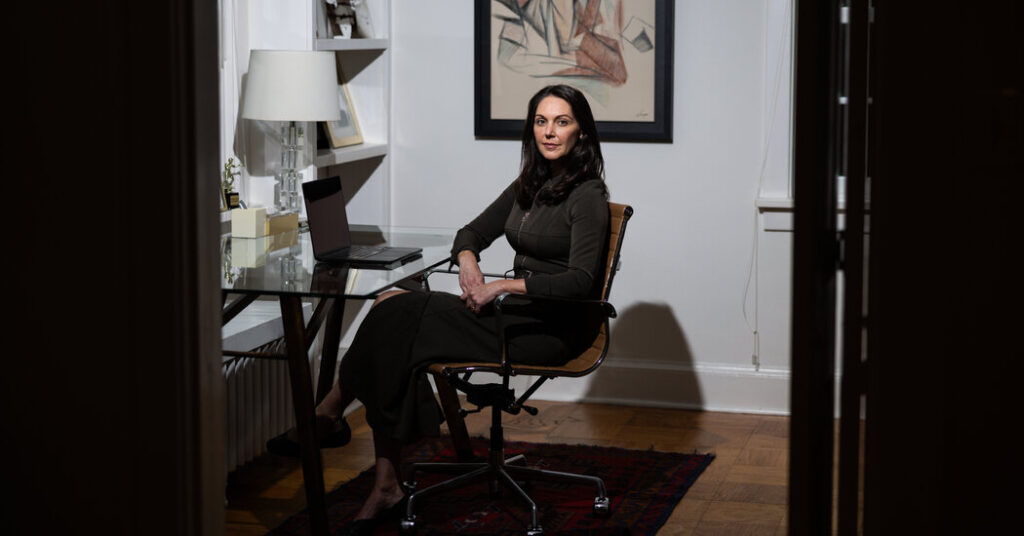
“Our fundamental belief here is that people still do have the power to stop this autocratic takeover of the Trump administration and the tech sector,” said Shaunna Thomas, who founded Guardrails with Leah Hunt-Hendrix, referring to how the Trump administration has generally shied from imposing A.I. rules.
Guardrails is small compared with Leading the Future, which has a political budget of more than $100 million. Guardrails and its linked nonprofit have raised $5 million, with a goal of amassing $15 million this cycle.
It has started deploying the cash. Guardrails said it was buying ads for the Democratic primary in New York City’s 12th Congressional District to support Alex Bores, a former tech worker who has written A.I. safety legislation. The race is a focal point in the midterm battle over the technology, with more than $10 million spent on ads by at least three A.I.-related super PACs to support or oppose Mr. Bores before the primary on Tuesday. Guardrails plans to air $250,000 of ads for him over the final days of the race.
Guardrails is emerging at a thorny time for the A.I. industry, which faces a backlash over how the technology may affect jobs, warfare and communities. Companies like OpenAI and Anthropic have seen the moment as a referendum on how the public views A.I., and executives at the firms have poured money into different super PACs.
Leading the Future was announced last year, with $50 million pledged from the A.I. investor Andreessen Horowitz and $50 million from Greg Brockman, OpenAI’s president, and his wife, Anna. Since then, three super PACs, including Guardrails, have formed in reaction to Leading the Future.
In November, a group of donors aligned with Anthropic, OpenAI’s rival, unveiled a super PAC called Public First. In May, Chris Larsen, a tech billionaire, began a group that has been spending primarily in the Bores race to specifically push back against OpenAI.
OpenAI declined to comment. (The New York Times has sued OpenAI and its partner, Microsoft, accusing them of copyright infringement of news content related to A.I. systems. OpenAI and Microsoft have denied those claims.)
Ms. Thomas and Ms. Hunt-Hendrix, the Guardrails founders, come from the Democratic Party’s left flank. Last year, they began having conversations with groups that said there had not been enough conversations about how to protect people from the rapidly advancing technology.
Ms. Thomas previously co-founded UltraViolet, a women’s advocacy nonprofit group. Ms. Hunt-Hendrix, who straddles the world of left-wing politics and major donors, is a granddaughter of a Texas oil baron and has sought to use her proximity to the wealthy to move the Democratic Party to the left.
Guardrails said its supporters included Chris Hyams, a former chief executive of the employment site Indeed.com; the American Federation of Teachers union; the American Association of University Professors; and the Working Families Party. David Farhi, a former OpenAI researcher, is also a donor. Guardrails said it was in discussions with more tech workers who had concerns about groups like Leading the Future.
“This is the oldest story in business: You have billionaire C.E.O.s who want no restrictions or accountability,” said Mr. Hyams, who left Indeed last year and now teaches A.I. ethics in Austin, Texas. “And then you have the rest of us, who want to be protected from completely unbridled wealth generation at all costs.”
At OpenAI, employees have voiced concerns on social media about Leading the Future and its attacks on Mr. Bores. After the tense internal meeting last month, which was earlier reported on by Transformer, the company posted to its policy blog, “We want to be explicit: No outside political group speaks for OpenAI or represents our company’s views.”
Ms. Thomas said she saw Guardrails as a grass-roots counterweight to OpenAI.
“This is not about matching them dollar for dollar, fighting them with money or another set of billionaires,” she said. “What this vehicle is meant to do is be a political home for people who are concerned about the way the anti-regulation A.I. tech sector is trying to manipulate elections.”
The post New Super PAC Aims to Rally Tech Workers to Help Limit A.I. appeared first on New York Times.