Times Insider explains who we are and what we do and delivers behind-the-scenes insights into how our journalism comes together.
For many people, Texas brings to mind politics and barbecue.
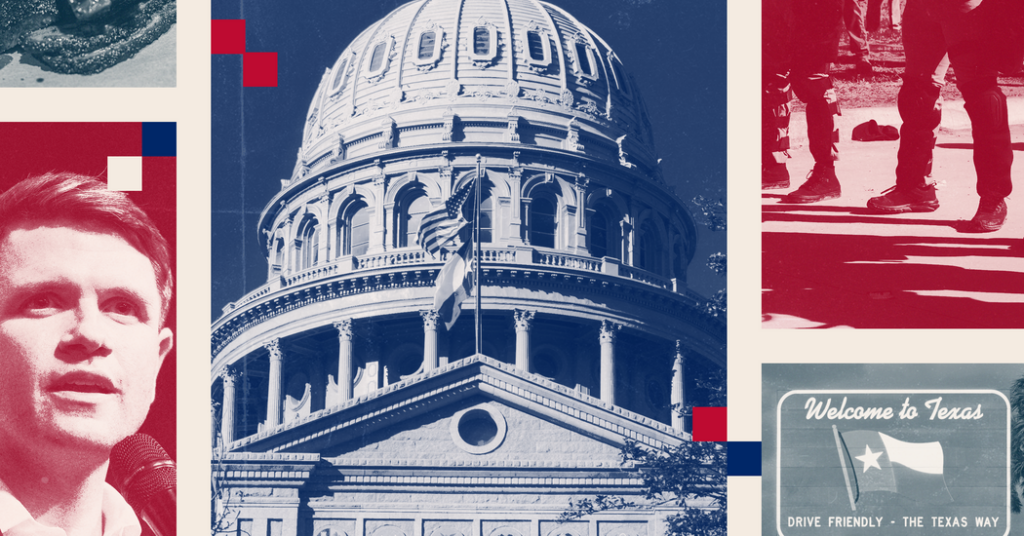
“People know it as a big, red state,” said Fernando Alfonso III, The New York Times’s first Texas-based editor and the leader of a new team of reporters and editors in the state, which has been in the works since last year.
But, he added, “it’s also a cultural force, from Beyoncé’s ‘Cowboy Carter’ fueling a Western-fashion revival, to shows like ‘Landman,’ to the endless fascination with Texas cuisine.”
The new hub of Times journalists aims to capture all of that and more in its reporting. In its first six months, the team of five has covered the aftermath of the deadly flooding at Camp Mystic last summer, explored why so many people in San Antonio are still living in poverty despite the city’s booming economy, and followed a family of children who had to raise one another after their parents were taken by ICE.
Over two interviews, Mr. Alfonso, who lives in the Houston suburb of Bellaire and joined The Times in December from The Houston Chronicle, shared more about why The Times is prioritizing Texas, how reporters navigate perceptions that The Times doesn’t understand the state and what story lines the nation should be watching. These are edited excerpts from the conversations.
Why does The Times need a Texas hub?
It’s a big state, an economic powerhouse, a cultural force; the stories out of Texas have been of great interest to the national New York Times audience. So the idea of creating a Texas hub is to use the state as a way to explain the phenomena to come or that are already happening across the country through different societal lenses, whether that’s business, culture, religion or, of course, politics.
Texas looms large in American culture and politics. But there are distinct communities with particular approaches to civic life. How are we approaching those?
It starts with just being there. You have to put in real time in a community before you can understand how it sees itself, which is often entirely different from how outsiders do.
Texas is full of places and groups that are talked about constantly and understood almost never: Muslim families up in North Texas. Vietnamese communities down along the Gulf. Ranching families out near the border. And the suburbs that keep sprawling outward, reshaped by people moving from all over the country. What we’re after is how people here actually take part in civic life, where they find community, which institutions they trust, what they make of all the change around them.
If living in Texas has taught me one thing, it’s that a lot of these communities don’t fit the boxes people outside the state like to reach for. The more time you spend with folks, the more tangled the story becomes — and a lot more interesting.
How do you navigate perceptions that The Times doesn’t really understand Texas?
I try to spend less time trying to persuade people that The Times isn’t what they think it is and far more trying to demonstrate how we work: the questions we ask, how we listen, how we verify information, why we call people back. We try to get it right.
I also try to meet people where they are and take their opinions seriously. At my former newspaper, we had a longtime reader who frequently emailed me and other newsroom leaders with a barrage of criticisms. Some were justified. Many were not.
I took it upon myself to meet him for coffee. We had a fairly intense but measured conversation about our coverage, the state of conservatism in Texas and the role of journalism. There was an understanding that we weren’t going to see eye to eye on everything. But there was enough shared experience that we walked away with a deeper respect for one another.
What are some criticisms you hear about our Texas coverage, and how are you working to address them?
One criticism we often hear is that Texas is viewed primarily through a political lens. Politics do matter tremendously in Texas — it’s a conservative powerhouse — but the stories we’re most interested in are often the ones that complicate people’s assumptions. Part of our job is to find those stories and explain why they matter beyond the state’s borders.
Another criticism is that our coverage of the state can feel monolithic. Houston, Dallas, San Antonio, the Rio Grande Valley and McAllen share a common Texas identity, but they diverge in dramatic ways when it comes to culture, cuisine, economics and countless other aspects of life. Our challenge and opportunity is to capture that complexity.
What are the most memorable stories the team has covered so far?
Edgar Sandoval, our San Antonio bureau chief, did a great job covering the trial of the Uvalde police officer who was accused of abandoning or endangering children and ultimately found not guilty. David Goodman, the Texas bureau chief, and Lauren McGaughy, our Texas politics correspondent, have done incredible work covering James Talarico’s campaign in Texas and really tapping into what has made him so different from previous Democratic lawmakers. Jesus Jiménez, a reporter in Dallas, did a great story looking at the restaurant industry in Texas, and how the Trump administration’s crackdown on undocumented labor has affected restaurants across the state.
Why is it important to have reporters living in the places they cover?
There’s a certain level of sincerity and lived experience that you get from having staff based in the state. We are writing for an audience that’s bigger than Texas, but a lot of that audience is still in Texas as well. So to have people based in these cities is crucially important, because Texans are nothing if not capable of spotting people who don’t take their state or their culture seriously.
What do we need to be covering more of in the state?
There has long been this assumption that Texas equals affordability, that people from the coasts migrate there because they can save so much money. That remains largely true, but with a giant asterisk that has started to become bolded. Texas has no state income tax, which means local governments rely heavily on property taxes to fund schools and services. When you add in property taxes, soaring insurance rates and rising housing costs, the bigger question becomes whether Texas is still the bargain America thinks it is.
I have to ask: Where is the best barbecue in Texas?
One of my favorites is Blood Bros. BBQ, which is not far from me in Bellaire. It fuses traditional barbecue techniques with some Korean influences. It’s phenomenal.
The post Why The New York Times Is Expanding in Texas appeared first on New York Times.