AI doesn’t cause dementia, but how you use it could weaken one of the brain’s core defenses against it.
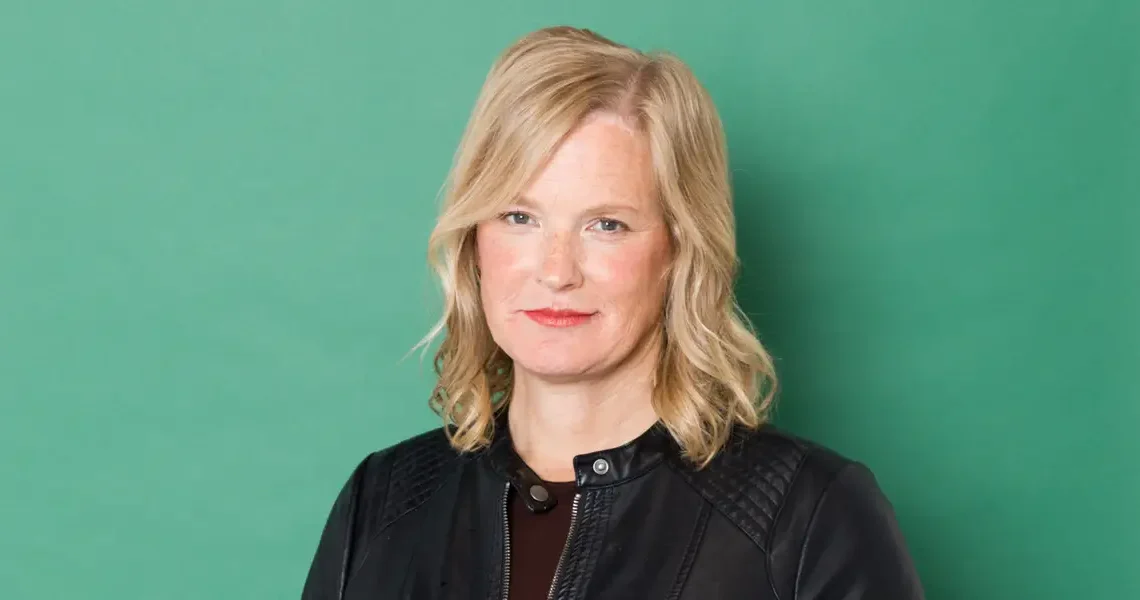
That’s the warning from Vivienne Ming, a theoretical neuroscientist, the chief scientist at the Possibility Institute, a metascience research group, and founder of Socos Labs, an AI and education firm.
“Your chatbot is not giving you Alzheimer’s,” Ming told Business Insider.
“My worry is the cumulative impact of chronic substitution: when you stop doing the cognitive work because something will do it for you, you stop building the reserve that protects you later,” she said.
As AI has swiftly become an integral part of people’s lives and careers, AI researchers and some tech leaders have been releasing warnings about its deskilling effect, the slow erosion of job skills, and the decline in independent thinking.
Ming went a step further, saying that repeatedly outsourcing mental effort to AI, especially among young people, could have real implications for long-term brain health.
“That’s the group from whom I’m most concerned,” she said. “How you use AI, not how often, will determine its impact.”
Over the long term, Ming worries that routinely outsourcing thinking to AI could reduce cognitive engagement and make it harder to build cognitive reserve — the brain’s ability to adapt and remain resilient in the face of damage or aging.
“The mechanism I’m describing is the classic ‘use it or lose it,'” Ming said.
‘GPT is the new GPS’
To drive her point home, Ming compared the effects of using GPS and an AI chatbot.
Researchers at McGill University in Montreal found in 2020 that people with greater lifetime GPS experience have worse spatial memory during self-guided navigation.
In a four-month small study conducted over four months last year, MIT’s Media Lab found that people who used a large language model to help write essays showed weaker neural connectivity than participants who used search engines or no external tools, and often couldn’t accurately quote passages from essays they had written minutes earlier.
These two examples, Ming said, are cases of cognitive offloading and surrender, or, as she put it, “delegating the effortful part of a task to an external system so your own networks never have to do it.”
Her concern in both cases is that people may be engaging key brain functions less frequently, including the hippocampus, the part of your brain that is responsible for memory and learning, and the prefrontal brain networks that help with attention, self-control, and decision-making.
“The hippocampus and prefrontal networks doing that work are precisely the systems that matter for cognitive aging,” she said.
“GPT is the new GPS,” she added, referring to OpenAI’s chatbot ChatGPT, which she said could erode cognitive skills if people increasingly rely on it to think for them.
A matter of cognitive reserve
Research has consistently linked mentally stimulating activities to higher levels of cognitive reserve and lower dementia risk.
One analysis conducted by the English Longitudinal Study of Ageing (ELSA) in 2020 on 12,280 adults aged 50 and older, found that older people with higher cognitive reserve can expect to have a 35% lower risk of developing dementia compared to those with lower levels.
“The principle that lifelong mental engagement delays cognitive decline is some of the most replicated research we have,” Ming said.
Importantly, Ming said no biomarker study linking AI use to dementia pathology has been conducted yet. Most of the data right now is “correlational or short-term,” she said.
However, she thinks now is the time to start analyzing this cohort, “while the behavior is still taking shape.”
“By the time we have the dementia data, a generation will have already formed the habit,” she added.
Read the original article on Business Insider
The post Why a neuroscientist worries outsourcing thinking to AI could weaken your brain’s defenses against dementia appeared first on Business Insider.