Ukraine is using its expanding fleet of attack drones to choke vital supply routes into Crimea, causing gasoline shortages and disrupting the summer holiday season as Kyiv tries to cut the peninsula off entirely from Russia.
When Moscow illegally annexed Crimea in 2014, its precarious geographical position, physically detached from Russia proper, posed a raft of challenges. After the full-scale invasion of Ukraine eight years later, the Kremlin justified the war in part as a mission to take territory in southern Ukraine that would give Russia a “land bridge” to Crimea, providing reliable supply routes.
Now, Ukraine is pounding those routes. Kyiv has in recent weeks struck scores of trucks and trains along the main highway leading to Crimea, and hit bridges connecting the peninsula to Russian-occupied Ukraine.
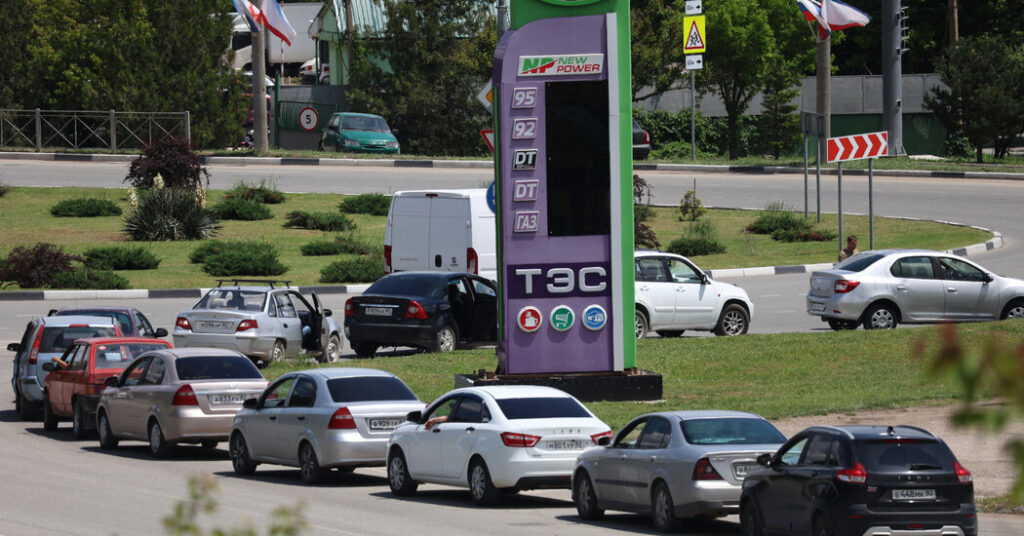
Social media has filled with videos of fuel trucks on fire after drone attacks and of lines of cars snaking around gas stations as deliveries have been disrupted. One photographer documented on social media how she spent eight hours in line at night to get gas.
Robert Brovdi, commander of Ukraine’s Unmanned Systems Forces, compared strikes on Russian military vehicles traveling along the exposed highway to “shooting partridges in an open field.”
The strikes are a major component of what Ukraine is calling a “logistics lockdown.”
Crimea is the primary logistical hub and staging ground for Russian military operations across southern Ukraine. Isolating the peninsula from Russia, analysts say, could hobble Moscow’s forces on the parts of the front that have been the most fluid in recent months, with Ukrainian troops mounting successful counterattacks.
Crimea also holds great symbolic and political value to the Kremlin. Interrupting supply lines shatters the illusion of security there, showing that Russia cannot protect a prize possession.
The routes Ukraine is targeting carry crucial supplies both for the military and for civilians. The attacks on fuel trucks have led to rationing, and sales have at times stopped entirely.
Tourists, who travel to Crimea in large numbers for the peninsula’s climate, landscape and history, often arrive from Russia by car. Some have been briefly trapped there by the gas crisis.
When the Russian travel blogger Anna Bunina went to Crimea on vacation at the end of May, she said online that she was looking forward to “sightseeing, driving around the peninsula and enjoying local wine.”
Instead, her trip turned into a “quest for gasoline,” she complained in a viral post that showed one empty gas station after another, their fuel price signs turned off.
Alyona Baskakova, who runs a real estate company in southern Russia, had to be rescued by a colleague who drove with gas canisters from Krasnodar, some 180 miles away.
“We have only 10 liters of gas left, and we can’t get out, we keep extending the booking,” Ms. Baskakova wrote in a social media post.
While there is no evidence of food shortages, some Crimeans appear to have snapped up goods in panic buying, with shelves stripped of sugar, rice and pasta at some supermarkets.
Daily life on the peninsula, which is roughly the size of Massachusetts, has turned into a “quest for hunting for gas or cheap sugar,” a resident of northern Crimea told The New York Times. She asked not to be named because of possible repercussions from the Russian authorities for discussing the situation there.
The attacks on Crimea-bound fuel trucks have forced drivers to think twice before making the journey. Damage to two bridges connecting occupied Ukraine to the peninsula has also constricted traffic. Satellite images taken late last week showed a pontoon bridge that Russia had put up after one bridge sustained critical damage.
Overall, traffic on the main highway leading to the peninsula, a road that Russia calls Novorossiya, or “New Russia,” has fallen by two-thirds since Ukraine began its campaign, Mr. Brovdi, the unmanned systems commander, told Reuters last week. That figure could not be independently verified.
The only connection for vehicles and trains between Crimea and Russia itself is a bridge over the Kerch Strait that Moscow built at a cost of $7.5 billion and opened in 2018. Fuel deliveries on that bridge have been prohibited since a Ukrainian car bombing in the fall of 2022 set fuel tanks ablaze and badly damaged the structure.
Russia’s last railway ferry to Crimea was destroyed in April, and a small oil terminal on the peninsula’s southern coast has been hit in several Ukrainian drone strikes in recent weeks.
As Ukraine ramps up drone production, with a stated target of making seven million this year, the military is outfitting them with upgraded engines, batteries and guidance systems.
A Washington-based analyst, Ruslan Leviev, head of the Conflict Intelligence Team, a group that uses open source data to study the war, said that Kyiv had unleashed the drones on supply routes in recent months after identifying Crimea as a “bottleneck susceptible to pressure as no other place on the front line.”
In May, Ukraine launched twice as many strikes at least 30 miles from the front line as they did in April, according to Mykhailo Fedorov, the Ukrainian defense minister.
Mr. Brovdi said that Ukraine hoped to gain “full control” of the Novorossiya highway within a month.
But Mr. Leviev, the analyst, cautioned that Ukraine would need far more drones to achieve dominance over the 185-mile roadway, and other experts noted that Moscow had adapted to such efforts in the past.
President Vladimir V. Putin of Russia has not commented on the supply crunch in Crimea. His spokesman, Dmitri S. Peskov, has sought to play down the shortages, describing them as an “unfounded rush” on goods.
When Russia annexed the peninsula, Moscow’s pitch to Crimeans was that it would bring wealth to residents whose livelihoods often depend on tourism. Until now, Crimea had been largely insulated from the war, attracting millions of tourists every year, almost all from Russia.
For the first time since Russia’s full-scale invasion of Ukraine, the summer holiday season in Crimea is in doubt. Nearly 80 percent of bookings in the last week of May and first week of June were canceled, according to data from a Russian travel bookings software company.
Some Crimean business owners themselves have recommended that tourists stay away.
“I would advise against going to Crimea this year because there are way too many issues right now,” Marina Vorobyova, a 66-year-old life coach who offers a summer rental in the countryside, said in a social media post.
On top of the gas shortages, she cited “sirens that go off every two-three hours.”
Irina Bogovich, a winemaker from Crimea, said in a video post that she knew she was “shooting myself in the foot” by asking visitors not to come.
“We all are looking forward to hosting tourists, but life is more precious than money,” she said. “Coming here right now is like playing Russian roulette.”
Even Russian pro-war military bloggers have acknowledged that the Ukrainian attacks could derail the summer season, dealing a psychological blow to both Crimeans and Russians.
“Kyiv’s goal is simple: They want to make sure that a ticket to Crimea in June 2026 feels less like a trip to the seaside and more like a lottery,” Alexander Kots, a staunchly pro-war reporter for the tabloid Komsomolskaya Pravda, said in a post on social media.
The strikes on supply routes have also affected Russian-occupied Ukraine. Sporadic gas shortages in the eastern Donbas region that began at the end of May have gotten worse, according to Yaroslav, a 23-year-old who lives in the suburbs of the city of Donetsk.
“What was once considered far from the front line is no longer safe,” said Yaroslav, who asked that his last name be withheld for his safety.
In Crimea, the governor of the largest city, Sevastopol, had to backtrack recently after promising fresh batches of gasoline.
“Fuel trucks sadly did not manage to come to the city at night,” the governor, Mikhail Razvozhaev, said last week. “I have a message for everyone: There is no point in standing in lines tomorrow.”
Marc Santora and Milana Mazaeva contributed reporting.
The post Sending Fuel Trucks Up in Flames, Ukraine Tries to Cut Off Crimea appeared first on New York Times.