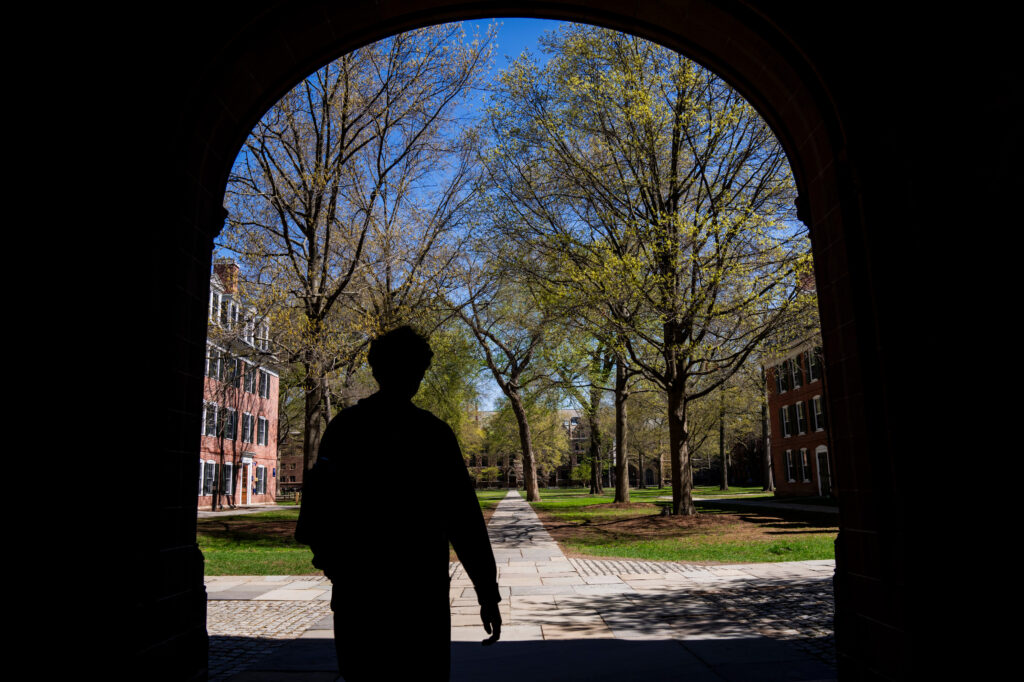
Amid intense pressure from the Trump administration and deepening public skepticism of higher education, a number of colleges have embarked on an unusually public bout of self-scrutiny in an effort to regain public trust.
A group of elite research universities released a statement this spring detailing their principles, including the importance of affordability, the freedom to debate and dissent, and their commitment to self-evaluation and correction.
Yale University announced the results of its examination on trust in higher education and is considering changes to its admissions, cost, grading and other areas. This month, the chancellors of Vanderbilt University and Washington University in St. Louis asked scholars to examine whether the standards in the humanities have eroded — effectively evaluating whether there’s merit to complaints that academic fields have been overtaken by ideologues. And on Tuesday, the American Association of Colleges and Universities released a report on how campuses can work to restore trust.
School leaders have been concerned about growing public skepticism of colleges and universities for years. Seventy percent of Americans say higher education is generally going in the wrong direction, according to a Pew Research Center poll published in October, up from 56 percent in 2020.
The recent public statements and investigations are intended to underscore not just the public service that universities provide, and the necessity of independence from political pressure, but also their desire to regain public confidence, according to some university leaders.
There seem to be two strategies at play with recent efforts, said Robert Kelchen, a professor of education policy at the University of Tennessee at Knoxville.
“One is trying to head off additional scrutiny and investigations from the federal government,” he said. “And the second is using the administration’s preferred language, really, against the administration.”
Last year, President Donald Trump’s administration launched intensive efforts to remake higher education: canceling research funding at some schools it accused of not combating antisemitism or other alleged failures, opening investigations and taking other actions to force cultural changes on campuses. The administration also fiercely targeted individual institutions, most prominently Harvard University, which has sued.
The American Association of Colleges and Universities’ report resulted from conversations school leaders had in response to the Trump administration attacks last year, said the association’s president, Lynn Pasquerella. They already had seen that some congressional leaders believed that higher education was so broken that it needed to be dismantled.
“We have to look at the ways in which we have contributed to that,” she said. “We won’t make any progress in our democracy or in reforming higher education if we can’t listen critically and with understanding.”
The report, aimed at leaders of individual campuses, has five recommendations, and the association plans to spend the next few years trying to help implement them. The most important goal is for colleges to be anchors in their communities, she said, to make clear that they’re serving the common good.
Another recommendation is to accelerate needed changes, cutting red tape to fix mistakes, said Jeremy Young, who wrote the report. A third is removing barriers to student success. That includes making sure conservative students feel welcome on campus, he said. The report suggests that colleges and universities communicate better about their impact.
It also advocates for campuses to work together to defend one another — even if a college under attack at that moment is a very different sort of school from their own.
The question that remains, Pasquerella said, “is whether higher education is willing to engage in the kind of work necessary to restore trust.”
Efforts were already underway.
After the Trump administration asked colleges to join a “Compact for Academic Excellence” last fall, promising a competitive advantage in scientific research funding to schools that agreed to its ideological priorities, some university presidents began writing a joint set of principles. That effort led to a statement from the Association of American Universities, the collective voice of the country’s 71 leading research schools.
The statement emphasized that universities serve the public interest through research that drives the economy, cures diseases and protects military service members, as well as through teaching that trains the next generation of leaders. It stressed that their ability to fulfill that mission to the country depends on academic freedom and institutional autonomy.
The group also wrote that the trust of the American people must be earned and renewed.
Barbara R. Snyder, president of the AAU, said it’s important for the group to be able to answer people who ask what they stand for and what their role is for the American people. “I think this is an attempt to respond to that,” she said. “I’m proud of that.”
Some elements of the statement stand in contrast to recent political efforts. The federal Office of Management and Budget has proposed sweeping changes that would give government officials more power over grants, a move many university leaders worry would politicize what science gets funded.
The AAU schools emphasized that they compete for grants awarded based on scientific merit.
“Universities must determine what to teach and study based on evidence, reason, and merit — not ideology or external pressure,” they wrote. “If inquiry is restricted by politics or special interests, innovation stagnates, and the nation loses its competitive edge.”
This year, Dartmouth College President Sian Leah Beilock wrote in an opinion piece in the Wall Street Journal that she would like to see colleges across the country take steps to restore public trust, making specific recommendations and describing actions Dartmouth has taken.
“We must demonstrate to students and families — and to the broader public — that we’ve heard their criticisms and will address them,” Beilock wrote. She recommended making college affordable, helping ensure graduates get meaningful work, avoiding political posturing, avoiding grade inflation and requiring standardized tests for admissions.
Two chancellors who also have been outspoken about the need to shore up trust in higher education, Daniel Diermeier of Vanderbilt University and Andrew D. Martin of Washington University in St. Louis, this month shared a report written by a committee of scholars and addressed to university leaders who are concerned about the quality of scholarship in humanities and social sciences.
Conservatives for years have complained that liberal bias has weakened those fields.
The report found strong evidence of the erosion of scholarly standards, Diermeier said. It sparked pushback from some, but the chancellors defended the work. Fixing the problems will be challenging, Diermeier said, “but the first thing we always have to do is have an honest discussion about what the problems are.
“They’re real. They’re systemic. They need to be addressed,” he said.
Not since the 1960s, in his view, has there been such an intense debate about the purpose of universities relative to society.
“There’s lots of work in this area,” Martin said. “It also needs to play out on a campus-by-campus level. That’s why it’s important to drop catalysts,” to get those conversations started.
The post Colleges know public trust has plummeted, and leaders are seeking a fix appeared first on Washington Post.