This is an edition of The Atlantic Daily, a newsletter that guides you through the biggest stories of the day, helps you discover new ideas, and recommends the best in culture. Sign up for it here.
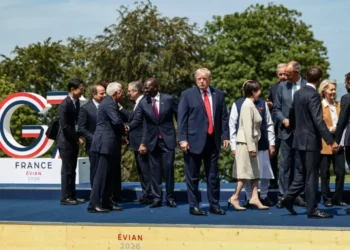
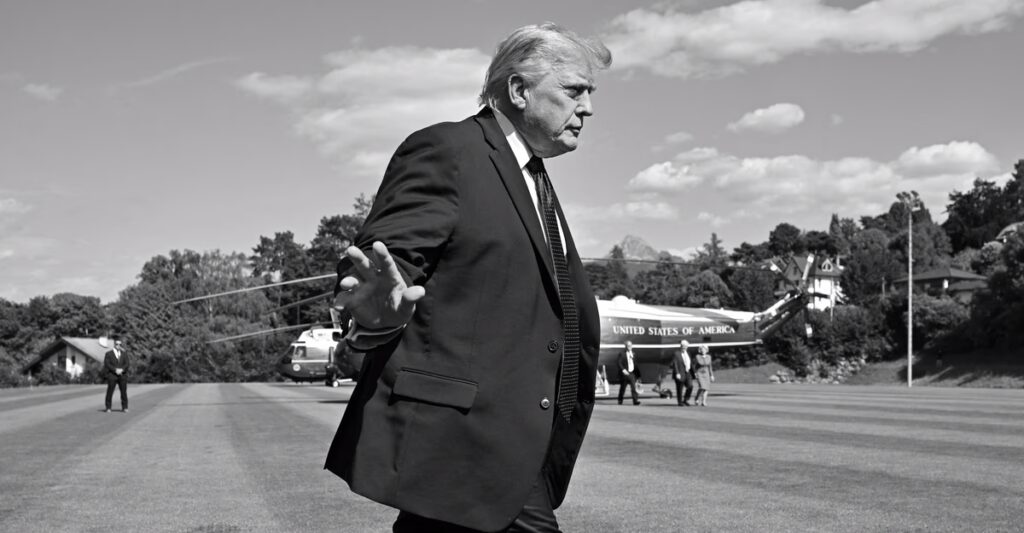
Donald Trump arrived in France yesterday for this morning’s G7 summit and promptly confirmed America’s capitulation to Iran. Instead of merely repeating the outlines of what looks to be a terrible peace deal, however, Trump made a series of statements so bizarre, even by his usual standards, that they raise the question of whether the president still understands the words that come out of his own mouth.
The president began with a classic Trumpian move, daring his listeners to forget today what they knew yesterday. Just this winter, Trump had promised the Iranian people that the tyrants who ruled them would be gone. But now? “I never cared about regime change,” he told reporters, waving away his failure to achieve a primary strategic goal by denying that it had ever been a goal at all.
Things got a little weirder, however, when he described the Iranians who have stepped in to replace the regime leaders killed in U.S. strikes: “We’re dealing with people that I think are very rational people. And they were nice to deal with.”
“They were strong people, smart people,” he added. And then he dropped this remarkable claim: “They’re not radicalized, and they’re, you know, looking to help their country.”
This definitely not-radicalized group that Trump seems to like includes the new supreme leader, Mojtaba Khamenei (whose father, wife, and son were killed by U.S. strikes), and the still-standing Islamic Revolutionary Guard Corps, all of whom have shown no compunction about lashing out in any direction during Trump’s “cease-fire,” the make-believe pause in the war during which no one actually ceased firing.
Trump’s description of the current regime in Tehran as a bunch of swell guys was brewed in a heavy-duty vat of wishful thinking. It’s an extreme version of Trump’s tendency, when he’s been outplayed by powerful enemies, to describe his opponents as basically reasonable people. (He has done the same over the years with dictators and autocrats in North Korea, Russia, and China, among other countries.) This is his way of assuring the public that he did not get taken to the cleaners—because, of course, his affable partners would never do that.
Trump fared no better talking about the Iranian nuclear program. Iran’s stockpile of highly enriched uranium exists largely because Trump unilaterally called off U.S. participation in the Joint Comprehensive Plan of Action, the 2015 agreement that was meant to prevent Iran from enriching uranium beyond minimal levels for civilian uses. After the U.S. and Israeli attacks last year, and yet more pounding during Operation Epic Fury, that uranium remains underground, either hidden in storage or buried beneath tons of rubble; some of it can likely be recovered and enriched for military uses. Trump has said, repeatedly, that Iran must hand it over.
Until today.
“I call it the nuclear dust, their enriched material, right?” Trump said. (Why he calls it this remains a mystery.) Does America still insist on its removal from Iran? Well, maybe.
“The whole mountain has collapsed on top. We have cameras on it,” Trump said. “You could make the case ‘Why are you even bothering?’ ’cause it’s not really valuable. It’s, you know, it’s probably half a million dollars’ worth. It’s not very valuable stuff, but I think psychologically we wanna get it.”
The United States and Israel ostensibly went to war with Iran last summer over the prospect of the Tehran regime developing a bomb, and that same threat has supposedly been at the center of America’s largest military operation in decades—but now the highly enriched uranium isn’t very valuable? The president wants it for “psychological” reasons? (This is reminiscent of his comment that America should seize Greenland because it was “psychologically” important to him.) Does the commander in chief understand what he’s saying? More important, will Iran keep tons of highly enriched uranium under this new deal or not?
“The biggest thing,” Trump said today, is that “Iran will not have a nuclear weapon.” That’s fine, except that it didn’t have one before, either, and now it has an even greater incentive to get one. But nuclear issues are very complex and technical, so let’s move on to Trump’s comments about something less complicated: Middle Eastern politics.
Once again, the president seemed unable to comprehend either the situation or his own words. No one outside of the Trump administration has yet seen the final memorandum of understanding that Trump and the Iranians have signed, least of all, according to some reports, the Israelis. If the outlines of the deal are in line with the administration’s own talking points, it’s bound to cause serious agita in Jerusalem: The terms reportedly require a cessation of Israeli hostilities with Hezbollah in Lebanon, a tricky condition considering that Israel was not a party to the negotiations. This is probably why Prime Minister Benjamin Netanyahu announcedyesterday that Israel would maintain its presence in Gaza, Lebanon, and Syria for “as long as necessary.”
Trump, in other words, is trying to deal away Israel’s right to defend itself, treating it less as a sovereign country and more as a kind of 51st U.S. state run by an annoying governor who needs to get with the program. But what if Iran’s proxy Hezbollah attacks Israel? According to the president, the Israelis need to calm down, and he minimized Hezbollah as “a little pinprick out there that constantly rears its head.”
Besides, Trump has an answer for the problem of Hezbollah: Outsource its elimination to the Syrian leader Ahmed al-Sharaa. Trump said that he suggested to Israel to “let Syria take care of Hezbollah, ’cause to be honest with you, I think they do a better job of doing it.”
It’s true that Hayat Tahrir al-Sham, the organization now in power in Syria, has plenty of experience fighting against Hezbollah. But Syria, a regime still trying to get its legs under it, is not going to march next door and pacify Lebanon—especially not with Israel occupying parts of Syria.
Trump has never shown very much concern about the conduct of Israeli military operations anywhere (including the war in Gaza, which he viewed primarily as a public-relations problem). But now that he needs to rein in Jerusalem at Tehran’s behest, he has taken the position that the Israelis are causing too much damage in Lebanon. And in a stunning reminder that alliances for Trump are only expedients, he pivoted to praising al-Sharaa and criticizing Israel, saying that if Israel “can’t do the job without killing everyone else, he’ll do the job.”
This kind of flip-flop illustrates Trump’s view of global politics: States are just a bunch of playing cards that he can rearrange at will, which makes watching him talk about foreign policy this way like watching someone cheating at solitaire. Even now, after many years as president, he is constantly frustrated to find out how little leverage he has when other nations refuse to abandon their own interests and do as he commands.
Trump’s comments about the Middle East may not make any sense, but one thing that has emerged in 4K clarity is that the only world leader who got pantsed worse than Trump in all of this was Netanyahu. No one should pity Israel’s prime minister: He brought this situation upon himself and his nation. Netanyahu, along with the Iran-war hawks in the United States, somehow thought that he could be smart or flattering or persuasive enough to avoid the inevitable burn that comes from trusting Donald Trump. Netanyahu refused to see that Trump, when it comes to self-interest, is as predictable as a sunrise: When something he’s involved with goes bad, he walks away and lets others suffer the chaos he’s created.
In the past, Trump has tried to conjure new circumstances by speaking them aloud and attempting to wish them into existence. His tired garble in France, however, is something different. It suggests that Trump, more than ever, is unable to fathom what’s happening in the world around him and has been reduced to turning all of his previous statements upside down: A regime that was once the epitome of evil is now a reasonable partner; nuclear material that once represented an existential threat to America might now sit in Iran forever; Syria and Iran and Israel and Lebanon will now do things that they would never do, just because he wants them to.
None of this makes any sense, except as desperate rationalizations from a man who cannot face facts and admit defeat. Trump has always had a tenuous relationship with the truth, but evidence is mounting that on the most important questions of war and peace, the president of the United States seems to be losing his grip on reality itself.
Related:
Here are four new stories from The Atlantic:
- The cult of delayed gratification is a lie.
- Why July 4 turned into a Trump rally
- The betrayal of the Iranian people
Today’s News
- Five people were charged after the FBI stopped an alleged plan to attack the Ultimate Fighting Championship event at the White House on Sunday, according to the Department of Justice.
- The Trump administration announced that several core functions of two major agencies in the Department of Education, the Office of Special Education and Rehabilitative Services and the Office for Civil Rights, will be moved to the Department of Health and Human Services and the Department of Justice, respectively.
- The Department of Justice released charges against 15 people in Minneapolis who allegedly conspired “to impede or injure federal officers” during the federal immigration-enforcement crackdown in the state earlier this year.
More From The Atlantic
- The butterfly longevity diet
- Oil prices might not go back to normal anytime soon.
- Assume you will be hacked, Matteo Wong writes.
- The White House is ratcheting up its war against Anthropic.
Evening Read

There’s a Name for the People Who Drain You
By Olga Khazan
One of the most repeated truisms in social-science research is: “The No. 1 best thing for your well-being is your relationships.” Despite using this line myself many times, I’ve nevertheless questioned its universality. Who hasn’t nodded along in recognition while listening to a story about a nightmare roommate, or had a narcissistic relative who makes everything about himself? The Subreddit r/FriendshipAdvice would be a ghost town if everyone’s relationships were truly enhancing their quality of life.
An emerging body of research validates my sense that surely not all social ties are beneficial. Relationships with people who are draining, critical, or otherwise difficult can compromise our mental and physical health. Shira Offer, a sociologist at Bar-Ilan University, in Israel, who has studied these so-called negative social ties, told me, “For a long time, social scientists have focused on the positive aspects of relationships. And finally, we’re also seriously dealing with the negative aspects.”
Researchers have even come up with a term for the people who wear us down: hasslers.
Culture Break
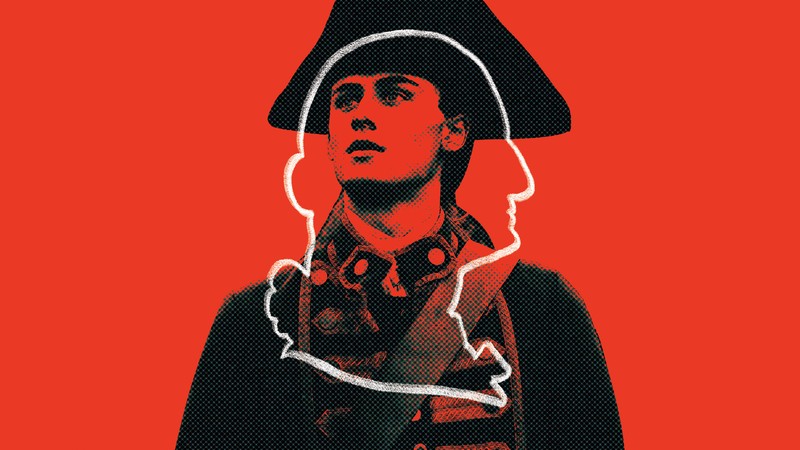
Get ready. Young Washington, a new biopic in theaters July 3, is a pre–Revolutionary War movie about George Washington that says something interesting about America’s national identity, James Parker writes.
Look closer. Frederic Church, a painter known for his massive, immersive landscapes, had a career that coincided with a paradigm shift in visual art—a change in not just what pictures mean but how that meaning is conveyed, Susan Tallman argues.
Stephanie Bai contributed to this newsletter.
When you buy a book using a link in this newsletter, we receive a commission. Thank you for supporting The Atlantic.
The post Trump Does Not Understand What He’s Saying About the Middle East appeared first on The Atlantic.