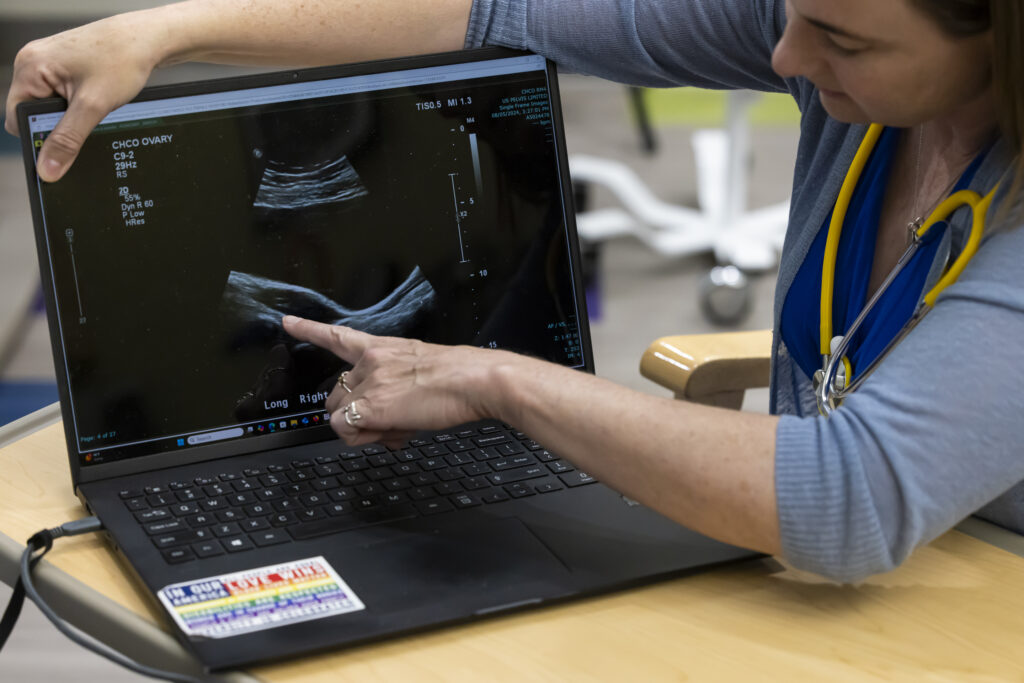
Imagine a condition that affects 170 million people worldwide, yet an estimated 70 percent don’t know they have it. Even those who are diagnosed are often told their symptoms are limited to one organ system, when in fact many are affected.
This is the case for polycystic ovary syndrome. Despite its prevalence — occurring in as much as 1 in 7 reproductive-age women — it remains vastly misunderstood by patients and clinicians.
A global effort to rename the condition has finally succeeded after decades of advocacy. Now, it will be known as polyendocrine metabolic ovarian syndrome, or PMOS. That more accurately reflects the biology behind the condition and will help women obtain more timely and appropriate treatment.
This is not the first name change for the condition, which was previously known as Stein-Leventhal syndrome after the gynecologists who first described it. That changed to PCOS in the 1990s but was always a misnomer.
Doctors used the term “polycystic” because early studies noted that some patients with the illness had a higher-than-normal number of ovarian follicles, the small fluid-filled sacs that contain developing eggs. But these are not cysts at all, and the term led many patients to believe they had abnormal growths in their ovaries and perpetuated the misconception that cysts were required for diagnosis.
The word “ovary” is also problematic because it suggests that the disorder originates in the ovaries. In fact, researchers have known for decades that it is fundamentally an endocrine disorder. Although many affected patients experience symptoms involving the reproductive system, such as irregular periods and infertility, the underlying hormonal disruptions affect the entire body.
Scientists have known since at least the 1980s that many patients with the condition do not respond normally to insulin and must produce more of it. Those elevated insulin levels can stimulate the ovaries to produce excess testosterone and other androgens, contributing to symptoms such as acne and excess body hair. Insulin resistance is also linked to metabolic syndrome, which explains why these patients have increased risks of diabetes, obesity, heart disease and fatty liver disease. More recently, researchers have found that hormonal disruptions may also contribute to depression, anxiety and other mental health conditions.
“We needed to change the name,” explained Helena Teede, a professor and women’s health researcher at Monash University who led the effort. “But the most important thing is that we are completely reclassifying the condition.”
Such a reframing will help patients better understand their diagnosis and why treatments such as birth control pills and certain diabetes medications are often recommended to target underlying hormonal and metabolic disturbances. It also places greater emphasis on reducing long-term health risks through weight management, which for some patients may include lifestyle changes as well as GLP-1 weight-loss drugs.
Moreover, patients need screening for future complications. A Lancet paper outlining the rationale for the name change explained that women with PMOS have higher risks of heart attack and stroke, and other research have found increased rates of endometrial cancer. During pregnancy, they are also at greater risk of complications such as gestational diabetes and preterm birth.
“They should be screened for other metabolic issues from their adolescence onwards and also screened in pregnancy, which currently they are not,” Teede said.
Beyond improvements in clinical care, reclassifying the disorder could also open up new funding sources and increase insurance coverage for screening and treatment of broader health risks. And instead of being limited to gynecology training, it could be taught across multiple disciplines so that all future physicians can recognize and treat it.
Although the case for the name change was strong, Teede told me that the process was long and arduous. In 2012, a National Institutes of Health consensus panel concluded that PCOS was a misleading name but stopped short of formalizing a replacement. Teede said she also led previous efforts to tackle the issue. “We all agreed in principle the name needed to change, but nobody could agree on what it should be,” she said.
This time, organizers recognized the process was just as important as the name itself. They first secured a mandate for change by surveying thousands of patients. They then convened 56 medical societies and patient organizations from around the world to decide on the new name and implement the change. That includes updating medical curriculums as well as changing how the condition is classified in medical records, billing systems and clinical guidelines.
Teede hopes clinicians and advocates will learn from their experience as they evaluate other conditions that need renaming. This is especially important in women’s health, where conditions affecting the whole body have historically been defined by only one aspect, leading to yawning gaps in research, diagnosis and care.
PMOS is a reminder that women’s health cannot be reduced to reproduction. The challenge now is ensuring that medicine moves beyond outdated assumptions that have long treated it that way.
Do you have questions about PMOS? Please write to me, and I will feature reader comments in a future edition of The Checkup newsletter.
The post This common women’s health issue is getting a new name. It’s about time. appeared first on Washington Post.