There’s a new entrant in the race to build a general-purpose robot, and it does not look human.
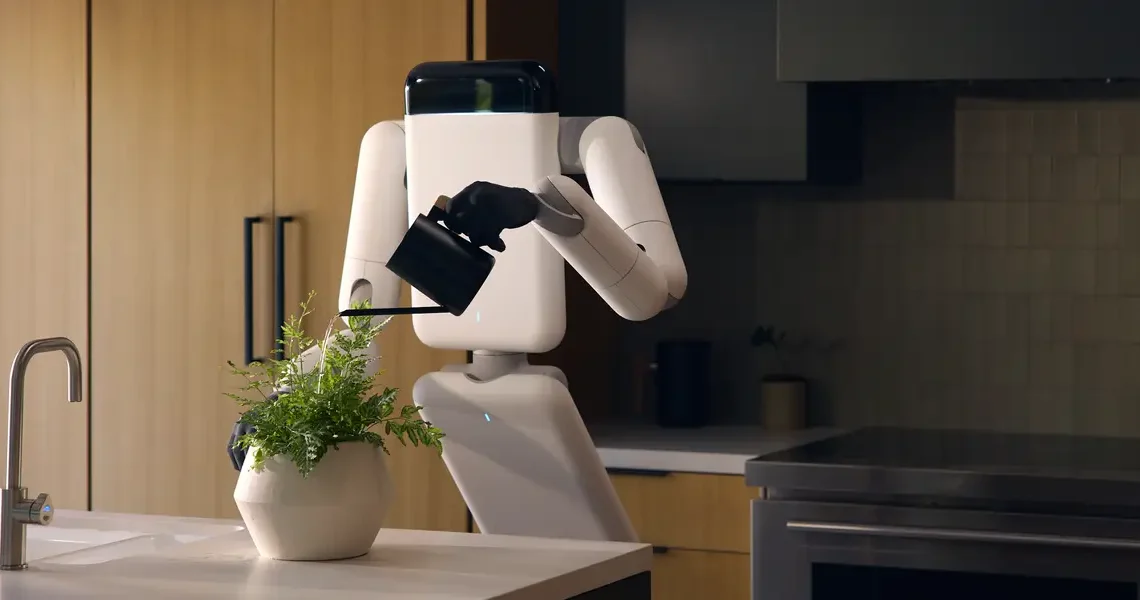
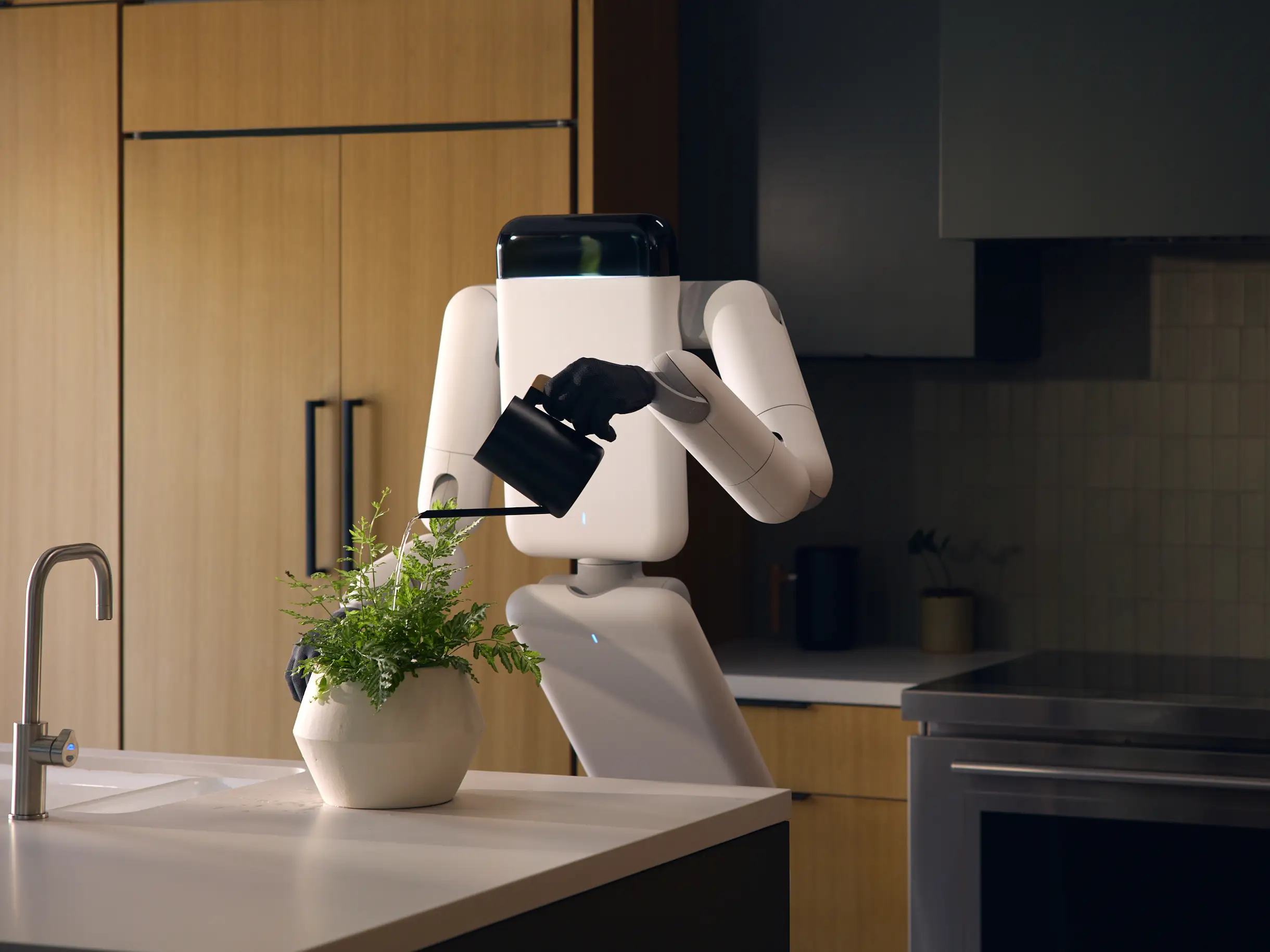
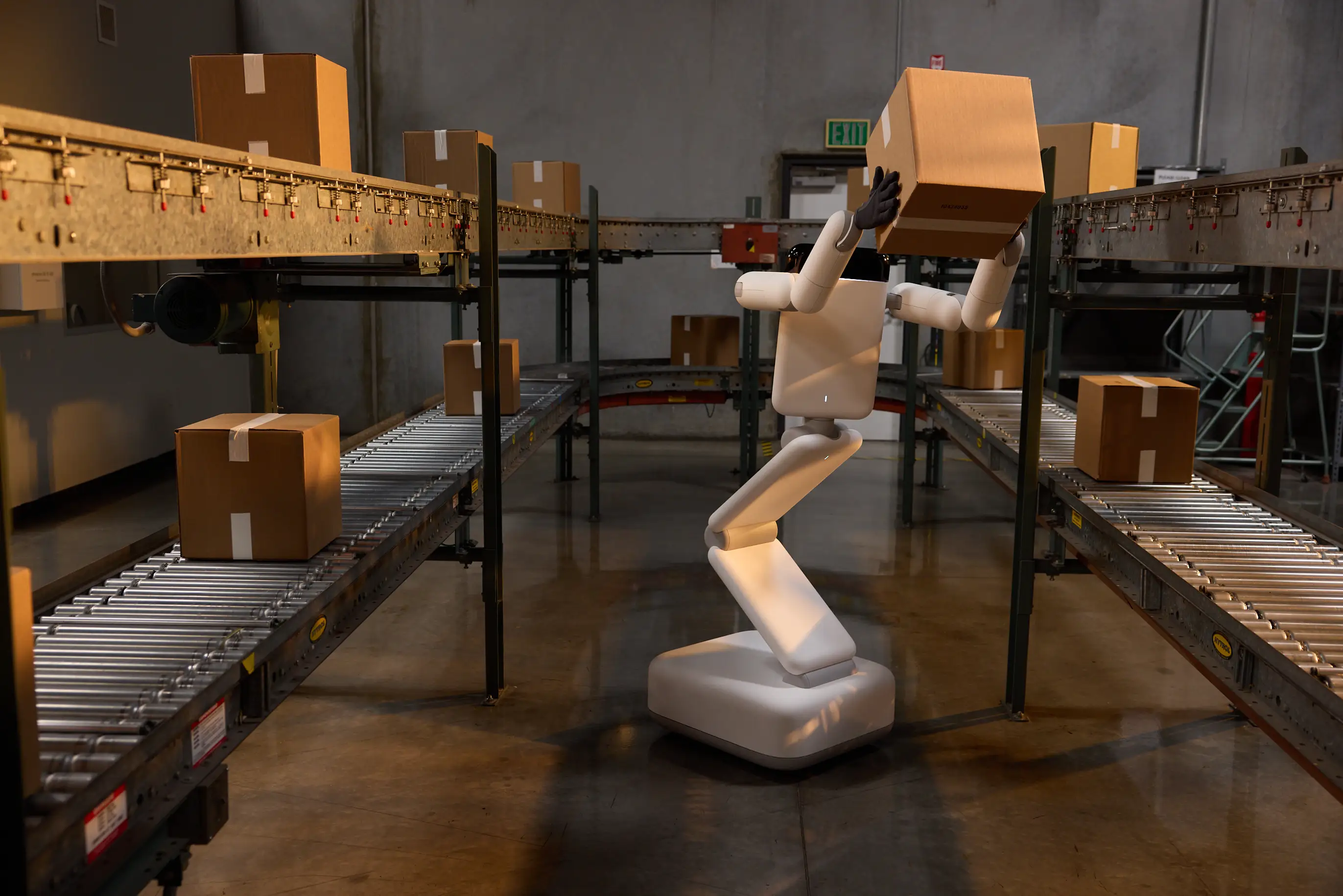
Robotics startup Genesis AI unveiled Eno on Tuesday, a wheeled robot with two arms, but instead of legs, it has a three-panel body that can adjust its height and fold down when not in use.
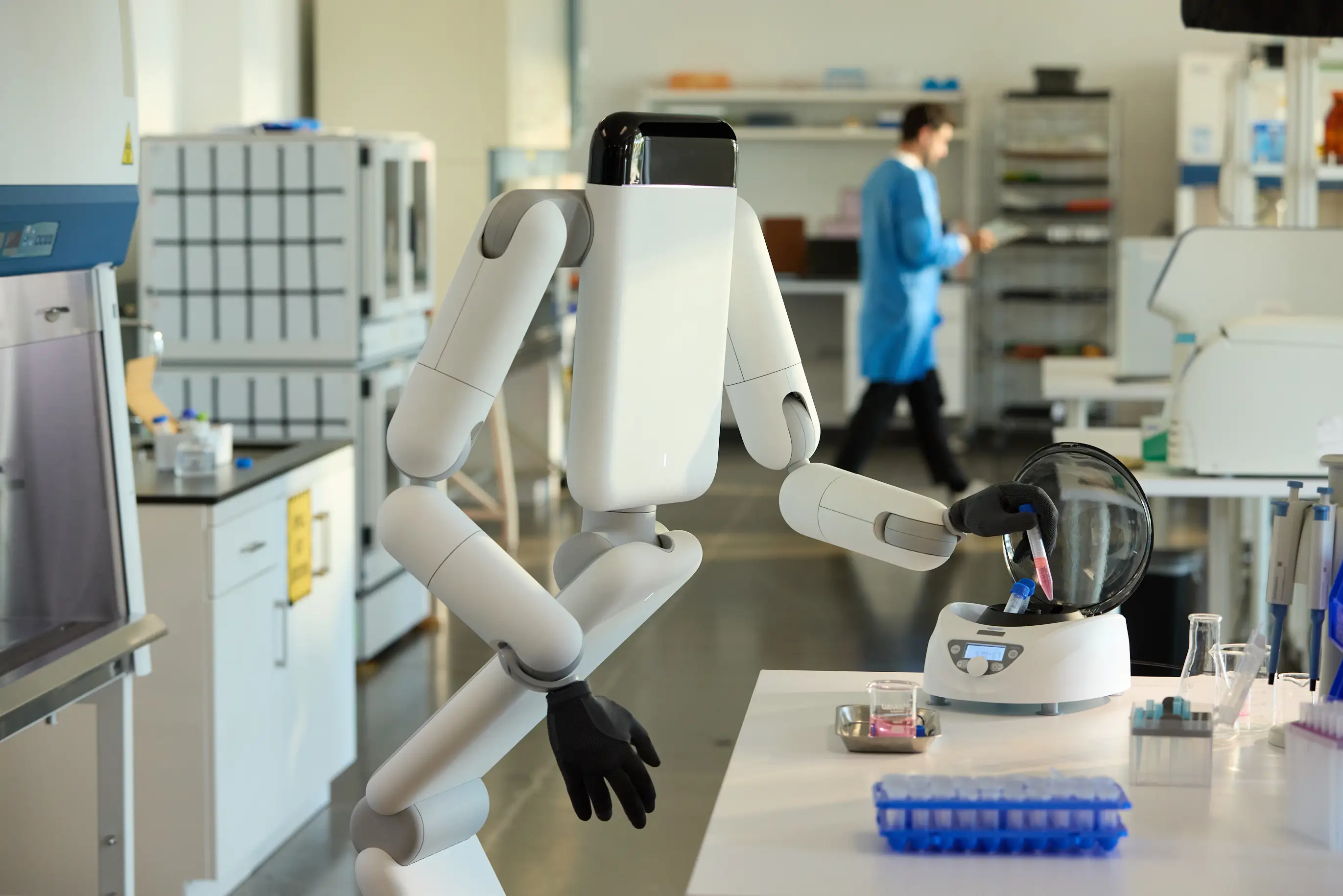
Zhou Xian, CEO of Genesis AI, said the company plans to produce dozens of robots by the end of the year and begin small-scale customer deployments. Eno will first roll out with manufacturers, logistics companies, and laboratories. Service industry customers will follow, and the robot will eventually be available for homes.
Genesis AI is entering the market as robotics becomes one of the hottest areas in AI. Investors and founders are betting that the next wave of AI will move beyond chatbots and into machines that can work in the physical world.
“We do foresee within the next ten years, there’s going to be a billion general-purpose robots deployed everywhere, and we want to be one of the dominant players,” said Xian, who cofounded the company in early 2025 after finishing his Ph.D. at Carnegie Mellon.
Genesis AI has raised $105 million from VC firm Eclipse, Khosla Ventures, and former Google CEO Eric Schmidt. Unlike model-focused firms such as Physical Intelligence and Skild, the startup is developing the entire stack: the AI model, training gloves, simulator, and the robot itself. Xian said Eno, which is “one” spelled backward, is the first of several robots Genesis AI plans to build.
Business Insider got an early look at Eno. At Genesis AI’s R&D facility in the Bay Area, Xian led me to what looked like an ordinary wall in the office. It turned out to have a concealed door into a hidden room. Inside the dimly lit space, a robot bust used for training sat beside a shape covered in black cloth. On the opposite wall, a slide showed photos of existing general-purpose robots, including Agility’s Digit, Figure’s humanoid robot, 1X’s Neo, and Enchanted Tools’ Mirokaï.
“When I look at this, I feel troubled,” Xian said. “In five years, if we have millions of these robots deployed around us, I don’t think humans will like that version of the future.”
While many of Genesis AI’s competitors are designing robots that look human, Xian said Genesis AI wanted to build a more timeless machine that could fit into different settings, from data centers to home kitchens. Users can customize Eno’s color depending on the setting it’s in.
The robot still has some human-like features because Genesis AI trains its models on human data, so its basic structure needs to resemble the human body. But the company intentionally removed legs because wheels are more energy efficient, stable, and safe. It also skipped a head to avoid building a “dystopian-looking robot” or giving Eno traits that would encourage people to treat it like a person.
“We didn’t want it to be too cute,” he said. “We have a design philosophy called calm intelligence. The robot does the job, and then it disappears.”
Eno runs on GENE, Genesis AI’s robotics model, which acts as the robot’s brain. The company says the model is meant to help Eno understand a goal, break it into steps, and adapt when conditions change, rather than simply repeat a preprogrammed task. Genesis AI is also offering a version of Eno with a screen on its torso that can show what the robot is thinking and doing.
“It’s a window into the robot’s mind,” Xian said. “When you talk to Claude Code, it tells you step-by-step what it’s thinking, and the same thing should happen with a robot.”
The data problem
Most general-purpose robotics companies are still in development or early deployment. Elon Musk has described Optimus as central to Tesla’s future, but the company has shared few details about the humanoid robot. Figure AI, most recently valued at $39 billion, signed a deal last month with Catalyst Brands, the parent company of JCPenney, Aéropostale, and Brooks Brothers, to deploy humanoids in its distribution and logistics network. Hyundai-owned Boston Dynamics plans to deploy Atlas in factories in 2028, while Agility Robotics’ Digit is already deployed with customers including Amazon and logistics company GXO.
Other companies are heading into homes. Sunday Robotics is preparing to launch Memo, a wheeled robot that can do dishes, fold laundry, and pull an espresso shot, as part of a beta program this fall. 1X has said it plans to ship Neo to homes later this year and expects to produce more than 10,000 robots.
Xian said Genesis AI will begin deployments with industrial customers and hopes to reach homes in three to five years.
“The technology is not there yet to handle all the corner cases and interaction with kids,” he said. “There’s a lot of safety concerns and no rigorous industry standards.”
The progression from industrial settings to homes depends on one of the biggest challenges in robotics: data. Chatbots were trained on vast amounts of text and images from the internet. No comparable trove exists for training robots.
Last month, Genesis AI released videos showing its robots playing piano, cracking eggs, cooking, and handling wires. The demonstrations were meant to show that the company is getting closer to what it calls “human-level capability” in manipulation.
But there is still a long way to go. Genesis AI is building a wireless glove that tracks each finger, senses touch through the palm, and records a worker’s hand movements with a small camera. Skilled workers will wear the gloves on the job, giving Genesis AI high-quality data on how experts perform difficult physical tasks.
The company plans to manufacture and deploy thousands of gloves later this year with industrial partners.
Genesis AI is moving away from teleoperation, where humans remotely control robots, because it does not believe the approach can generate enough data for general-purpose robots.
“When you look at someone who is spending $6,000 on teleoperation versus someone who is spending $300 [on gloves], Genesis AI’s approach is significantly, orders of magnitude more scalable,” Eclipse partner Charly Mwangi, who co-led Genesis AI’s seed round with Khosla Ventures, told Business Insider.
Read the original article on Business Insider
The post This AI robot startup thinks humanoids are overrated appeared first on Business Insider.