Stephen Gutowski is the founder of the Reload.
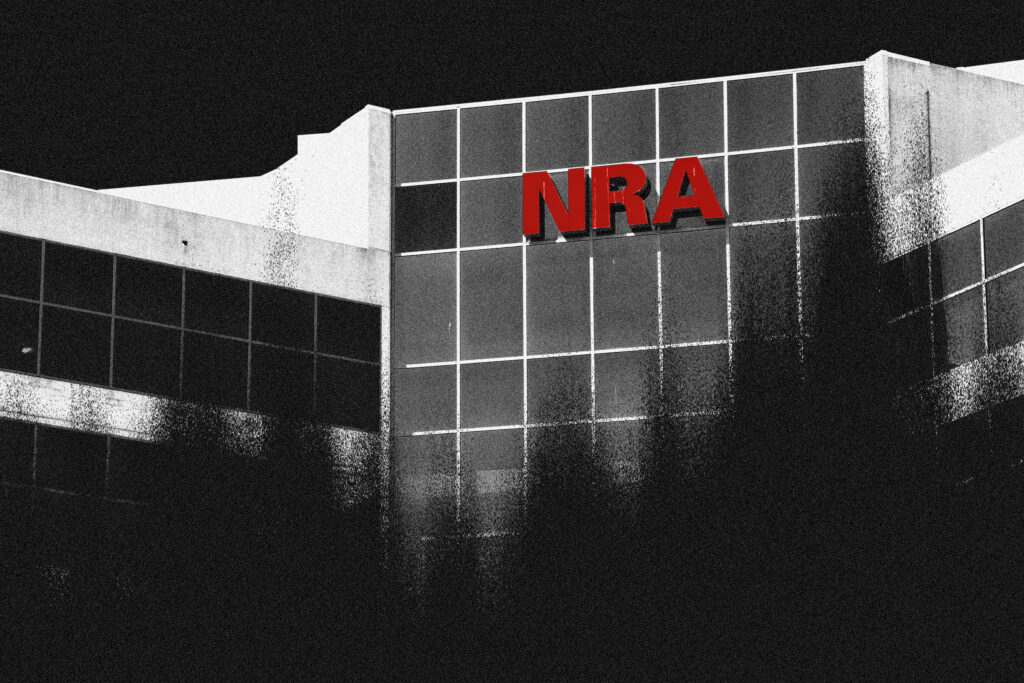
The National Rifle Association has survived for more than 150 years. The polarizing organization trudged through a corruption trial and attempted to file for bankruptcy in the past decade. But the fallout from a recent lawsuit risks emptying the NRA’s coffers and presents an existential threat to the gun rights group.
The internal fight that erupted over then-NRA chief executive Wayne LaPierre’s misuse of funds for extravagant personal expenses, such as private helicopter and jet flights and bespoke suits, has threatened to take down the organization since 2018. In February 2024, a New York jury found LaPierre liable for more than $5 million in misappropriated funds, and NRA members abandoned the group in droves. The NRA also went through a failed bankruptcy and shrank to about half its size. Leadership splintered, with reformers gaining control of the core membership organization and LaPierre allies reportedly capturing the NRA Foundation, the organization’s charitable arm.
Though the NRA’s corruption trial concluded in 2024 and a New York appeals court rejected LaPierre’s appeal this month, a legal fight over the foundation is heating up. The fallout from this case has the potential to drown the already floundering group.
That’s because the NRA Foundation is a key piece of the gun rights group’s structure. According to the NRA’s most recent annual report, the foundation houses nearly 70 percent of the NRA’s net assets and cash.
As with many advocacy groups that have a large national footprint, the NRA is actually made up of several affiliated legal entities. Anyone who has bought an NRA membership has joined the 501(c)(4), while most people who have given tax-deductible donations to further things like gun training or the “Eddie Eagle” child-safety program are likely to have contributed to the NRA Foundation.
The membership organization has long been the power center, directing most of its safety training, shooting competitions and political advocacy operations. The foundation was a financial backstop for many of the membership organization’s nonpolitical operations, though it also gave to other pro-gun groups.
In January, the membership organization filed suit against the foundation after it said the foundation’s leadership moved to cut off NRA oversight and restrict grants to the organization. The NRA pointed a finger at LaPierre loyalists and claimed its own foundation is now acting against its interests, and the court should either undo the foundation’s recent bylaw changes or force it to stop using the NRA name.
“The Foundation’s beef with the NRA is personal,” the complaint reads. “It is driven by a clique of former NRA leaders who are bitter that their faction lost control of the NRA’s Board following a series of scandals that led to a loss of member confidence, and the rise of a competing movement to reform the NRA that ultimately gained control of the NRA Board.”
The foundation has repeatedly denied those allegations. Instead, it has claimed the moves are designed to protect the group’s independence. Foundation leaders pointed to a 2024 settlement with D.C.’s attorney general over claims it had previously made questionable financial arrangements with the membership organization during LaPierre’s tenure. The settlement also noted the foundation hasn’t completely cut off grants to NRA programs consistent with its charitable mission.
Earlier this month, the foundation abandoned the fight to keep the NRA name and announced it would instead rebrand as the 1791 Foundation to position itself “to operate with greater independence.”
“This is not a change in mission,” Tom King, president of the 1791 Foundation’s board of trustees, said in a statement. “It is a renewed commitment to fulfilling that mission as effectively and responsibly as possible.”
King was a longtime NRA board member who often defended LaPierre during the corruption scandal, before losing his seat in a wave election that put the reformers in charge. Along with many other LaPierre defenders, King has argued that the case against LaPierre and the NRA was politically motivated and illegitimate. New York Attorney General Letitia James (D) campaigned in 2018 on investigating the NRA and labeled the group a “terrorist organization.” By contrast, courts have consistently concluded there was enough proof of corruption by LaPierre to justify finding him liable for misappropriating funds — including in the former NRA chief executive’s most recent appeal. James failed to dissolve the NRA, but the latest development in the internal fight may finish the job.
Despite nearly a decade of scandal, declining membership and cratering finances, the NRA remains by far the largest gun group in America. It may be half the size it was eight years ago, but it still tops $360 million in assets, $190 million in revenue and $42 million in cash. Other gun rights groups have grown during the NRA’s decline, but none have managed to exceed $15 million in annual revenue.
But the foundation is a massive store of assets with few liabilities. Its net assets totaled $176 million in 2025. Wiping them off the NRA’s balance sheet would leave the organization with just $14 million in cash on hand. That could force the NRA to further cut services to its members and degrade its operations, especially the popular gun safety or education programs the foundation largely funded.
That could accelerate the NRA’s membership decline and force more and more cuts until there’s simply nothing left.
The schism could be equally devastating for the foundation itself. Without the NRA name and fundraising operation, the foundation’s ability to fundraise on its own is unclear. The possibility that the foundation could spin up a competitor to the NRA, and even bring back LaPierre in a leadership role, is real, and could make it even harder for both sides to survive.
That’s why the legal battle to undo the spin-off attempt is likely existential. If the crack-up continues, the NRA will be closer to the cliff than ever before.
The post The NRA is almost out of bullets appeared first on Washington Post.