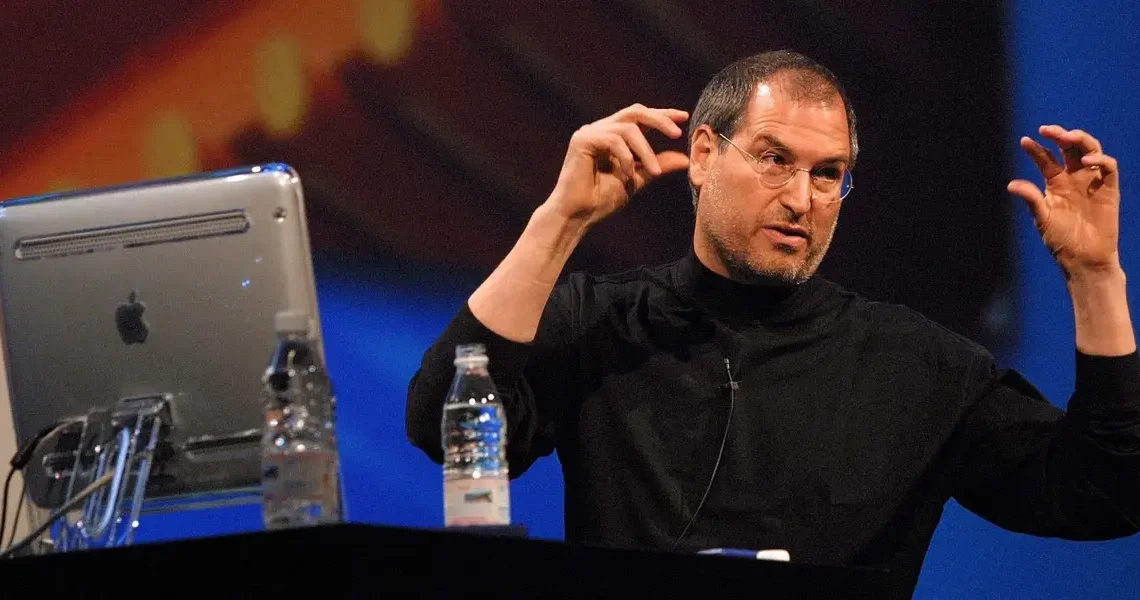
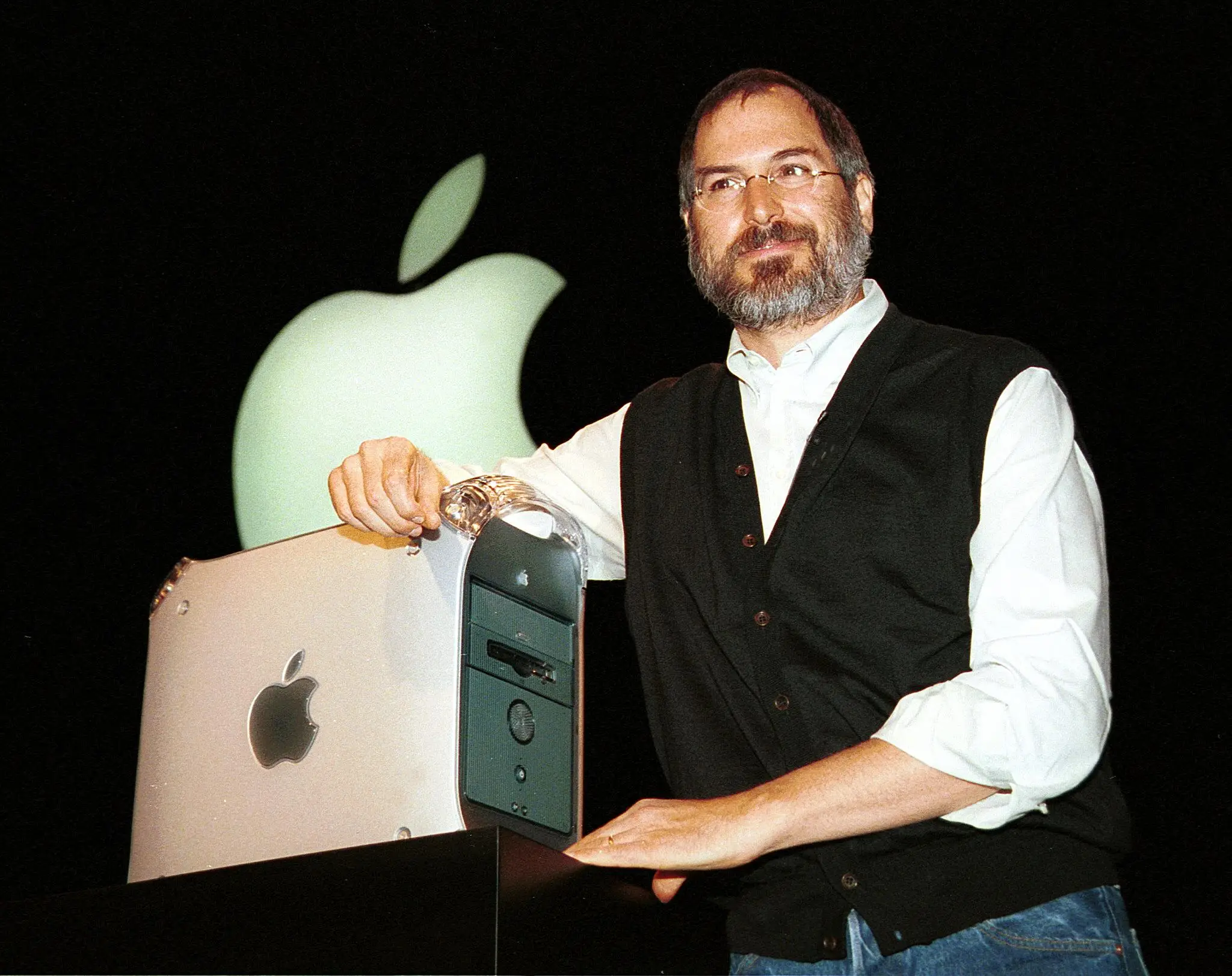
Sometimes, the US government’s concerns that a powerful new tech product could fall into the wrong hands can be a marketing opportunity. Just look at Steve Jobs and Apple back in 1999.
In August of that year, Jobs, who was then Apple’s interim-CEO, took the stage to unveil the company’s new desktop “supercomputer”: the Power Mac G4. Jobs called it “the most powerful personal computer ever brought to market,” CBS News reported at the time.
The only issue was all that computing power technically meant that the device crossed the threshold that would trigger US export controls limiting which countries Apple could ship the computer to.
Jobs highlighted the distinction in the wake of the computer’s unveiling.
“The Power Mac G4 is so fast that it is classified as a supercomputer by the US government, and we are prohibited from exporting it to over 50 nations worldwide,” Jobs said the Apple Expo, CNN reported in September 1999.
The restriction Apple faced at the time stemmed from a Government Accountability Office report that called 50 countries a concern “for military or proliferation reasons,” with seven others facing near-embargo restrictions on computer exports.
Jobs told the audience that the new Macs, capable of operating at up to one gigaflop, could not be exported to the nations in that report, including China, Iraq, and North Korea.
Now — as Anthropic faces US export restrictions for its Fable 5 and Mythos 5 AI models — Jobs’ computer unveiling and subsequent marketing have renewed relevance.
Behind the scenes, Apple pushed to ease the US restrictions (and was eventually successful). In public, Apple leaned into the US government’s concerns in an ad campaign recently resurfaced by Tom’s Hardware.
Fable isn’t the first.
In 1999 the department of defense blocked exports of the PowerMac G4 for crossing the 1 gigaflop threshold.
Steve Jobs turned it into an ad. pic.twitter.com/yHoyJjpSke— Justin Schroeder (@jpschroeder) June 13, 2026
The commercial showed tanks surrounding the Power Mac G4 as a voiceover declares that, “For the first time in history, a personal computer has been classified as a weapon by the US government.”
The commercial ended with a jab at Intel-powered PCs: “Well, they’re harmless,” the voiceover said.
Apple’s 1999 run-in with export controls was an earlier example of Washington treating cutting-edge commercial technology as a national-security concern.
Today, there’s an AI-flavored twist that’s landed Anthropic into very real hot water. Over the weekend, the Trump administration ordered Anthropic to restrict foreign nationals’ access to its Fable 5 and Mythos 5 models, citing national security concerns related to a possible jailbreak to get around safeguards.
Anthropic disabled the AI models for all customers while it works to clear up what it described as a misunderstanding from the White House. The company has disputed the severity of the issue that was originally flagged to the White House.
Anthropic has long championed its focus on AI safety, and earlier this year said its Mythos Preview model was too powerful to release widely due to its hacking abilities, instead offering early access to selected partners to help bolster cybersecurity safeguards.
The severity of the White House’s Anthropic order means it’s not exactly an apples-to-apples comparison (pun intended) to Steve Jobs and Apple in 1999. After all, Apple was still able to launch and sell its Power Mac G4s.
But if Anthropic manages to smooth over its latest clash with the US government and re-launch its Fable 5 and Mythos models, Jobs and Apple demonstrated decades ago that having a product so powerful it raises government export concerns doesn’t have to be all bad.
Read the original article on Business Insider
The post Apple once faced a US export control on its ‘supercomputer.’ Steve Jobs turned it into a marketing moment. appeared first on Business Insider.