President Trump recently issued yet another indefensible pardon, this time to Stephen Buyer, a former congressman from Indiana who was convicted of insider trading in 2023.
A disturbingly large number of well-connected and wealthy felons have been pardoned by Mr. Trump, in some cases after they reportedly spent hundreds of thousands or even millions of dollars to support Mr. Trump’s re-election efforts or to attend a dinner at Mar-a-Lago or to pay politically connected lobbyists or associates of Mr. Trump to help get clemency. All of which fosters the impression that the president’s friends and donors are above the law.
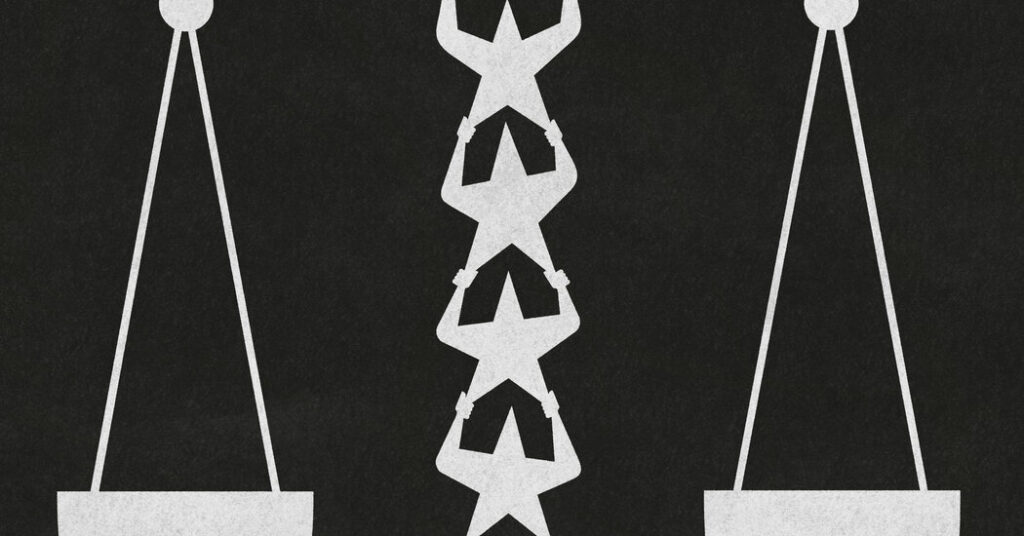
Because the exercise of the president’s pardon power is highly discretionary, it might seem that nothing can be done. But there is a solution hiding in plain sight: The states can and should collectively work to hold people responsible when the federal government will not — by prosecuting those who were wrongfully pardoned.
People routinely forget that the states, as separate sovereigns, have the power to bring cases that the federal government has abandoned or declines to prosecute, so long as the conduct in question violates state law. And state prosecutions are unaffected by federal pardons.
The case of Joseph Schwartz offers something of a model. In 2024, Mr. Schwartz pleaded guilty to federal tax crimes related to a fraudulent nursing home empire — and was then pardoned by Mr. Trump the following year. But Mr. Schwartz had also been convicted under Arkansas law for Medicaid fraud and tax evasion. After Mr. Trump’s pardon, the Arkansas attorney general, Tim Griffin, a Republican, successfully forced Mr. Schwartz to serve some of his remaining time in state prison. Arkansas is also requiring Mr. Schwartz to pay more than $1 million in restitution and fees.
Mr. Schwartz’s business did damage in other states as well. He should be held to account there too.
Or consider Trevor Milton, who in 2022 was convicted of willfully defrauding investors in the electric truck company Nikola and in 2025 received a pardon from Mr. Trump. Mr. Milton’s company was based in Arizona; Arizona, with help from other states, could prosecute him under state laws for fraud.
Such efforts should be nonpartisan and centered on a simple message: The rule of law still exists, even if the president himself is lawless. Mr. Trump’s defenders might point out that he is not the first president to abuse the pardon power and surely will not be the last. That’s correct — think of President Bill Clinton’s indefensible pardon of the fugitive financier Marc Rich in 2001. It’s even more reason for states to develop a backup system.
To be sure, states have fewer law enforcement resources than the federal government, and they sometimes may lack jurisdiction. But by acting collectively, as they have learned to do in antitrust and other areas of law, they can step in when the federal government succumbs to corruption or cronyism.
This year, a coalition of 33 states and the District of Columbia won a monopolization case against Live Nation after the federal government, which had been leading the case, abruptly and inexplicably agreed to a feckless settlement. Similarly, after the Trump administration effectively incapacitated the Consumer Financial Protection Bureau, California signaled that it would pick up the slack, appointing the former federal regulator Rohit Chopra to run a new consumer protection agency in the state.
The prospect of state cooperation in criminal prosecution is more novel. But working in the states’ favor is the otherwise unfortunate exodus of legal talent from the federal government — more than 10,000 lawyers since last year. It is not hard to imagine states undertaking joint investigations of the worst of Mr. Trump’s pardoned offenders with the help of highly capable former federal prosecutors.
Working together, especially across parties, offers another advantage to the states: It helps insulate individual attorneys general from any political pressure or attacks from the president and his allies. There is strength in numbers.
In 2019, in anticipation of Mr. Trump’s corrupt pardons, New York enacted a statute creating a presidential-pardon exception to the state’s double jeopardy law, which otherwise prohibits prosecuting someone who already faced federal prosecution for the same crime. More states should pass laws that help prosecute those who have received unworthy presidential pardons — for example, by extending statutes of limitations in these cases.
Of course, some people who receive presidential pardons are deserving of clemency. Those people should not be prosecuted by the states, and in borderline cases, states should err on the side of caution. But too many of Mr. Trump’s pardons are not close calls; these are not remorseful people who have shown signs of reforming themselves after serving lengthy sentences, nor are these pardons necessary to restore political tranquillity (as President Gerald Ford’s pardon of Richard Nixon was widely thought to be).
Mr. Trump has not been subtle in the message he is sending: that the law is for other people. This is not only corrupt in individual cases; it also fosters corruption more broadly. Once word gets out that undeserving pardons can be bought or lobbied for, the law loses its deterrent effect.
The states have a duty to protect the rule of law when the federal government will not. It does take courage. But acting together, they can send a different message: You cannot weasel your way out of everything.
Tim Wu (@superwuster) is a law professor at Columbia and a contributing Opinion writer. He served on the National Economic Council as a special assistant to the president for competition and tech policy from 2021 to 2023. He is the author of “The Age of Extraction: How Tech Platforms Conquered the Economy and Threaten Our Future Prosperity.”
The Times is committed to publishing a diversity of letters to the editor. We’d like to hear what you think about this or any of our articles. Here are some tips. And here’s our email: [email protected].
Follow the New York Times Opinion section on Facebook, Instagram, TikTok, Bluesky, WhatsApp and Threads.
The post There’s Actually Something We Can Do About Trump’s Pardons appeared first on New York Times.