For years, federal health officials have warned about the risks associated with a supplement derived from the leaves of kratom trees that adherents say can kill pain or boost energy. Sold in gas stations across America, kratom has been linked to liver toxicity, seizures and thousands of deaths.
Powerful figures close to President Trump, including Homeland Security Secretary Markwayne Mullin, pushed to downplay those concerns.
Mr. Mullin, until recently a Republican senator from Oklahoma, played a key role in a sprawling influence campaign spearheaded by the kratom industry that courted Health Secretary Robert F. Kennedy Jr. and Vice President JD Vance, among others in the Trump administration, an investigation by The New York Times found.
Only when he was nominated by Mr. Trump in March to lead the Homeland Security Department did it become clear that Mr. Mullin had a financial connection to the supplement. In a disclosure statement, he listed an investment worth as much as $1 million in a kratom company, Botanic Tonics, that could benefit from the changes he has sought.
The company’s founder, Jerry W. Ross — who had been an energy executive in Mr. Mullin’s home state before pleading guilty to a financial crime — is a leading player in the influence campaign that was devised to benefit kratom at the expense of its rivals in the marketplace.
The kratom campaign underscores how corporations in the growing wellness industry can gain traction in Mr. Trump’s government by casting risky products as aligned with the administration’s Make America Healthy Again, or MAHA, agenda championed by Mr. Kennedy, who has sometimes prioritized unproven remedies over science.
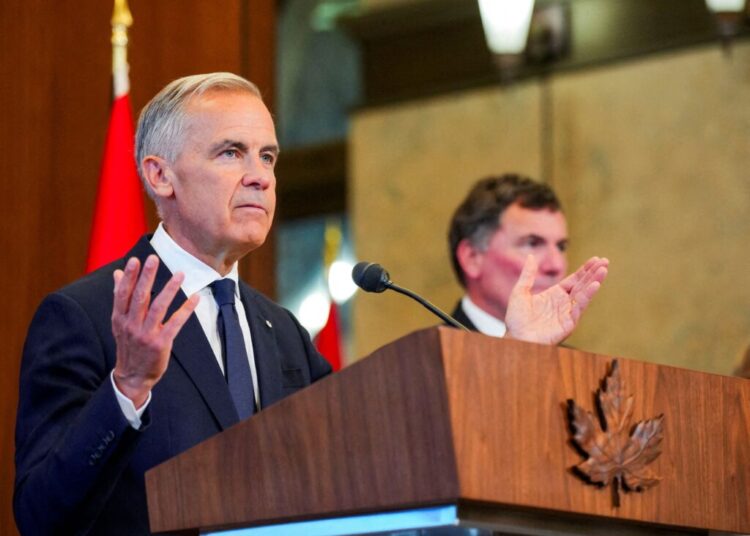
In July, while still a senator, Mr. Mullin showed up at a Food and Drug Administration news conference and endorsed proposed federal restrictions on more powerful synthetic supplements that compete with kratom for shelf space. In explaining his position, Mr. Mullin pointed to a history of addiction in his family, though health experts say kratom products have also been shown to be addictive.
His disclosure form did not indicate when he acquired his stake in Botanic Tonics, but he has not filed paperwork to indicate that he has divested from it.
The Homeland Security Department did not answer questions about the investment. In a statement, the department said that Mr. Mullin “follows all ethics and conflict of interest standards and has not lobbied for any individual or company.”
The restrictions that Mr. Mullin supported on the synthetic products would have been a boon to Mr. Ross’s company and others in the kratom industry, which market their supplements as safer and more natural. The kratom companies used donations and lobbyists to push for the crackdown.
“It’s not pay to play. It’s pay to have conversations. It’s pay to have a chance at the table,” Ryan Niddel, the chief executive of Diversified Botanics, another kratom company involved in the effort, said in an interview with The Times. “And anybody that considers any of the lobbying work or any of the governmental work that goes on being different than that, I think has their head buried in the sand at this point.
“I mean, that is the world that we live in.”
The Times’s investigation — drawn from campaign finance data, lobbying disclosures, court filings, private correspondence and dozens of interviews — found the following:
-
Mr. Ross ramped up his donations to Mr. Kennedy’s defunct presidential campaign after Mr. Trump chose him to be health secretary. Mr. Ross privately boasted that he was “working on a plan for Bobby.”
-
The F.D.A. in 2025 deleted links on its kratom webpage that detailed a then-pending legal case against Mr. Ross’s company, Botanic Tonics, after his allies pushed for the change.
-
Botanic Tonics had been sued by the federal government for illegally selling kratom products that were not proven safe, which the company disputed. But in December, the Justice Department suddenly moved to drop the case — which the company celebrated as a sign of the federal government’s receptiveness to kratom.
-
Mr. Kennedy, as health secretary, called the governor of Ohio to try to head off a state ban on kratom in the fall of 2025. Months later, Botanic Tonics donated $1 million to a political committee associated with Mr. Kennedy.
-
Mr. Ross, joined by the influential lobbyist Ches McDowell, used donations to secure a private audience with Mr. Vance to lobby him about the benefits of kratom and to urge the ban on the synthetic products.
Kush Desai, a spokesman for the White House, suggested the administration was not swayed by the influence campaign, even though Mr. Trump recently made comments about needing to address the matter.
“The only guiding factor behind the Trump administration’s health care policymaking is gold standard science,” he said in a statement. The administration, he added, was working “to get this critical matter correct and ensure the health and safety of Americans.”
The Health and Human Services Department and Mr. Kennedy did not respond to requests for comment, nor did Mr. Ross.
The administration’s receptiveness to kratom comes as Mr. Trump has also expressed a willingness to loosen rules covering other drugs backed by influence campaigns, including cannabis and psychedelics. The permissive posture stands in contrast to Mr. Trump’s baseless skepticism about highly regulated and widely used medications like Tylenol and vaccines.
“It’s looking like we have a coin-operated drug policy that basically responds to whoever will give money,” said Kevin Sabet, who worked on drug policy under Republican and Democratic presidents. “And it threatens public health and safety because it’s going around the scientific process in favor of donors and influencers.”
A Rising Scourge
Long used medicinally in Southeast Asia, the leaves of the kratom tree contain a compound called mitragynine that interacts with the brain’s opioid receptors in a manner said to produce mild pain relief and — depending on its preparation — either sedation or energy and focus.
Kratom started gaining popularity in the United States in the early 2010s as the opioid addiction epidemic raged. With doctors tightening access to powerful prescription painkillers like OxyContin, users spread the word that kratom — initially sold as a bitter-tasting powder — could produce a similar effect.
Devotees promoted it as a way to kick opioid addiction or to replace alcohol. But as reports of negative effects started rolling in, the government tried to take action.
Under the Obama administration, the Drug Enforcement Administration described kratom as “a drug and chemical of concern,” and moved to greatly restrict access by classifying it as a Schedule I drug. Doing so would have defined it as having no medicinal value, making it illegal to sell.
The proposal was withdrawn weeks later amid backlash from the fledgling industry, kratom users and members of Congress.
Another proposal to restrict access during the first Trump administration was also pulled after lobbying by an industry trade group, over the objection of Scott Gottlieb, the F.D.A. commissioner at the time.
Kratom took off, appearing on the shelves of convenience stores and vape shops as tablets, drinks and gummies. The products varied in strength, and the concentration of active ingredients on the labels was not always accurate. They could be purchased in many states without age verification.
From 2020 through 2024, kratom was found in the system of more than 5,200 people who died of drug overdoses, according to data from the Centers for Disease Control and Prevention based on death certificates and other official reports. Though often found in combination with other drugs, one study determined that those using kratom carried a sixfold increase in the risk of overdose death.
Wyatt Wheeler was a 27-year-old pursuing a master’s degree in business at Texas Christian University. He died of an overdose in October 2022, six weeks after he started taking a kratom extract, according to his mother, Patti Wheeler.
An autopsy report issued by a county medical examiner in Fort Worth found that the cause of the overdose was the “combined toxic effects” of the active compound in kratom, along with a prescribed antidepressant and antihistamines.
Ms. Wheeler has become an anti-kratom activist, producing a documentary about the drug’s harms and pushing for state and federal restrictions.
She says the industry has used its influence to thwart safeguards.
If the federal government had effectively banned kratom earlier, Ms. Wheeler said in an interview, many overdose deaths could have been avoided.
“My son would be alive,” she said.
Feel Free
It was in this profitable but unregulated landscape that Mr. Ross set out to take the kratom industry mainstream.
It was a fresh start for Mr. Ross after his stint in federal prison.
Formerly a prominent energy executive in Oklahoma named Jerry D. Cash, he was a self-admitted heavy drinker who was charged on three occasions with driving under the influence from 2001 through 2008.
In 2010, he pleaded guilty to a federal charge related to concealing his diversion of $10 million from oil and gas companies he ran.
He was released from prison in the fall of 2013, after serving less than three years of a nine-year sentence. He was ordered to participate in substance abuse treatment and to abstain from intoxicants including alcohol, which he has said he previously used to cope with social anxiety.
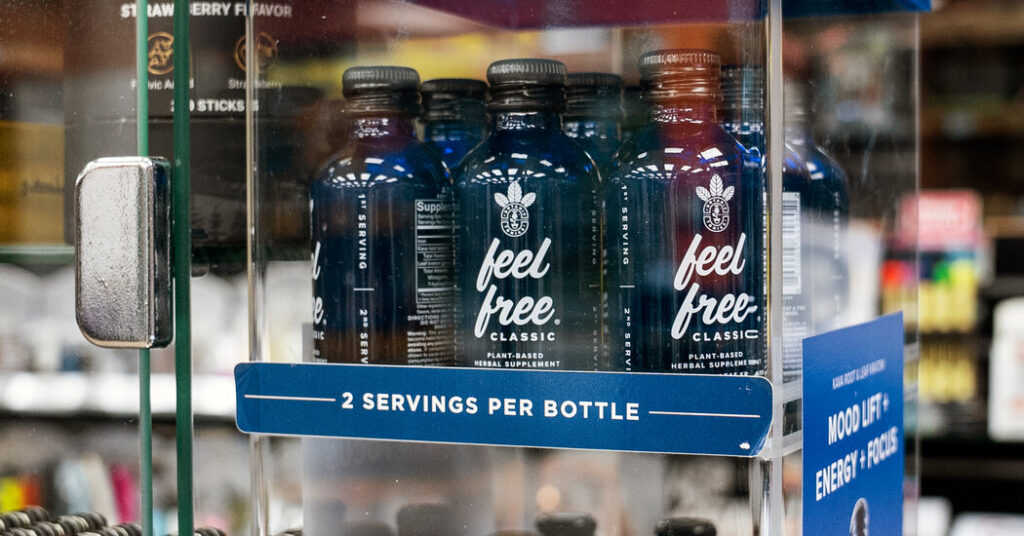
Eventually, he said later on a podcast, he began to experiment with other “social lubricants” — both legal and illegal — in search of a healthier alternative. By the time he created Botanic Tonics in 2020 with a base of operations in the Tulsa area, he had changed his name. The company began selling a roughly shot-size beverage called Feel Free containing kratom and another supplement called kava.
Business boomed as Feel Free and competing products were embraced by skeptics of mainstream medicine who would become the core of the MAHA movement.
Feel Free came to be sold at more than 24,000 retailers. Through a company, Mr. Ross would eventually pay more than $30 million for an 11,000-square-foot home in Malibu overlooking the Pacific Ocean.
Still, serious challenges loomed for the kratom business.
In late 2023 a more powerful synthetic product emerged, featuring elevated levels of a psychoactive compound that is also found in lower levels in natural kratom. It is called 7-OH, or 7-hydroxymitragynine.
Government and legal scrutiny of both kratom and 7-OH began mounting. While some states passed industry-endorsed laws regulating kratom, others enacted restrictions or even banned it and 7-OH entirely.
Users also began suing.
A class-action lawsuit filed in 2023 asserted that Botanic Tonics targeted recovering alcoholics with advertising casting Feel Free as a healthy, safe and sober alternative. The suit claimed that, to the contrary, the tonic had the “potential to be highly addictive.”
The lead plaintiff in the suit was a recovering alcoholic in California. He spent $3,000 a month on Feel Free, according to the suit. (They retail for about $10 a bottle.) It said he “could no longer function without Feel Free and suffered severe withdrawal symptoms when he attempted to stop,” eventually turning back to alcohol “in an effort to cope with the worsening symptoms of his Feel Free addiction.”
To settle the class action, Mr. Ross last year signed an agreement under which Botanic Tonics would pay $8.75 million and include warnings on Feel Free labels about how kratom “can become habit-forming and cause serious adverse health effects.”
The F.D.A. would eventually receive more than 965 kratom-related reports of harm, including 264 resulting in death. The self-reported claims detailed instances of vomiting, paranoia and drug withdrawal.
In 2023, F.D.A. inspectors visited Botanic Tonics’ warehouse in suburban Tulsa. They reported their findings to the Justice Department, which went to court to seize 250,000 bottles of Feel Free and other kratom supplements.
In court filings, prosecutors cited “serious safety concerns,” saying kratom had been linked to “addiction” and “liver toxicity.” They accused Botanic Tonics of engaging in illegal interstate trade of an unapproved substance.
On a podcast released in 2024, Mr. Ross indicated that he planned a campaign to differentiate between natural kratom and other versions.
“We’re going to be coming out of the chute asking for separate regulation for whole leaf kratom,” he said.
Calling a Governor
Mr. Trump’s election — and his appointment of Mr. Kennedy as health secretary days later — created an ideal environment for such a campaign.
To others working on the issue, Mr. Ross highlighted his relationship with Mr. Kennedy, indicating that he was planning to enlist the incoming secretary in efforts to influence the administration, according to one associate.
In the weeks around the inauguration, Mr. Ross donated nearly $162,000 to Mr. Kennedy’s defunct presidential campaign, exceeding by many times his total federal political giving to that point.
Mr. Ross was not the only kratom entrepreneur jockeying for position.
A newly formed group called Botanicals for Better Health and Wellness, which is linked to a rival kratom supplement maker, retained the firm of Jeff Miller, a leading Trump fund-raiser, to lobby the F.D.A., Congress and the White House. The new group donated $50,000 to the incoming president’s inaugural committee, for which Mr. Miller was finance chairman.
Mr. Miller and the group did not respond to requests for comment.
Shortly after the inauguration, another rival firm, Diversified Botanics, which produces the popular kratom brand MIT45, hired a lobbyist who worked on Mr. Trump’s first presidential campaign and transition. The lobbyist helped arrange meetings with members of Congress and officials from the F.D.A. and the health department for Diversified’s chief executive, Mr. Niddel.
Mr. Niddel said he wanted to explain to government officials how his company’s products differed from those featuring 7-OH.
“We got to get in front of this,” Mr. Niddel said he recalled thinking. “It’s going to destroy the kratom industry, because an uninformed consumer or an uninformed legislator — it’s all being lumped in together.”
Vince Sanders, the founder and president of CBD American Shaman, which helped popularize 7-OH, said the kratom industry is targeting businesses like his for financial reasons, not because of moral or safety concerns.
“We’ve devastated the industry,” Mr. Sanders said. “When 7-OH came in and people tried it, they learned very quickly that it was vastly superior. I mean, this is like going from a horse and buggy to an automobile.”
Mr. Sanders’s company received a letter from the F.D.A. last year accusing it of illegally marketing 7-OH products. It recently agreed to halt sales in Missouri to settle a lawsuit brought by the state attorney general. The suit accused the company of peddling “deadly opioids,” though the company did not acknowledge liability.
Mr. Sanders believes that kratom lobbying has “demonized” his side of the industry.
Mr. Mullin used his connections in Mr. Trump’s orbit to help the other side.
Starting while he was in the Senate and continuing after he became homeland security secretary, Mr. Mullin urged officials in the health department to remove language from the F.D.A. website warning of kratom’s harms, according to four people familiar with his efforts who were not authorized to discuss them.
For the kratom industry, the warnings on the F.D.A. website were no small concern. Industry representatives said they feared state officials were taking their cues from the agency in deciding whether to pursue bans or other restrictions.
Records obtained by The Times show that the F.D.A. was asked to remove from its kratom webpage links that took readers to enforcement actions against Mr. Ross’s and other kratom companies.
By the end of 2025, the F.D.A. had removed the links.
Other requested changes were not enacted, including one asking the agency to remove a warning “not to use kratom because of the risk of serious adverse events, including liver toxicity, seizures and substance use disorder.”
Emily Hilliard, a health department spokeswoman, declined to comment on the website changes, but said the agency is “solely focused on serving the American people, not advancing industry interests.”
Mr. Mullin went public with his involvement in July.
In a notable move, he joined Mr. Kennedy and Dr. Marty Makary, then the F.D.A. commissioner, at a news briefing to announce that the agency was moving to effectively end the legal sale of synthetic 7-OH products.
In a comment that was later highlighted by a group backed by Mr. Ross, Dr. Makary said at the briefing that “we’re not targeting the kratom leaf.”
Mr. Mullin added that companies selling 7-OH were exploiting a loophole in F.D.A. regulations to cause harm to consumers.
“It’s legal, but it’s an addiction that’s ruining lives,” he said.
Mr. Kennedy referred to his own past struggles with addiction at the news briefing. Weeks later, he pushed Ohio to adopt a policy that would have protected the kratom industry.
Gov. Mike DeWine, a Republican, had announced a plan in August to designate all kratom products as illegal drugs. But Mr. Kennedy asked Mr. DeWine to crack down instead only on synthetic 7-OH — and not kratom leaf products. The health secretary had hoped to see states align with the federal effort, said Dan Tierney, a spokesman for the governor.
Mr. DeWine soon dropped the push to ban kratom and moved forward with an emergency prohibition against 7-OH. After a review, though, his office said it was moving ahead with a broader kratom crackdown.
‘People Are Asking for It’
Having powerful people in Mr. Trump’s cabinet vouching for kratom was not enough for Mr. Ross. He actively joined the effort to kneecap his competition.
His allies launched an opaque company to position natural kratom products as safer than synthetic alternatives.
They gave the company a name, Stop Gas Station Heroin, that made synthetics sound especially dangerous. The company hired the firm of the lobbyist Mr. McDowell, who had been introduced to Mr. Ross as a well-connected Trump insider.
Mr. McDowell, who is close to the president’s elder sons, also employs a nephew of Mr. Kennedy and the son of Mr. Trump’s 2024 campaign co-manager Chris LaCivita.
Stop Gas Station Heroin has paid Mr. McDowell’s firm, Checkmate Government Relations, at least $600,000, according to lobbying records.
Mr. McDowell’s firm has pushed for tougher enforcement against the rival synthetic products in meetings with congressional offices and Mr. Kennedy’s health department.
All the while, Botanic Tonics had been awaiting a ruling on its own battle with the federal government.
In December, a federal judge denied the company’s motion to dismiss the F.D.A. lawsuit accusing it of unlawfully selling kratom.
Then, less than two weeks later, federal prosecutors moved to drop the case, as reported by The Kansas City Star. They told the judge that the seized supplements had expired and that the Trump administration had “determined it would not be a prudent use of government resources to sustain this action.”
In a statement praising the decision, the company said the dismissal “reflects a maturing regulatory landscape” in which federal agencies increasingly recognize the differences between natural kratom leaf and the synthetic products.
Justin A. Lollman, a lawyer for the company, told The Times in a statement that even during the lawsuit, the government “never sought to restrict Botanic Tonics’ continued manufacture and sale of Feel Free.” The company has sold more than 130 million servings of Feel Free, he added.
In February, after the dismissal, Mr. Ross donated a total of $443,000 to the Republican National Committee in connection with a fund-raising dinner headlined by Mr. Vance in New York.
Before the dinner, Mr. Ross, accompanied by Mr. McDowell, secured a private meeting with Mr. Vance. Mr. Ross used the access to promote the benefits of natural kratom and urge the Trump administration, and particularly the D.E.A., to clamp down on 7-OH, according to two people briefed on the meeting who were not authorized to discuss it.
Mr. McDowell’s firm did not respond to a request for comment.
Over the next two months, Botanic Tonics donated $1 million to MAHA PAC, which is associated with Mr. Kennedy. The money from Botanic Tonics accounted for about 44 percent of all the funds raised by the PAC between the beginning of last year and the end of April.
The PAC did not respond to a request for comment.
It is not clear whether the administration will approve the emergency ban of 7-OH that Mr. Ross and his allies have sought.
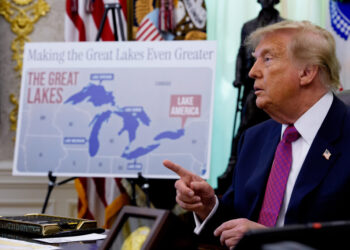
But during a briefing in the Oval Office about maternal health care last month, Mr. Trump made a stray comment indicating the issue had reached his desk, even as his administration was grappling with higher-profile priorities including a war with Iran.
“We’re looking very seriously at natural 7-OH and getting that approved,” Mr. Trump said.
The statement left even industry insiders divided on whether he was siding with natural kratom or synthetic 7-OH, or taking another position altogether.
Whatever his stance, Mr. Trump left the impression that he had heard from influential figures on the matter, adding that “we’re looking to see if we can do something there.
“A lot of people are asking for it.”
Georgia Gee and Kitty Bennett contributed research.
The post How an Addictive Gas Station Drug Found Allies in Trump’s Cabinet appeared first on New York Times.