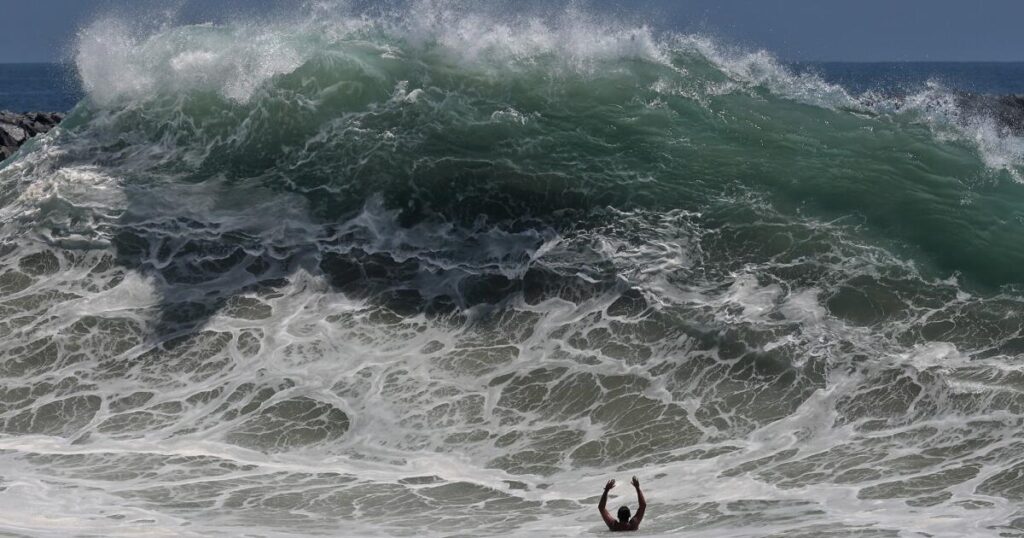
The risk of flooding and dangerous surf at California beaches will continue until Wednesday, weather officials said Sunday.
Waves are not expected to be as big as those that pounded the shore last week and led to the deaths of two people.
The National Weather Service said San Francisco recorded its highest-ever summer ocean water level late Saturday.
At 1.83 feet above normal high tide, the level was the highest recorded outside of those occurring from November to March, when winter storms cause surges, officials said. Water level records go back to 1898.
A coastal flood advisory remains in effect through Wednesday morning, the weather service said.
The highest tides will be in the evening, officials said.
Over the last week, the greatest threat of dangerous rip currents and sneaker waves has been on the beaches facing south or southwest, officials said.
The City of Newport Beach warned residents to prepare for a series of king tides, continuing through Tuesday.
City employees have been distributing sandbags to residents to help protect their property from flooding. Officials urged those going to the beach not to park in low-lying areas.
“Motorists are urged to drive slowly through flooded areas to avoid creating wakes that can worsen flooding and impact nearby properties,” the city said in a statement.
Last week’s ocean swell brought historic 20-foot waves to the Wedge, the Newport surf break at the tip of the Balboa Peninsula.
On Wednesday, rescuers attempted to savetwo women who were swept out to sea from a beach in Santa Cruz. One of the women died. The other was in critical condition, officials said Friday.
The body of missing 5-year-old Amada Mia Brown of San Bernardino was recovered in Laguna Beach on Thursday, two days after she vanished in high surf.
Officials urge beachgoers to stay off rocks and jetties at times of high surf and keep an eye on the ocean.
If caught in a rip current, don’t panic, officials advised. Swim along the shoreline, rather than directly back to the beach, until free of the current’s pull.
If needed, tread water and call for help.
The post Historic swells continue to batter California beaches. When will the surf die down? appeared first on Los Angeles Times.