This is an edition of the Books Briefing, our editors’ weekly guide to the best in books. Sign up for it here.
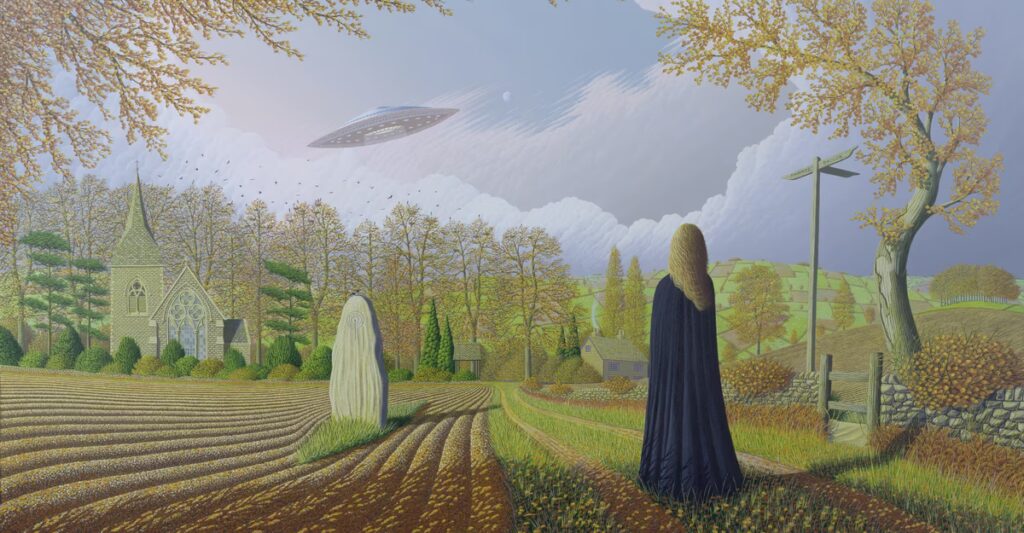
Among my friends and family, I am notorious for being a skeptic. I don’t believe in ghosts; I find all cryptozoological sightings unconvincing; I dismiss astrology out of hand. But (and this might surprise my inner circle) I am quite open to the possibility that some form of extraterrestrial life exists. I agree with what Alexandra Oliva wrote in The Atlantic this week: “Considering the sheer number of stars in the cosmos, and the possibly larger number of planets that revolve around them, the idea that humans are alone in the universe strikes me as unlikely. So, instead, I wonder: What is that life like, and will we ever encounter it?”
Oliva recommended six books in which the presence of aliens prompts readers to think more deeply about humanity. Do I believe that another planet’s life-forms would be anything like us—social, intelligent, self-aware? Well … that’s where my skepticism kicks back in. But I suppose I can’t rule it out, and imagining what another species might value prompts me to reconsider which traits make us fundamentally human and which ones might not be unique to us at all. Oliva’s list made me think of a book I read recently and adored. The Sparrow, by Mary Doria Russell, is nominally about an interstellar voyage to initiate first contact, but it’s actually about sex, love, God, and the problem of evil.
When The Sparrow begins, readers know this: Decades ago, human beings received a radio transmission from a civilization near the sun’s closest neighboring star system, Alpha Centauri. The Jesuit order of the Catholic Church sent a small mission to Rakhat, the planet that had sent the message, hoping to reach the beings who lived there. In 2060, a priest named Emilio Sandoz, the mission’s only survivor, finally makes it back to Earth—and his colleagues in the Society of Jesus desperately want to know what went wrong out there.
Sandoz is a traumatized, unwilling witness. He was the group’s linguist, charged with helping his crewmates communicate with the inhabitants of Rakhat. As a Puerto Rican Jesuit, one descended from both the island’s indigenous Taino people and Spanish conquistadors, he is aware of the role the Society of Jesus played in European colonization. He can’t help but see parallels with this new age of exploration, in which he is helping his order establish a foothold in a genuinely new world. Sandoz had believed that this mission was divinely ordained, but the mistakes he and his colleagues made, despite all their preparation and faith, doomed them in ways he is ashamed to discuss. The mystery of how the mission ended is the book’s driving force.
But much of the story takes place in the early 2010s and the ’20s, when the group the Jesuits will eventually send to space comes together through social ties and a dose of serendipity. This section, which features no extraterrestrials at all, is what I loved most about the novel: The beings these explorers plan to encounter are a device to bring out the characters’ most human qualities; the story focuses not on aliens but on the human ingenuity, expertise, and relationships that will be required to make any contact a success.
The people who go to Rakhat are not all Jesuits, nor are they all Christians. These characters—not only priests but a married couple and multiple young singles—talk, fairly openly, about sex and family; they consider what it means to truly love someone, and the different forms that love can take. At first, they’re united by a roving curiosity and hunger for knowledge; later, they are bound by a clarity of purpose. Knowing that only Sandoz will return from Rakhat is gutting. But seeing them prepare to go, while their targets are still hypothetical, is deeply moving. Their task requires them to access what is best, bravest, and most admirable about humanity—something any of us can believe in.
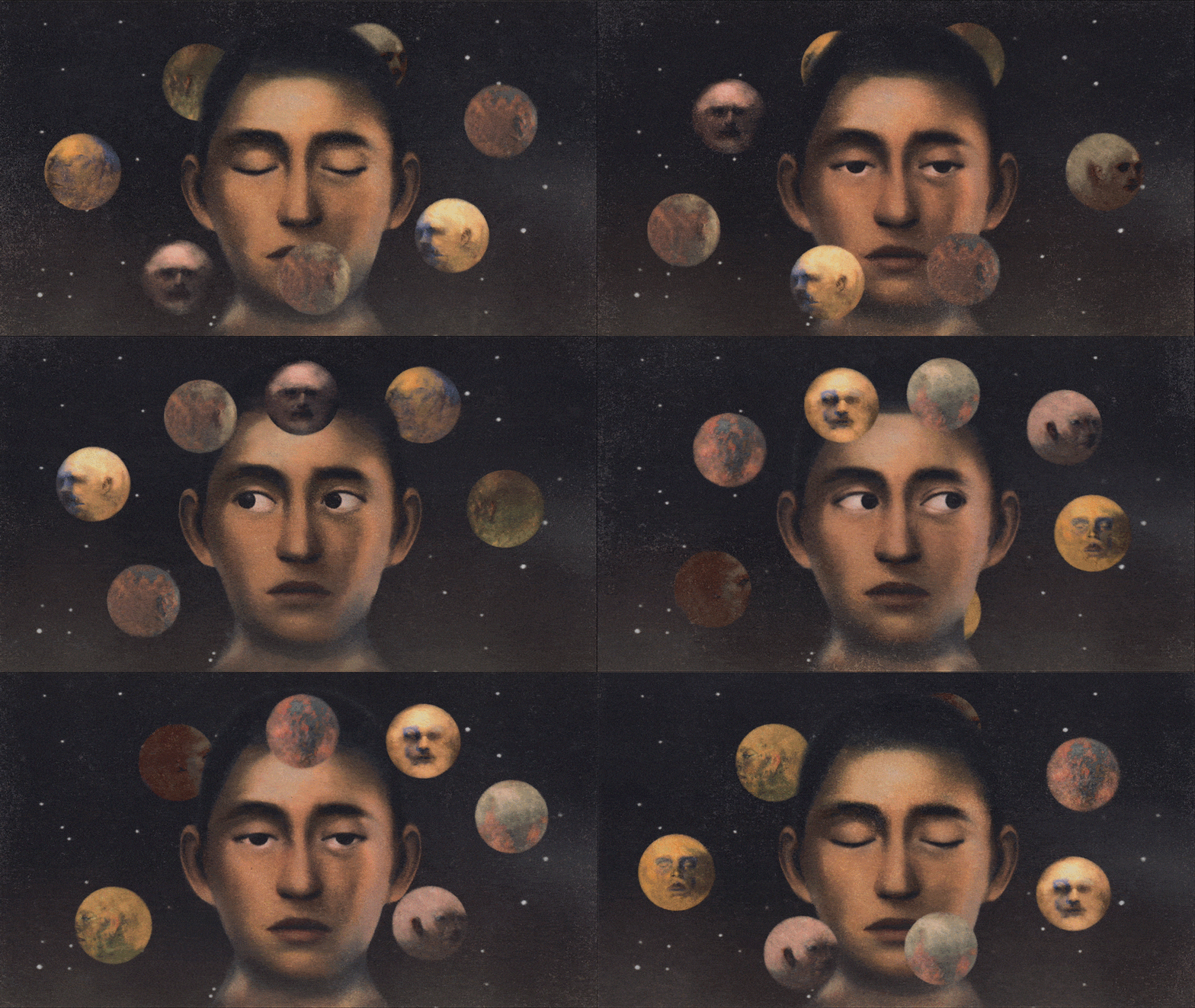
Six Surprisingly Human Stories About Aliens
By Alexandra Oliva
These stories about extraterrestrials all resonate here on Earth.
What to Read
American Diva: Extraordinary, Unruly, Fabulous, by Deborah Paredez
In pop-culture parlance, diva has lost most of its positive sheen (the Italian word originally meant “goddess”) and instead refers to a prima-donna type: a person who is too much of everything. While these traits can be off-putting, they are also, Paredez argues, a show of strength—an attribute that has not always been regarded kindly in women, especially women of color. The author, a self-proclaimed “diva devotee,” aims to return both the term and the artists labeled by it to their rightful renown in this combination of memoir, criticism, and music history. Household names such as Aretha Franklin and Tina Turner get their due, as well as others whose talent, determination, and, yes, fractiousness cement their place in the canon, including the otherworldly Grace Jones, the salsa queen Celia Cruz, and the triple threat Rita Moreno. Paredez reframes what might be pejoratively called diva behavior as, instead, the actions of women with the confidence to know that they matter. Readers will come away with a deeper understanding of artistic brilliance, even when its avatars may be difficult or messy. — Juliet Izon
From our list: What to read to really understand music
Out Next Week
 I Eat the Stars, by Sarah Wilson
Charity & Sylvia, by Tillie Walden
The Heart of Man, by Jón Kalman Stefánsson
Your Weekend Read
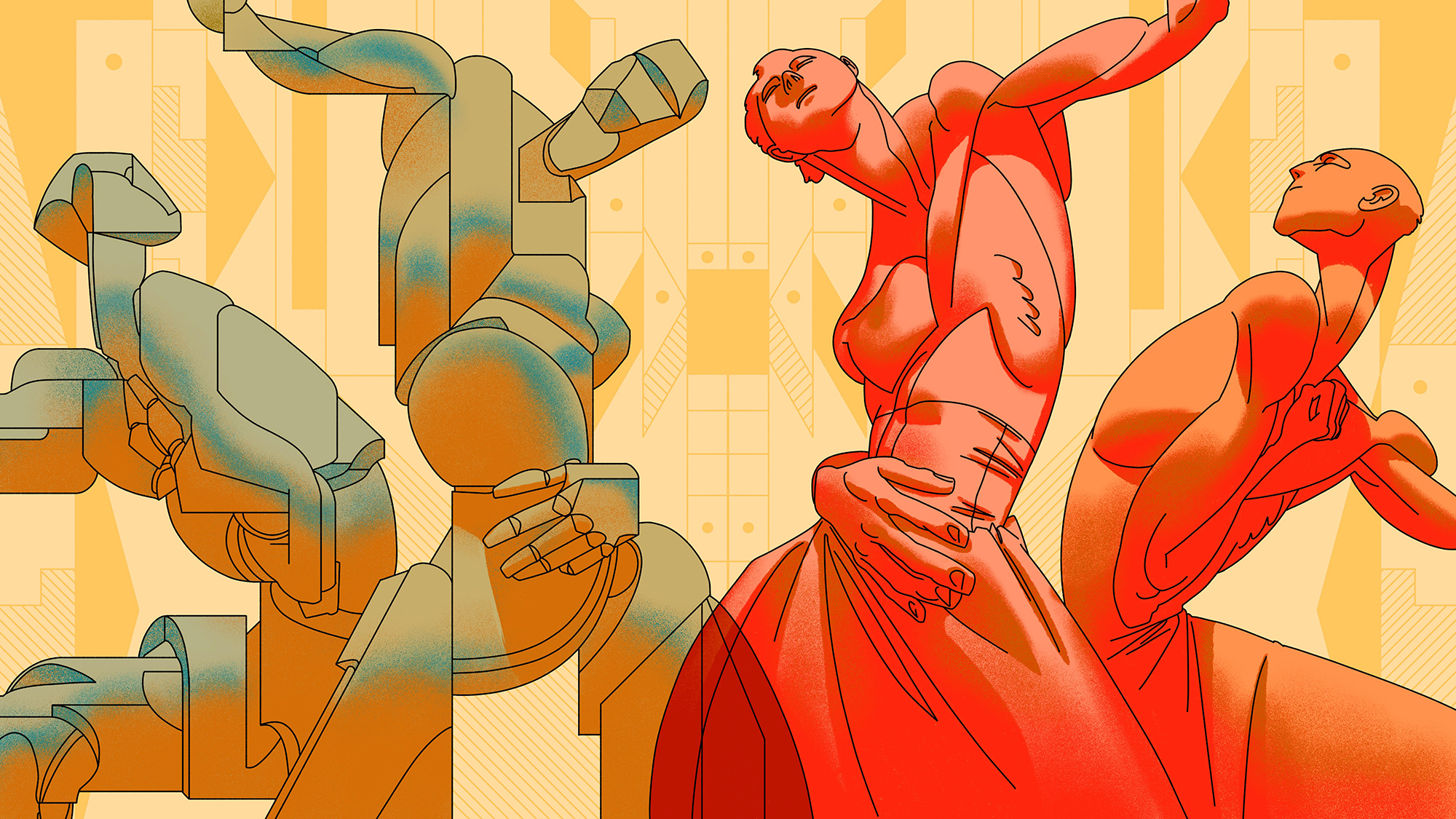
I Trained as a Dancer. Then I Saw the Robots Move.
By Valerie Trapp
Earlier this year, I watched a video that caught me entirely by surprise: A clip from the CCTV Spring Festival in China, in which more than a dozen humanoid robots performed an intricate martial-arts routine. They backflipped. They high-kicked. They wielded swords and dropped into potentially pant-splitting lunges. A side-by-side comparison with their movements just the year before was astounding: The robots, made by the company Unitree Robotics, could now move with a fluidity that looked less like the archetypical “robot dance” and more like ballet, albeit a dead-eyed version.
I was impressed, but—I must admit—a part of me felt threatened. And jealous. Despite my more than two decades of dance training, those robots could perform moves that I never could. (Like backflips! I cannot backflip.) The video plopped me back into a time of complicated emotions, when I was enchanted by dance but constantly saw it as a catalog of tricks I had largely failed to master.
When you buy a book using a link in this newsletter, we receive a commission. Thank you for supporting The Atlantic.
Sign up for The Wonder Reader, a Saturday newsletter in which our editors recommend stories to spark your curiosity and fill you with delight.
Explore all of our newsletters.
The post What to Read When You’re Wondering What’s Out There appeared first on The Atlantic.