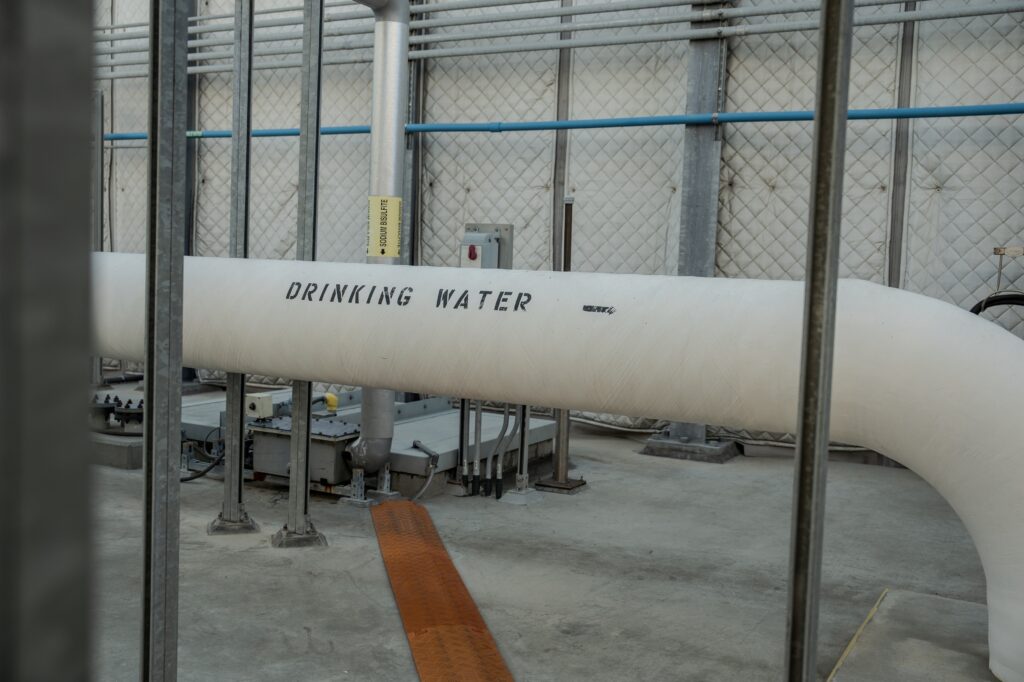
While cities across drought-stricken western states struggle to meet their water needs, San Diego has a surplus of the all-important resource. That’s largely thanks to the county’s investment in desalination, which other localities would be wise to consider.
San Diego’s desalination plant first opened in 2015, and it now supplies about 10 percent of the county’s water — around 50 million gallons a day. That new supply has put the community on a more sustainable path.
San Diego now has so much of the scarce resource, in fact, that its water authority recently struck a deal to sell its access to the Colorado River to Arizona and Nevada. San Diego’s success provides much-needed hope for the parched region. It’s also a useful counter to those who write off technology before it has a chance to mature.
The strategy has had plenty of critics, especially environmentalists who say desalination is not worth its hefty price tag. Many also argue that desalination requires a lot of energy and that it disrupts marine wildlife, especially when plants discharge their briny wastewater back into the Pacific Ocean. Such objections successfully scuttled another planned desalination plant in Huntington Beach in 2022.
San Diego’s plant took about $1 billion to build, and it resulted in high water rate increases in the area. But the deal with inland states might just prove that the plant was a wise investment, especially as the Colorado River crisis worsens. The utility has also signed deals to sell water to nearby Riverside County.
It’s worth noting that much of the cost for the project has to do with California itself. That includes the state’s high energy prices and affinity for bureaucracy, which inflates expenses for infrastructure projects.
San Diego’s plant, like other desalination facilities, also devised strategies to mitigate its effect on marine ecosystems. For example, combining briny discharge with unprocessed seawater helps dilute its salt content. A study conducted from 2019 to 2023 found the plant’s operation had no significant impact on wildlife.
The fundamental problem with the opposition to desalination is that there are few good alternatives. Environmentalists often argue that the region simply needs to use less water, but cities haven’t been able to cut back as quickly as the shortage demands.
The problem also has national economic implications, since California alone produces half the country’s vegetables and nearly three-quarters of its fruits and nuts. Farmers have attempted to shift to less water-intensive products, but droughts exacerbated by climate change continue to strain the industry.
Desalination is a rare point of bipartisan agreement, from officials in the Trump administration to California Gov. Gavin Newsom (D). That’s encouraging at a time when the West cannot afford to shun any tools that will help address the region’s water crisis.
The post San Diego’s big bet on salt water appeared first on Washington Post.