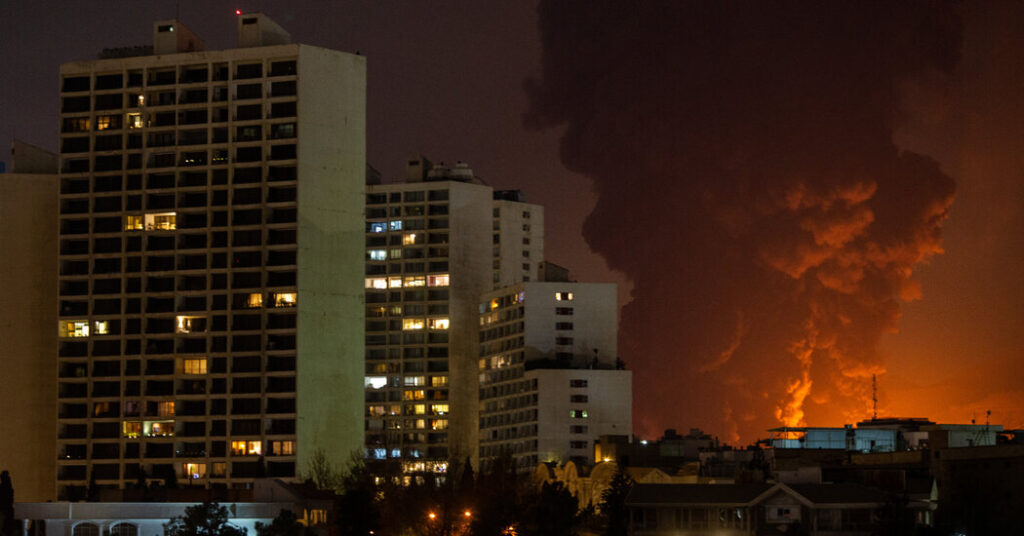
The war in the Middle East is slowing global economic growth this year to its weakest pace since the Covid-19 pandemic, according to a World Bank report published on Thursday that revealed the fallout of soaring energy prices.
The U.S.-Israeli attack on Iran in late February has led to a prolonged disruption of cargo traffic through the Strait of Hormuz, causing oil, gas and fertilizer prices to gyrate for months. The disruption to global supply chains has fanned a new round of inflation, raising expectations for higher interest rates and slower output around the world.
The World Bank lowered its growth outlook from earlier this year, projecting output to slow to 2.5 percent in 2026 from the 2.9 percent it grew in 2025. It estimated that output could fall to 1.3 percent if the conflict escalated and supply disruptions were protracted.
The conflict appeared to be escalating on Thursday, when President Trump threatened additional attacks on Iran and a takeover of its energy infrastructure.
“At some point in the not too distant future, we will be taking Kharg Island, and other oil infrastructure points, and assume total control of their Oil and Gas Markets, much like we have with Venezuela,” Mr. Trump wrote in a post on social media.
After more than four years of persistent inflation, the war is pushing prices higher again. The World Bank projects that global inflation will rise to 4 percent in 2026 from 3.3 percent last year. The increase is being driven by a 22 percent rise in commodity prices, which in January had been expected to decline.
Rising prices in the eurozone pushed the European Central Bank to raise interest rates on Thursday, making it the first global central bank to increase borrowing costs in the wake of the war. The inflation rate in the eurozone was 3.2 percent in May, driven by higher energy prices stemming from the closure of the Strait of Hormuz.
The Middle East is bearing the brunt of the global slowdown, as the war impedes oil exports. Europe is also facing substantial headwinds because of its reliance on natural gas imports. High food prices and fertilizer shortages are slowing growth in sub-Saharan Africa.
The U.S. economy has been relatively resilient because of tax cuts, artificial intelligence investments and domestic oil production. Despite those buffers, the United States is also contending with rising consumer prices.
On Wednesday, the Consumer Price Index showed that the annual rate of inflation rose to 4.2 percent in May. That was up from a 2.4 percent before the war in the Middle East started and the fastest pace since April 2023.
The World Bank said policymakers needed to balance their goals of containing inflation and supporting economic growth. It warned that weaker investment could lead to slower hiring.
“The conflict has taken a toll on global activity, but every crisis also brings an opportunity,” said Ayhan Kose, deputy chief economist at the World Bank Group. “This moment should be used to strengthen policy frameworks, invest in infrastructure, accelerate business-enabling reforms and mobilize private capital to support job creation at scale.”
The post World Bank Warns Iran War Is Slowing Global Growth appeared first on New York Times.