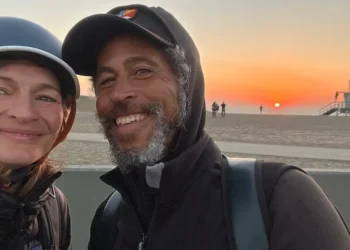
When “The Comeback” released its first season in 2005, Elie Smolkin was just starting his career, working mostly in short films. It took nine years for the HBO show, starring Lisa Kudrow as a fictional celebrity trying to make a series of career rebounds, to return for its second season and another 12 to air its third, which premiered in March of this year.
By Season 3, Smolkin was an established cinematographer who was ready to help co-creators Kudrow and Michael Patrick King bring the riff on reality TV into an era when iPhones, Ring cameras and podcast studios are capable of capturing 4K video at a moment’s notice.
“It sounded like such a technical and creative challenge,” Smolkin said. “Michael kept saying that, and he was right. But it was also insanely exciting that there was such a challenge. There was nothing basic about it.”
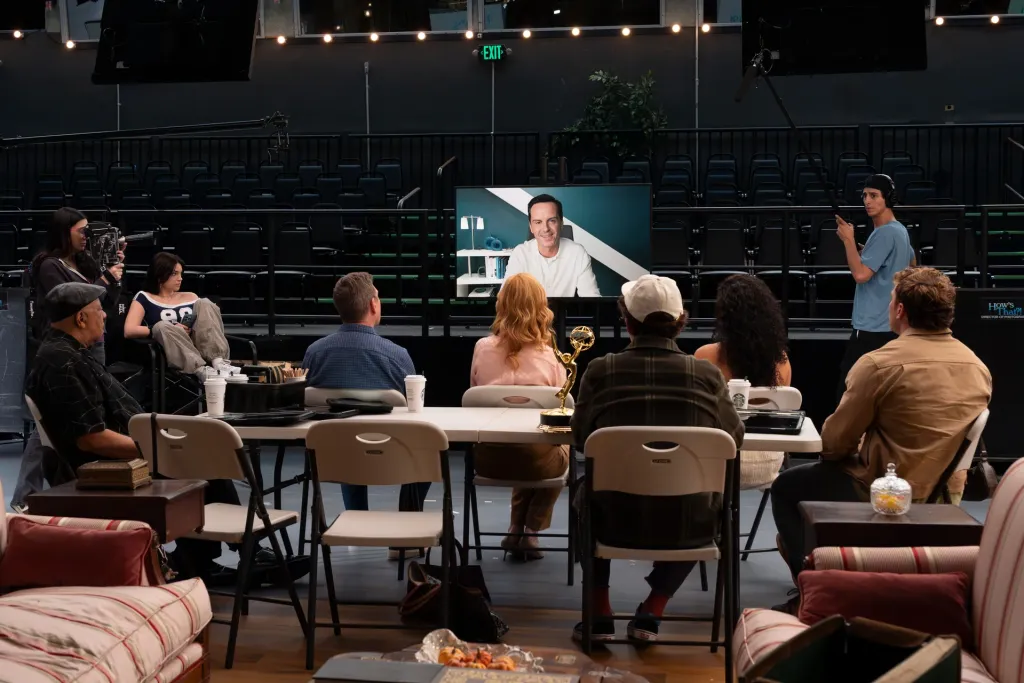
Much of the cinematography in “The Comeback” is diegetic, originating from cameras that exist in-universe as Kudrow’s Valerie Cherish documents her return to the spotlight. As DP, Smolkin had to direct a slew of camera operators through headsets, helping real camerapeople grab footage in character as fictional camerapeople surrounding Valerie on the show. “Acting notes are not usually part of my job,” he said.
“We wanted to really play with different mediums,” he added. “There’s the podcast, the sitcom, the security cameras, the documentary, there’s what we call the ‘cinematic camera’ and then we end on 16mm film.”
Is this a different muscle to flex, having to think about the in-universe characterization of these various cameras?
It is. I feel like my job as a cinematographer is always to tell the story visually and to pick the right lenses, the right camera movement, the right framing or lighting to tell the story. This is on another level because each format means something different. We hired 73 different (Local) 600 Camera Union members because once you saw that person (operating a camera), they were a character on the show.
Then we couldn’t see them again unless they were that character again. Our sitcom crew kept coming back, and our doc crew obviously, but then everybody else we kind of just went through. So I’m picking the format, but I’m also with Michael like, “Hey, does this person look right for the indie movie?” Then, on the headset, I’m talking them through camera movements.
Talk to me about how cameras and screens have become more ubiquitous. I feel like they’re in every room now.
Val is a character always playing to the camera. Now, with social media especially, everybody is playing to the camera and putting their own persona on social media as who they want you to think they are and what they’re experiencing. Camera technology has come a long way. That’s something I also brought up in that very first meeting with Lisa and Michael.
What’s amazing about this show, one of the things I love about it, is it talks about a major change in our industry, the first being reality TV and the second being fewer writers’ rooms and shorter seasons and darker shows on TV. This season was about technology, so it was really important that our visual story- telling was also showcasing this change in technology.
Does knowing that everything is going to be cleaner and crisper change how you approach the story?
It does. That’s why at the very end of the show, when you’re seeing Val through (documentarian) Jane’s literal lens, we wanted to go back to film to give it something different. That’s the thing about these new technologies: They all look pretty good. I mean, when we see them side by side, does the iPhone look as good as the Alexa 35? No, there are changes, but they all look good. They all look clean; they all have depth of field now. You can fake it.
It’s really impressive. But that’s why we wanted to end a season about technology and the change in the industry by going back onto analog. It was special to be able to play with all these technologies, but it was also important to show how much it’s changed.
This story first ran in the Comedy Series issue of TheWrap’s awards magazine. Read more from the issue here.

The post How ‘The Comeback’ Cinematographer Elie Smolkin Used 73 Camera Operators to Bring Reality TV Spoof Into the Digital Age appeared first on TheWrap.