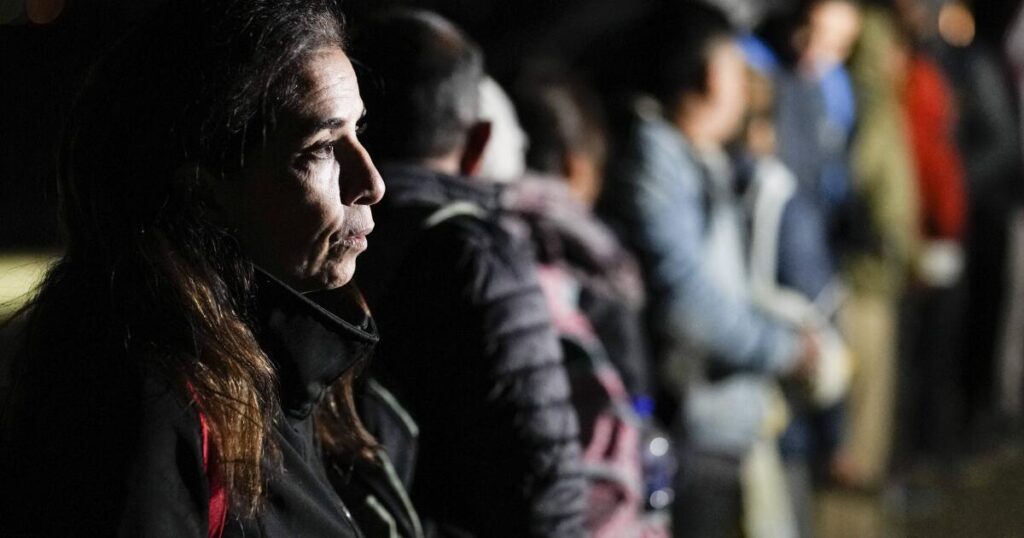
We have two new problems in the asylum system, a dangerous combination that started last month: The asylum application now costs $102 to file, but asylum seekers are no longer allowed to apply for the right to work until a full year passes after submitting their application. My clients are officially stuck.
One of them is nine months pregnant. She is raising two young children alongside her husband in California while waiting to learn whether her family will be allowed to stay in the United States. They fled Mexico after her husband was kidnapped by members of the Jalisco New Generation Cartel. Returning to Mexico is not an option. Like many asylum seekers, my client did what the law requires: She came to the United States seeking refuge and applied for protection.
Starting May 29, a Department of Homeland Security rule instituted the first-of-its-kind annual asylum fee. Until now, it was free to file. My client and all asylum seekers are now required to pay $102 per person, per year, just to keep an asylum application alive. For her family of four, that is more than $400 annually.
And here is where many applicants will face the even greater hardship: In addition to the cost to file the application, asylum applicants will not be allowed to legally work in the U.S. The rule extends the waiting period to apply for a work permit application from five months to 365 days. Then, the waiting period for the employment authorization begins, which can be up to a year. Most of my clients are now asking the difficult question: How can I pay for my application if I am not allowed to apply for a work permit?
A $100 fee may sound modest. A delay for a work permit application may seem manageable. But together, they create a system that demands payment from vulnerable people the government has made legally unable to work.
For people fleeing persecution, applying for asylum is a legal right grounded in both U.S. and international law, one that has long reflected this country’s commitment to offering refuge to those in danger. This system has been free since its inception after the second world war.
For seven years I represented asylum seekers at the Los Angeles LGBT Center. My clients came to the U.S. to live safely and affirm their truest selves. We see how difficult it is to make ends meet when clients are denied the right to work and are afraid to apply for immigration relief. Asylum seekers wait years in legal limbo, unable to support themselves without the right to work, often relying on informal networks, unstable housing and survival work.
Even under the preexisting rules, the system was barely tenable. Recent changes threaten to break it entirely. Immigration courts face a backlog of more than 3.3 million cases, including more than 2.3 million people waiting on asylum claims. Applicants often wait years for their claims to be heard. During that time, they are expected to survive without stable income, without certainty and often without support.
And even after years of waiting, relief is far from guaranteed. Many applicants endure prolonged hardship for only a slim chance of success. Adding new financial and procedural barriers on top of those odds does not improve the system. It ensures that fewer people will even try.
The United States has historically stood in solidarity with most countries in the world in one important way: It has not charged people fees to apply for humanitarian asylum. The modern global refugee system was shaped in the aftermath of World War II, grounded in the principle that applications for protection should be accessible to all refugees.
This rule moves us further from this tradition. Supporters argue that fees and delays are necessary to reduce strain on the system or discourage weak claims. But policies that make survival itself the barrier to entry do not distinguish between strong and weak cases. They distinguish between those who can endure prolonged poverty and those who cannot.
For people like my clients, the choice becomes impossible: work illegally to survive, abandon a lawful asylum claim for the entire family or go without basic necessities while waiting.
None of these options reflect a system committed to fairness or the rule of law.
When the government takes away someone’s ability to work, even the smallest fee becomes insurmountable. And when that happens, the asylum system does not just become harder to navigate. It becomes impossible.
Tess Feldman teaches at the Asylum Law Clinic at Southwestern Law School and is a supervising attorney at the Loyola Immigrant Justice Clinic, where she represents immigrant families, refugees and asylum seekers. She is the founding attorney of Drimolegal PC.
The post New rules squeeze money from asylum seekers while preventing them from working appeared first on Los Angeles Times.