As tens of thousands of fans watch World Cup matches this summer, local and federal authorities will be watching them.
Security costs for the 104-game, 16-city tournament are expected to run into the hundreds of millions across North America. In the Dallas-Fort Worth area, where nine matches will be played, a $40 million emergency operations center is among the security measures that officials are counting on to monitor concerns.
Several North Texas police departments, state troopers and federal officials from the F.B.I. and other agencies will make the Dallas County Emergency Operations Center home base during the tournament. It was funded by a 2021 federal stimulus package passed under former President Joseph R. Biden Jr.
“The whole point is to be ready for anything,” Clay Jenkins, the top elected official in Dallas County, said on a recent media tour that offered a peek at the extent of the security preparations underway there and in many host regions.
The new building houses office space for law enforcement officials, a state-of-the-art briefing room to host news conferences, and a warehouse to store security equipment. At the heart of the facility, officials will be able to monitor traffic cameras, weather radar, airspace and news broadcasts in real time.
A portion of the building was built to withstand a tornado with winds of more than 200 miles per hour. It has enough power and water to last a week without replenishment.
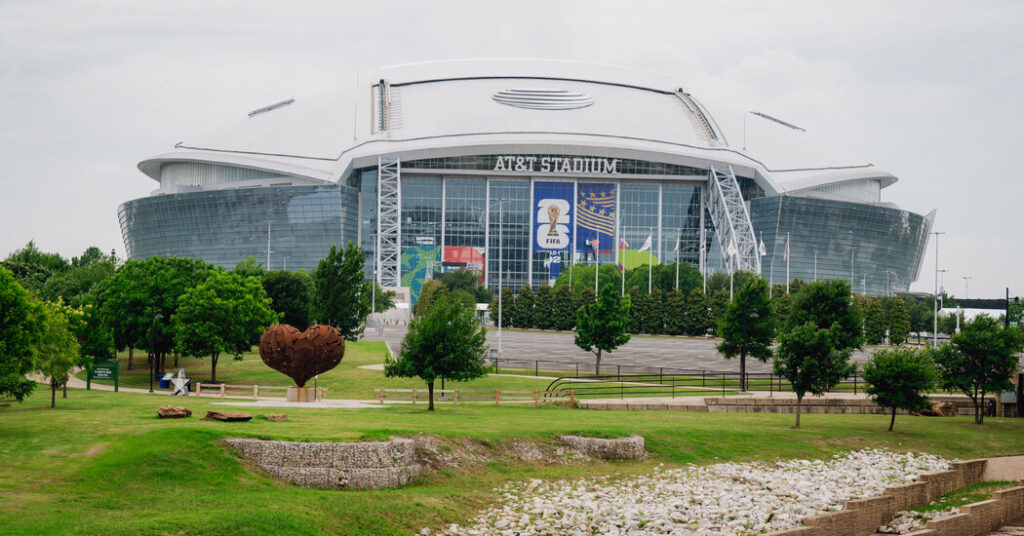
Officials said they would be prepared for a wide range of potential threats at the stadium in Arlington, as well as the FIFA Fan Festival more than 20 miles east, and unplanned celebrations in their streets.
Possible concerns include lone-wolf terror attacks, unauthorized drone incursions, skirmishes between fans and extreme heat. Temperatures in the Dallas region regularly reach more than 100 degrees during the summer — a concern for locals, but even more for visitors unaccustomed to the Texas heat.
“Even though the radio says it’s 104 that day, it might be in the 120s if you’re just sitting on a highway with hot engines around you,” Mr. Jenkins said. Cars can overheat and break down, then overheat their passengers who try to get out and walk.
“All those things can be problems,” he said.
The post Inside a World Cup Nerve Center Monitoring Fans, Drones and Heat appeared first on New York Times.