First class is meant to remove friction from travel, from the moment you arrive at the airport to the moment you land at your destination.
On a recent flight from Los Angeles to Tokyo, I flew Singapore Airlines’ first class to see how well it delivers on that promise.
Widely regarded as one of the best first-class products in the world, it also comes with a steep price tag: one-way fares for this flight can exceed $14,000. In my case, though, I booked using credit-card points I’d transferred to the airline and paid just $5.60 in taxes for my ticket.
Having flown first class with several international carriers, I was particularly curious to see how Singapore Airlines would compare.
The elevated experience began before I’d even cleared security.
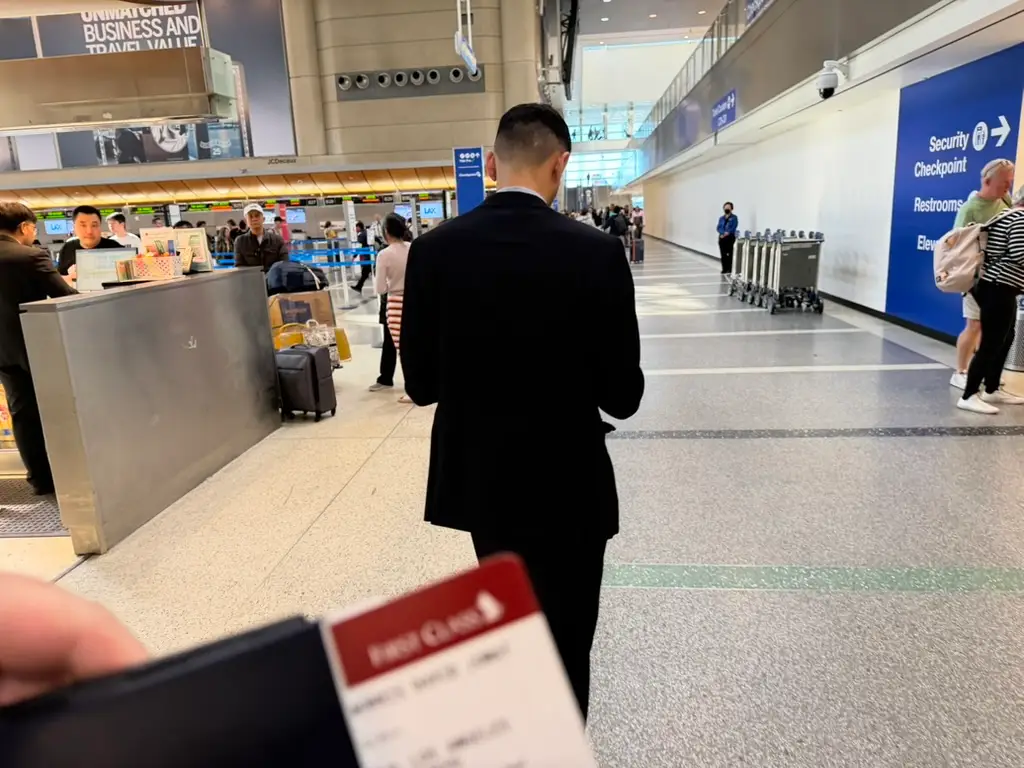
Flying out of Tom Bradley International Terminal at LAX can be chaotic and stressful, but my experience on this trip felt far from it.
There was no one in the first-class check-in line, and after a quick bag drop, an agent personally escorted me through the airport — bypassing standard security lines and guiding me through a crew access point.
TSA PreCheck and touchless ID are nice, but this felt like a different level of service entirely. (Although it wasn’t quite the same level as LAX’s Private Suite, or PS, where travelers can bypass the main terminal entirely and be driven directly to the aircraft.)
The agent continued with me all the way to the Star Alliance Lounge, where I was personally dropped off and connected with the staff inside.
The first-class lounge felt quiet, private, and highly personalized.
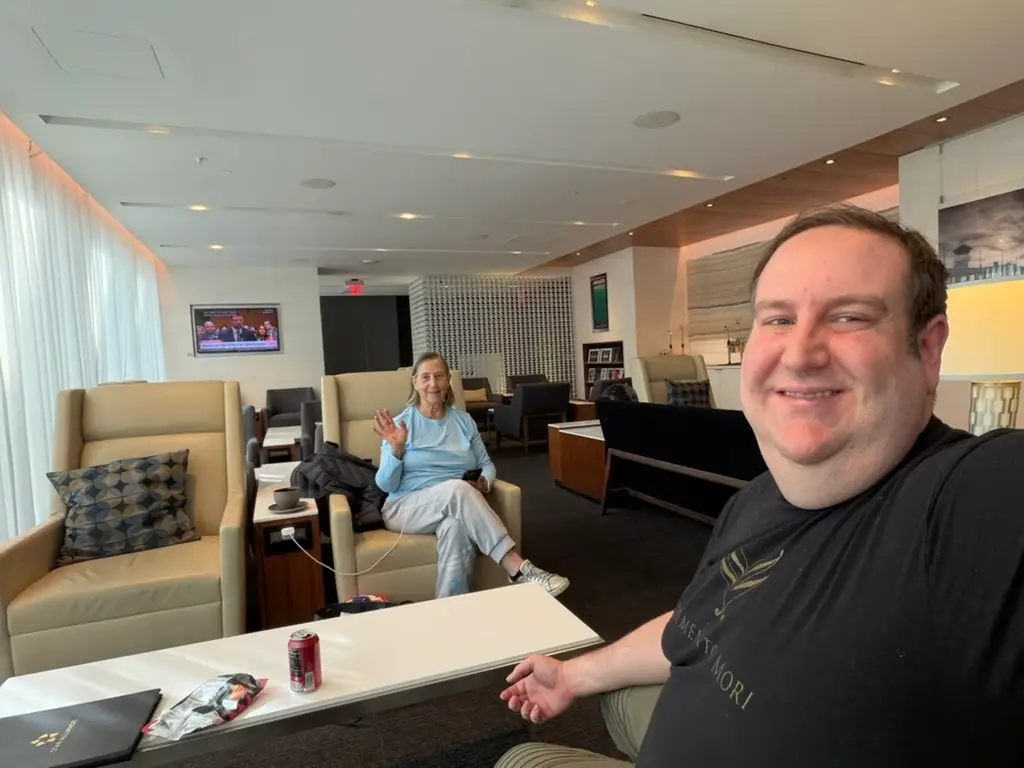
The Star Alliance Lounge has a separate lounge area for first-class travelers. This part of the space felt calm and was almost entirely empty — not by accident, but because access is so limited.
At LAX, there are very few Star Alliance flights with a true first-class cabin, and Singapore Airlines operates only four first-class seats on this route. With so few eligible passengers, the lounge is unlikely to ever feel too crowded.
Inside, there were separate areas to relax, an open bar, and a menu with made-to-order dishes ranging from comfort food like chicken fingers to more elevated options.
Soon, we were escorted from the lounge to the plane.
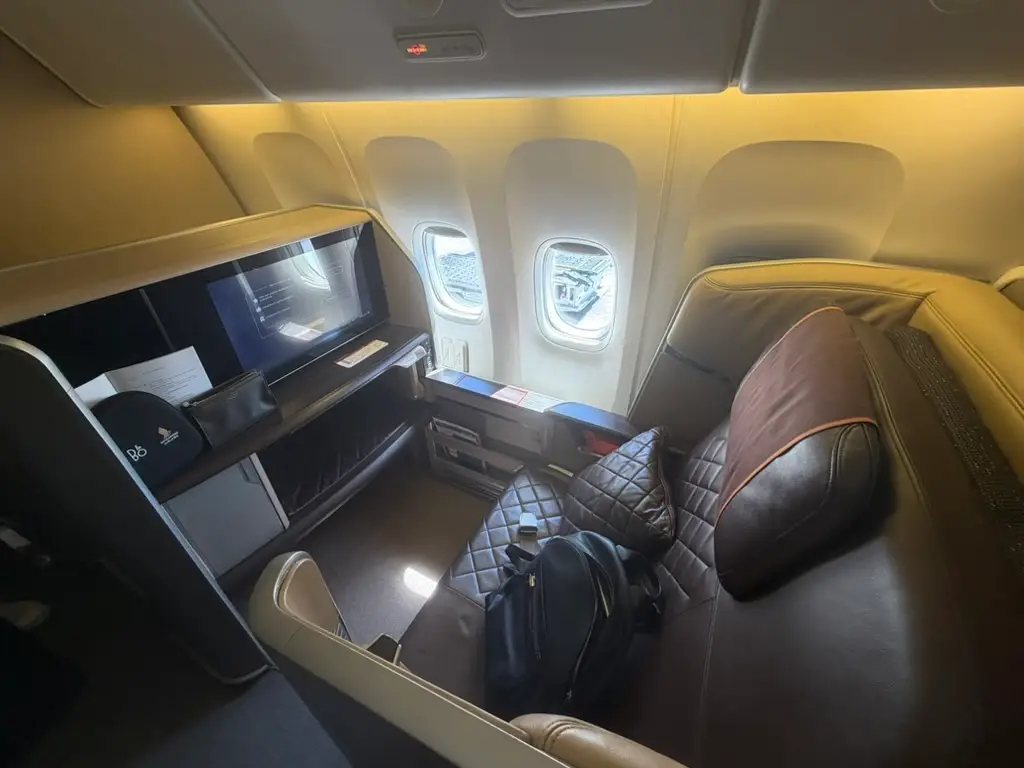
When it was time to board, a Singapore Airlines supervisor came to the lounge, escorted me directly to the gate, and walked me onto the aircraft ahead of other passengers.
I was personally introduced to the cabin crew and shown to my seat.
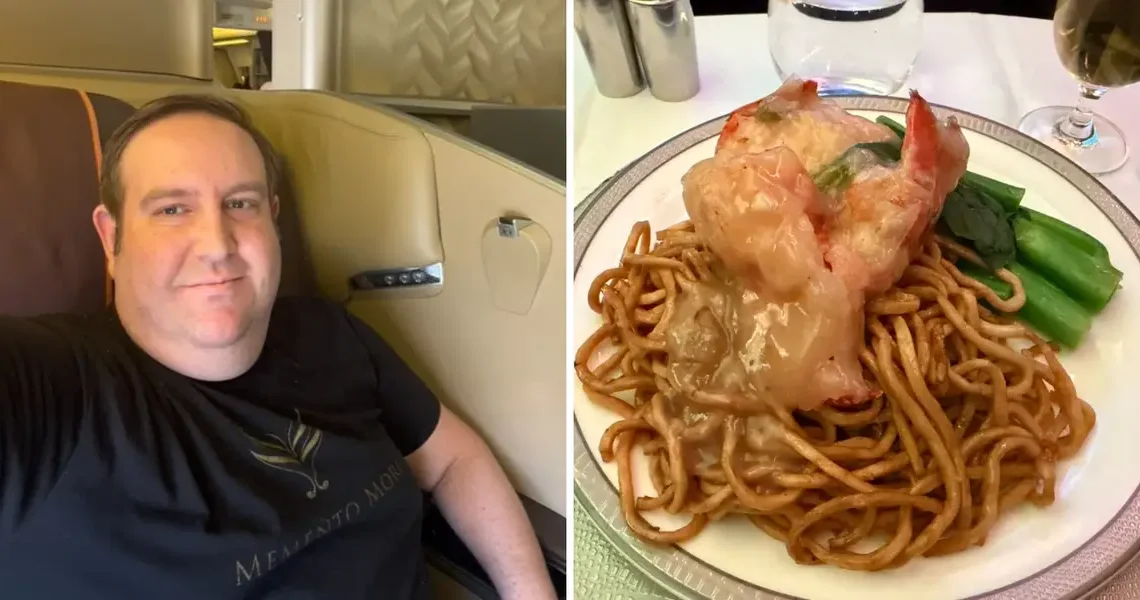
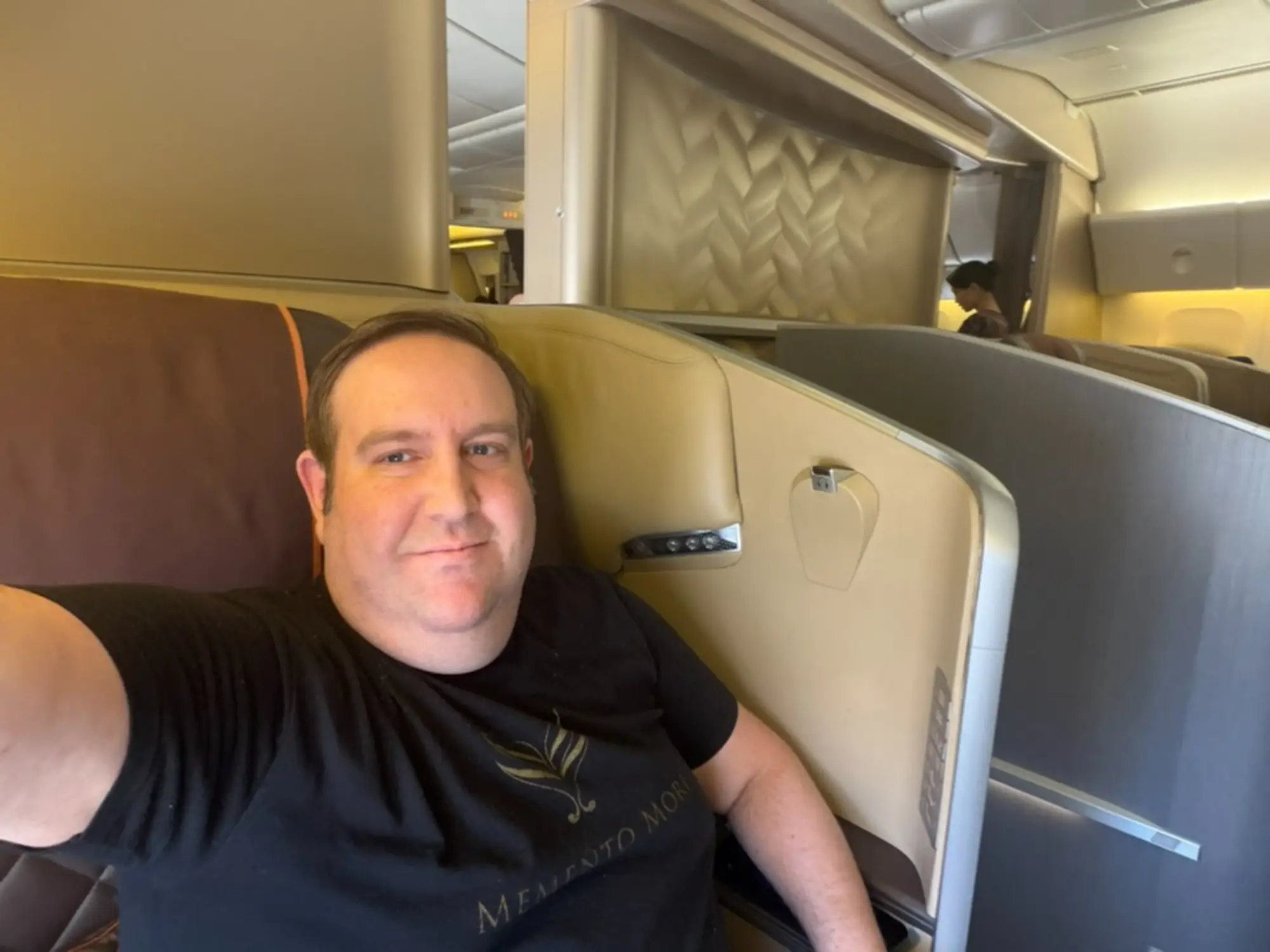
My seat felt spacious and comfortable.
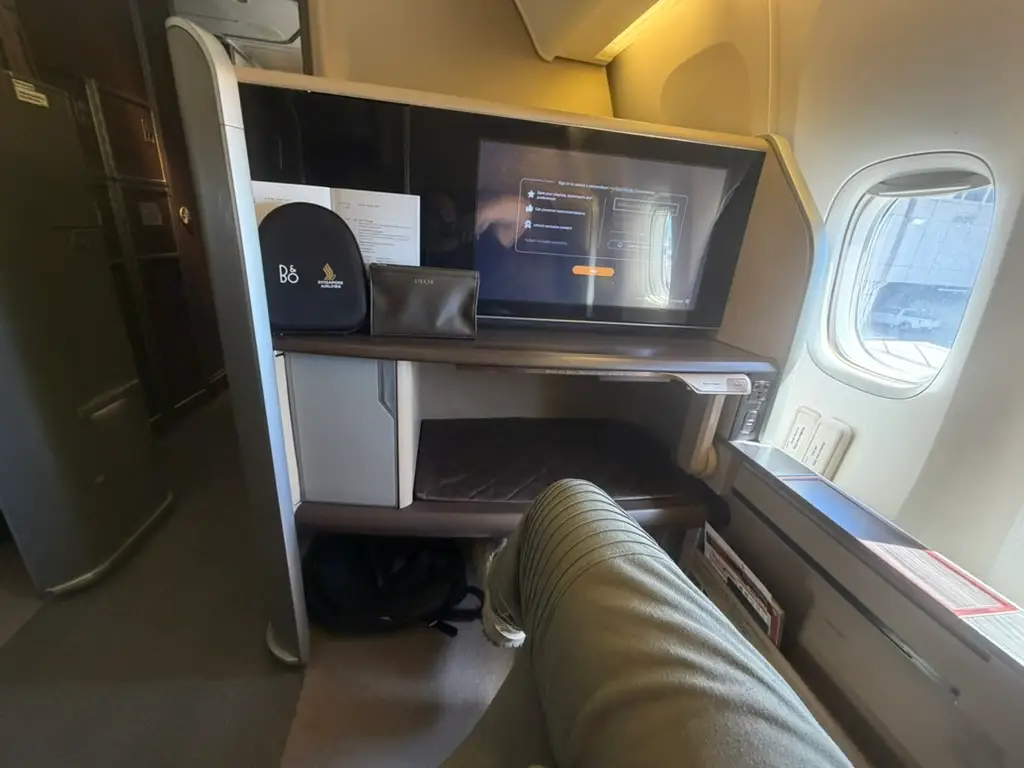
My window seat was complete with a large in-flight entertainment screen, charging ports, a pull-out tray table, and several storage options.
I also received pajamas, a well-appointed amenity kit with Lalique products, an eye mask, and other essentials, which made the flight more comfortable.
It truly felt designed for sleep.
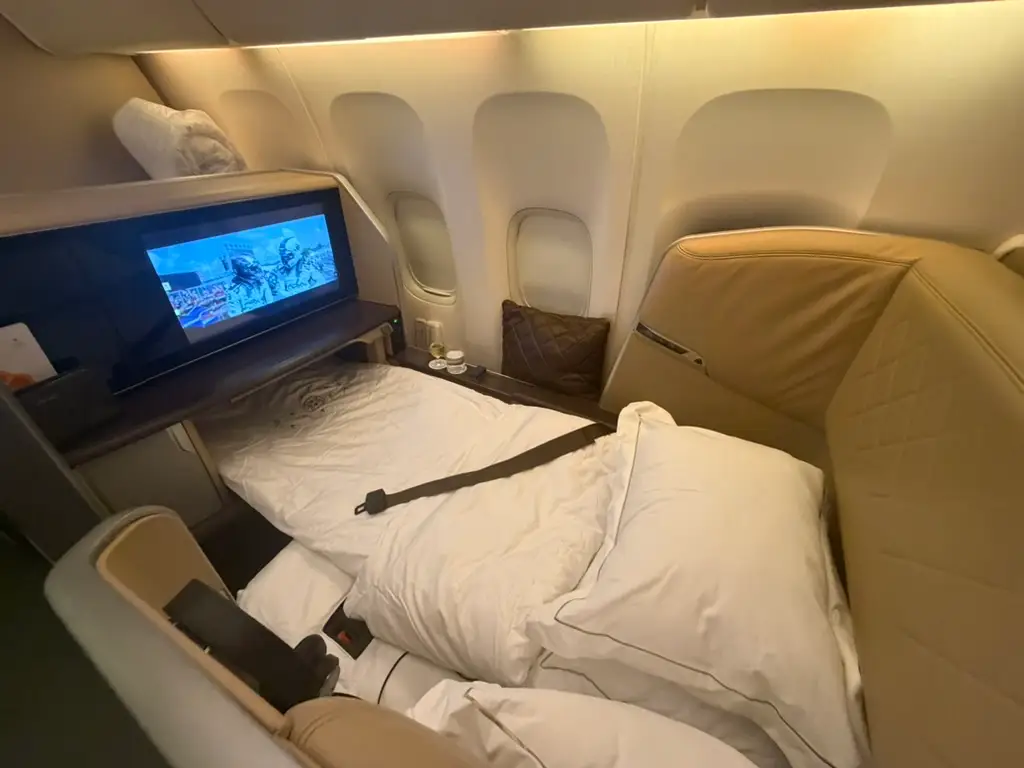
The extra-wide seats are larger than those in business class, but for me, the biggest difference comes down to sleep.
When converted to lie-flat configurations, business-class seats often have narrower, tapered footwells, which can make feet feel trapped.
However, the wider sleeping surface and more open footwell made this lie-flat seat feel closer to a true bed than any business-class seat I’ve tried.
Here, I was able to roll over naturally and settle in, rather than staying in one position or feeling restricted.
That extra space made a meaningful difference. I was able to settle in and sleep comfortably for several hours, something that’s harder to do in most business-class configurations.
All of the food I tried felt refined and satisfying.
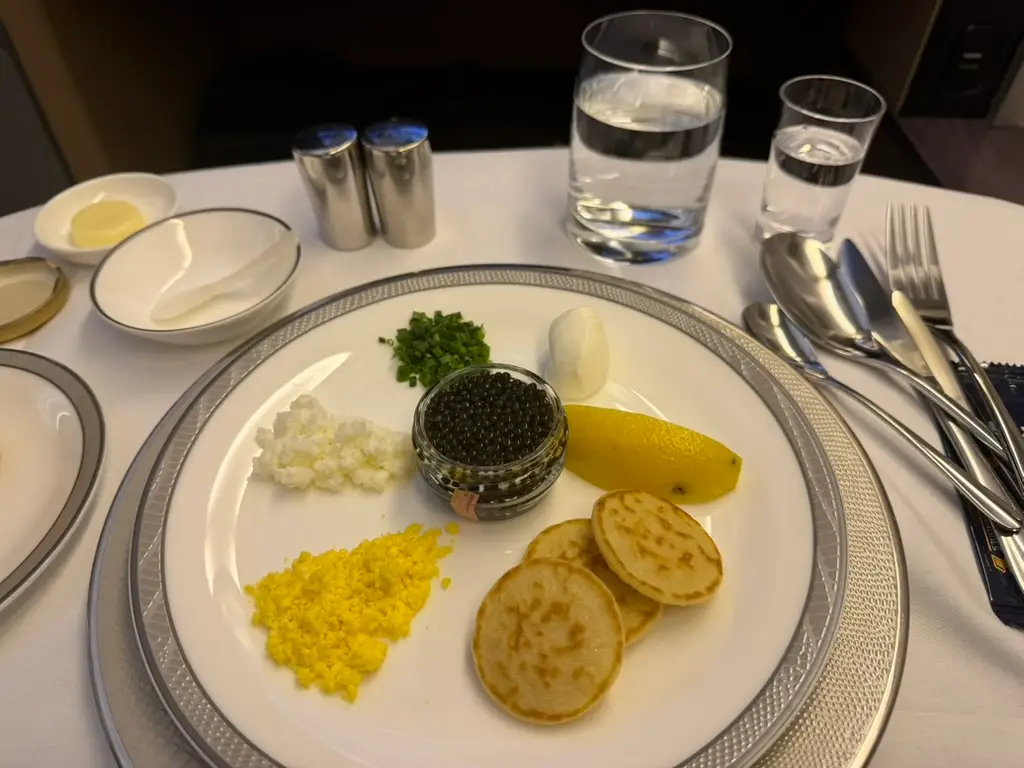
Before departure, I had pre-ordered my main course — Cantonese-style roast duck with plum sauce — through Singapore Airlines’ “Book the Cook” program, which is available to premium passengers.
Once on board, I built out the meal further, starting with an Osetra caviar service and a soup before moving on to the duck.
By the time dessert came around, I was already full, so I opted for just a small portion of the cheese course.
I was also impressed by the flexibility and extensiveness of the in-air dining options.
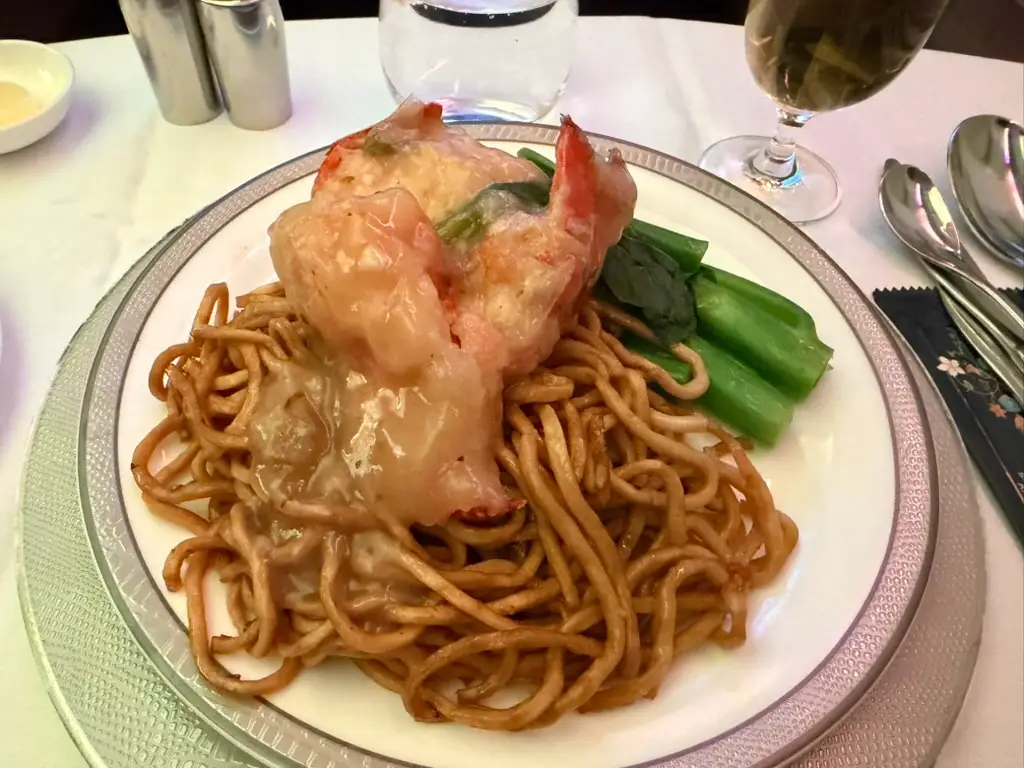
Beyond the main meal service, there was a wide range of dishes available throughout the flight, including egg noodle soups, chicken-katsu sandwiches, and pizza — all available on demand.
A second, pre-arrival meal service was also offered before landing, with options like marinated crab on a sweet-pea pancake and a lobster noodle dish.
For me, what stood out most was the flexibility. Between “Book the Cook,” the onboard menu, and the ability to order at will, the dining experience felt tailored rather than fixed.
Champagne, wine, and service all delivered.
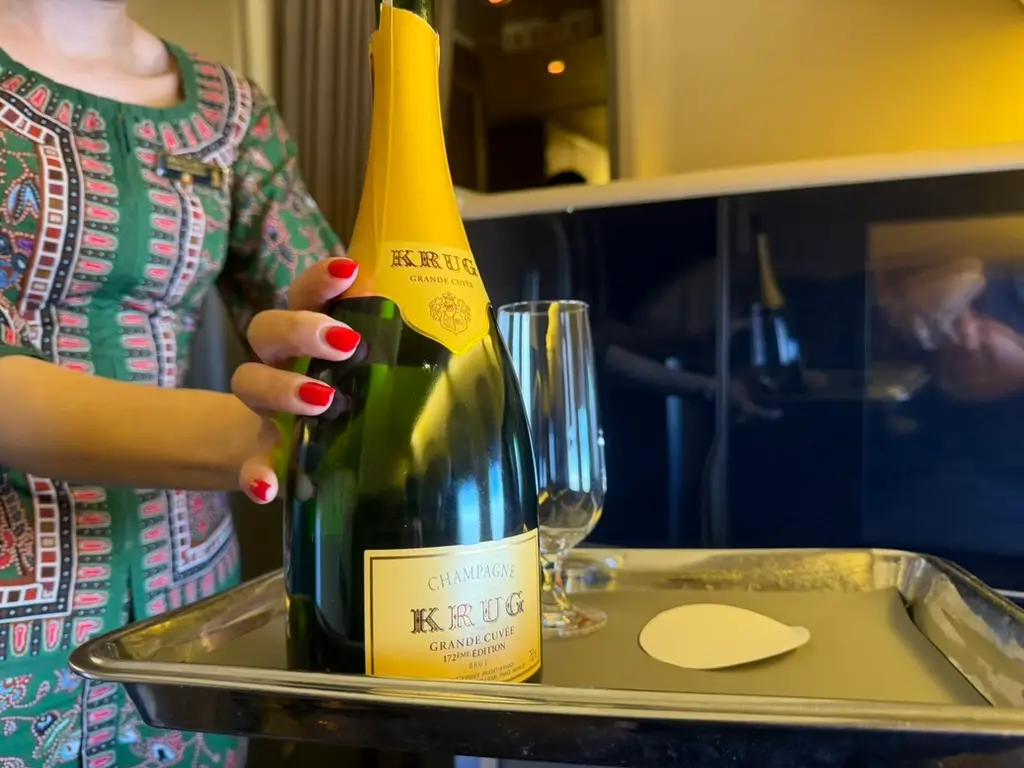
Singapore Airlines consistently carries Krug Champagne in first class, which alone elevates the experience.
On my flight, there was also a solid wine list that included a rotating vintage and offerings from several vineyards in places like Napa and France. It felt more curated than maximalist.
Cocktails and premium spirits were readily available as well.
The cabin crew was attentive without being intrusive, and when I pressed the call button, someone arrived almost immediately — at one point, in under 20 seconds.
The flight was incredible, but the price tag feels difficult to justify without points.
After nearly 12 hours in the air, our arrival was the only part of the trip that felt less premium.
Immigration lines at Narita International Airport felt long and chaotic — a reminder that even the best onboard experience eventually gives way to standard airport realities.
That said, the flight itself was excellent: comfortable, polished, and thoughtfully executed from start to finish.
Service was attentive, the seat delivered where it mattered most for sleep, and the overall experience felt cohesive in a way that some competitors don’t always achieve.
The ground experience at LAX was among the most seamless I’ve had. I’m also grateful I was able to sleep comfortably for several hours, which is ultimately what matters most on a long-haul flight like this.
At full price, though, this is a difficult ticket to justify. A $14,000 one-way fare puts it firmly in competition with some of the world’s best luxury travel experiences.
For me, the value came through points. I transferred 128,000 American Express Membership Rewards points and paid only a few dollars for my ticket.
At that level, this flight is an easy yes and a reminder that, for those who know how to use them, points can unlock experiences like this at a fraction of the cash cost.
Read the original article on Business Insider
The post I flew 12 hours in Singapore Airlines’ first class. Here’s what the experience is really like — and whether it’s worth it. appeared first on Business Insider.