Steven Carl Quay, a senior fellow at the Hudson Institute, is the author of “The Code as Witness: How the Covid Genome Reveals Its Lab Origins and How to Prevent Future Outbreaks.”
Three warnings have been in the news recently: hantavirus on a cruise ship, Ebola out of Africa and potential exposures to Crimean-Congo hemorrhagic fever at a high-containment laboratory in Montana. Each disease can kill more than one in five infected victims. The world may have moved on from covid-19, but deadly pathogens have not moved on from the most attractive host on the planet in mobility, population density and biology: us.
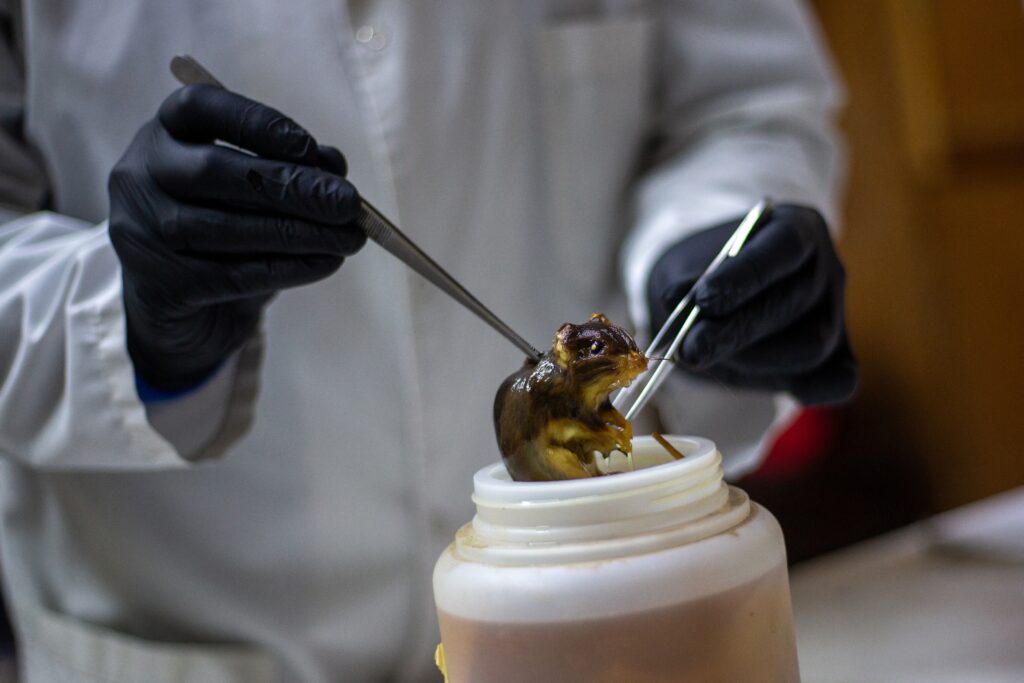
The next pandemic could come from nature, but it also may come from research the United States or another nation has failed to govern: when a virus studied in a laboratory, and sometimes altered there, escapes. The first route demands preparedness. The second demands governance.
Scientific advancement can produce vaccines, diagnostics and lifesaving drugs. But the same tools can also make pathogens more transmissible, pathogenic, immune-evasive or harder to detect. Synthetic biology is a scientific frontier and a public safety frontier.
For decades, the argument for “gain of function” research was simple: Find the next pathogen before it finds us, then build treatments, vaccines and stockpiles to stop it before it comes ashore. Covid changed that calculation. It revealed that research intended to prevent pandemics can create new routes for them. It also showed that vaccine development can begin within days of virus sequencing, rendering advance study less meaningful. The old approach needs a modern reassessment.
Not all risky biology is classic gain of function. Some is what I call “gain of opportunity”: transporting remote pathogens to labs in cities and growing them in human cells. Here, the opportunity to infect people could arise before a virus is genetically enhanced.
A recent Justice Department complaint alleging that virologists smuggled biological materials — including deactivated mpox virus, also known as monkeypox — into the United States from an African outbreak region underscores the point: The danger is not only what happens inside a lab, but how pathogens, samples and researchers move across the globe.
To be clear, the scientists who do this research are diligent and often motivated by public service. But a governance system built for an earlier era of biology now must confront technologies powerful enough to create new dangers, even as researchers aim to preempt nature’s risks.
Five actions would rebalance the cost-benefit analysis.
First, review high-risk research through a federal “Life Sciences Research Security Board,” independent of the agencies that fund or perform the work. The board should include virologists, biosafety experts, national security professionals, ethicists and public representatives. Its deliberations should be public and binding.
Second, genetically watermark synthetic or manipulated pathogens. A small genomic change could identify a laboratory lineage without altering the organism’s biology. If an outbreak occurred near a lab, the watermark could identify that facility or exonerate it, protecting the public and responsible scientists alike. After covid, uncertainty about origin became corrosive to public trust. Federal guidelines can help address that.
Third, extend containment beyond the laboratory door. Scientists handling potential pandemic pathogens should receive medical monitoring and undergo a brief post-work quarantine before returning to a community. Such requirements could stop a lab-acquired infection before it becomes an outbreak.
Fourth, add enforcement to the U.N. Biological Weapons Convention. Biology has changed since 1975, when the convention was enacted. Gene synthesis and inexpensive laboratory equipment have lowered barriers that once confined dangerous research to major powers. Artificial intelligence could lower those barriers further, enabling bad actors to design more dangerous pathogens, designing genetic changes that evade detection or immunity, and easing the path to work that once required years of specialized training.
The United Nations must mandate inspections of high-containment laboratories, reporting standards for laboratory-acquired infections, and controls on the materials and machines used to synthesize deadly pathogens. Gene synthesis companies should be required to verify customers and flag suspicious orders, much like U.S. Treasury regulations require banks to know their customers and report suspicious financial activity. The convention was written to ban yesterday’s weapons. It must now become a warning system for today’s biology.
Fifth, build targeted surveillance where risk concentrates: airports, seaports, city wastewater systems, live-animal markets and communities near high-containment laboratories. During the covid pandemic, city wastewater helped predict future hospital admissions, and aircraft wastewater detected new variants weeks before they appeared in local clinics. The United States should not spend billions checking people at borders while giving dangerous pathogens visa-free transit.
These guardrails are how scientists can restore trust. Nuclear energy survived the danger of nuclear weapons. Aviation survived crashes. Both fields became safer through investigation, transparency and accountability. Pathogen biology requires the same maturity.
The unfolding Ebola crisis shows once again that trust in medical professionals is not optional. When communities believe officials are hiding information, conspiracy theories take hold. When health care workers face unclear rules about exposure, evacuation and quarantine, fear spreads. The worst time to explain a safety system is after people suspect one never existed.
The next pandemic might begin in a jungle, a cave, a market — or a laboratory. Modern biology has given human beings extraordinary power, and that power must come with new rules. Safety does not have to prevent discovery. Rather, the question is whether the U.S. will develop guardrails while the risks are merely risks — or once they have already become the next pandemic.
The post How to stop the next pandemic before it begins appeared first on Washington Post.