The Trump administration said on Monday that it was seeking to strip the citizenship of 17 immigrants, escalating its aggressive push to find and expel people who federal officials say improperly obtained U.S. citizenship.
The Justice Department said it filed the denaturalization cases in district courts across the country, targeting people who were accused of concealing previous crimes or committing fraud during the naturalization process.
Although denaturalization cases have been rare, the Trump administration has vowed to use every tool at its disposal to root out immigrants who it believes should be stripped of their status and removed from the country. The push to denaturalize more immigrants is also the latest sign that the administration is setting its sights on the legal immigration system, expanding the focus of its crackdown beyond people living in the country unlawfully.
Last month, the Justice Department said it asked federal courts to revoke the citizenship of 12 immigrants who committed crimes or other acts that federal officials said made them ineligible to naturalize. That announcement came after Department of Homeland Security officials were told late last year to refer upward of 200 denaturalization cases a month.
The people targeted in the latest wave of cases included those who were convicted of conspiracy to commit health care fraud, attempted sexual battery upon a child and conspiracy to distribute prescription drugs without a license. They also included a former Catholic priest who was accused of sexually abusing a minor, and a man accused of filing fraudulent H-1B visa petitions. Federal officials also alleged that one of the women was previously denied an immigration benefit and used a new identity to obtain U.S. citizenship.
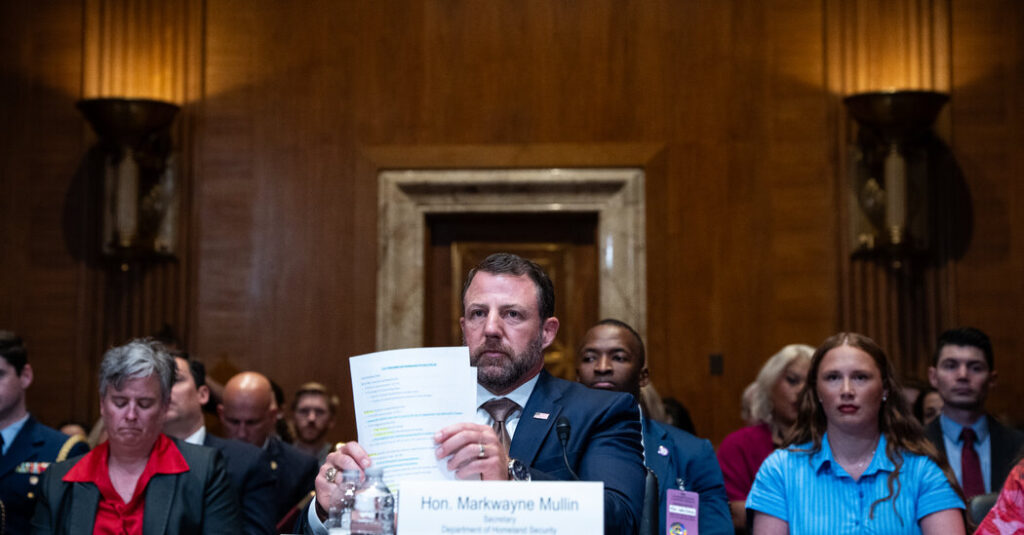
“American citizenship is a privilege, and it must be earned honestly,” Markwayne Mullin, the homeland security secretary, said in a statement on Monday, adding, “We will continue to use every lawful avenue to denaturalize and remove aliens.”
Denaturalization cases have been rare in part because the government has to go through a challenging court process and there is a high bar to persuade a federal judge to revoke a person’s citizenship. The Justice Department has said that only about 130 cases were filed from 2017 to July 2025.
Citizenship can be revoked for a range of reasons, including if people deliberately misrepresented facts on their naturalization application.
Kirsten Noyes contributed research.
The post Trump Administration Seeks to Revoke U.S. Citizenship of 17 Immigrants appeared first on New York Times.