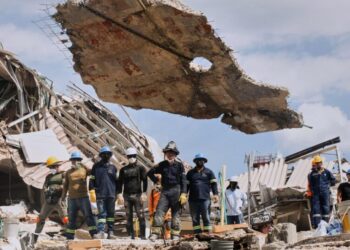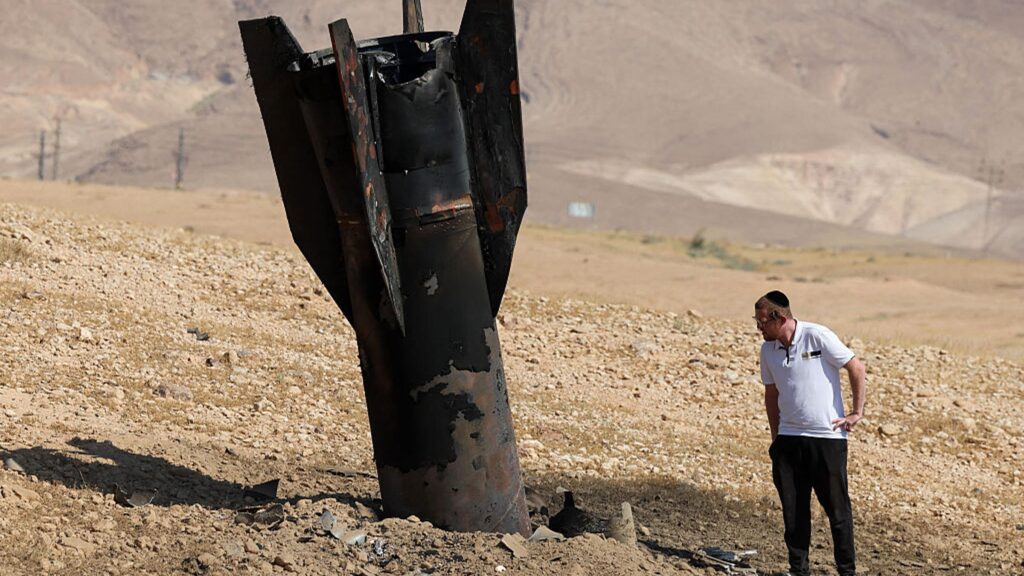
Israel and Iran have exchanged strikes for the first time since the weekslong U.S.-Iran cease-fire took effect, potentially jeopardizing talks aimed at putting an end to the war.
On Monday morning, Iranian state media said that Iran had launched a new wave of missiles towards Israel. Earlier on Monday, Israel bombed Iranian cities—with explosions heard in Tehran, Tabriz, and Isfahan—as well as an Iranian petrochemical plant in Bandar-e Mahshar after intercepting a wave of ballistic missiles from Iran on Sunday night. Iran had claimed that the missiles were a warning to Israel to halt its attacks on Lebanon, which have continued despite a cease-fire that took effect last week.
So far, neither Israel nor Iran have reported casualties from the latest attacks.
Israel’s decision to retaliate against Iran may have contradicted the advice of President Donald Trump, who had reportedly told Israeli Prime Minister Benjamin Netanyahu to hold off on an attack in hopes of reaching a U.S.-Iran deal.
The strikes mark the biggest escalation in direct hostilities since the cease-fire began on April 8. Iran closed airspace in Tehran and some western areas after Israel’s attacks. The conflict appeared also to widen, with the Iran-backed Houthi rebels claiming responsibility for missiles fired at Israel from Yemen, which were intercepted. The Houthis declared on Monday a “complete and total ban on Israeli maritime navigation in the Red Sea.” The Houthis had targeted commercial ships in the Red Sea in late 2023 and 2024 in retaliation for Israel’s bombardment of Gaza. If the Houthis resume attacks in the waterway, it could mean even more disruptions to global shipping, exacerbating already higher prices of energy and other commodities due to the war.
While the U.S. and Iran have exchanged low-level attacks since the cease-fire, both sides have continued to participate in negotiations toward ending the war and finding a consensus around Iran’s nuclear program. Israel’s attacks on Iran, however, are a significant test for Trump, who has sought for weeks to wind down U.S. engagement in the war.
In an interview with the Financial Times late on Sunday, after Iran had fired missiles at Israel, Trump said that Israel will have no choice but to accept any deal that the U.S. negotiates with Iran.
“He won’t have any choice,” the U.S. President told the FT, referring to Netanyahu. “I call the shots. I call all the shots. He doesn’t call the shots,” Trump insisted—a claim challenged, however, by the latest attacks as well as Israel’s criticisms of U.S.-Iran diplomacy.
Netanyahu tests Trump
Experts previously told TIME that the U.S. may be concerned about the longevity of any deal under the potential threat of new attacks from Israel. Israel has said that Iran can never have a nuclear weapon, while Iran has maintained that its nuclear program is only for civilian purposes.
Experts previously told TIME that there is precedent for Israel attacking Iran if it feels dissatisfied by U.S.-Iran negotiations. Last June, Israel attacked Iran in the midst of U.S.-Iran nuclear negotiations, eventually drawing the U.S. into a bombing campaign on Iranian nuclear facilities before reaching a Trump-brokered cease-fire. The U.S.-Israel strikes on Feb. 28 that launched the war had again interrupted ongoing U.S.-Iran nuclear talks. In early March, Secretary of State Marco Rubio suggested that Israel may have pushed the U.S. into the war with Iran, though Rubio and Trump later rejected that.
Trump appears to have taken steps toward making a possible deal more palatable to Israel. Last month, he told the leaders of several Arab and Muslim nations that he expected them to sign the Abraham Accords, a set of agreements establishing formal diplomatic relations with Israel, as part of any U.S. deal with Iran. So far, it does not appear that any of the countries that were not already signatories of the accords have accepted the request.
William Figueroa, an assistant professor of international relations at the University of Groningen, previously told TIME that in seeking to attach the Abraham Accords to a U.S.-Iran peace deal, Trump may have hoped that “the prospect of wider normalized relations and economic investment” would discourage Israel from restarting hostilities with Iran.
Israel’s continued fighting with Hezbollah in Lebanon has also threatened to derail progress towards a U.S.-Iran deal.
The U.S. has brokered multiple cease-fires between Israel and Lebanon, but Israel has continued to carry out near-daily strikes, including on civilian areas, killing more than 3,500 people since early March according to Lebanon’s Health Ministry. Iran has repeatedly objected to Israel’s fighting with Hezbollah and said that a permanent cessation of Israeli attacks across the region is a precondition for any U.S.-Iran deal.
After Israel escalated its offensive in Lebanon, Trump reportedly erupted at Netanyahu over a call last week, “You’re f-cking crazy. … Everybody hates Israel because of this.” Trump confirmed the call had taken place, and said he had been “a little bit perturbed at [Netanyahu’s] constantly fighting with Lebanon.”
Still, Trump has insisted that talks with Iran are progressing in spite of its fighting with Israel. The U.S. President told the FT on Sunday that Iran’s strikes were “not going to have any impact on the deal.”
The strikes “were attacks that did not kick at all. It’s one of those things that’s been going for 3,000 years, or 47 years, depending on how you count,” Trump said.
U.S. officials had for weeks suggested that a U.S.-Iran deal is imminent, but both sides appear unwilling to budge on certain key points, including a moratorium on Iran’s nuclear program and its handing over of its uranium stockpile. Iran has also repeatedly said it intends to continue managing transit through the Strait of Hormuz, which it militarized at the start of the war, including a possible arrangement with Oman to charge ships fees to sail through its waters. The U.S. has strongly opposed such an arrangement.
“I think the deal is going on,” Trump told the FT. “We’ll see what happens.”
The post Israel and Iran Renew Direct Hostilities, Testing Trump Claim That U.S. ‘Calls the Shots’ appeared first on TIME.