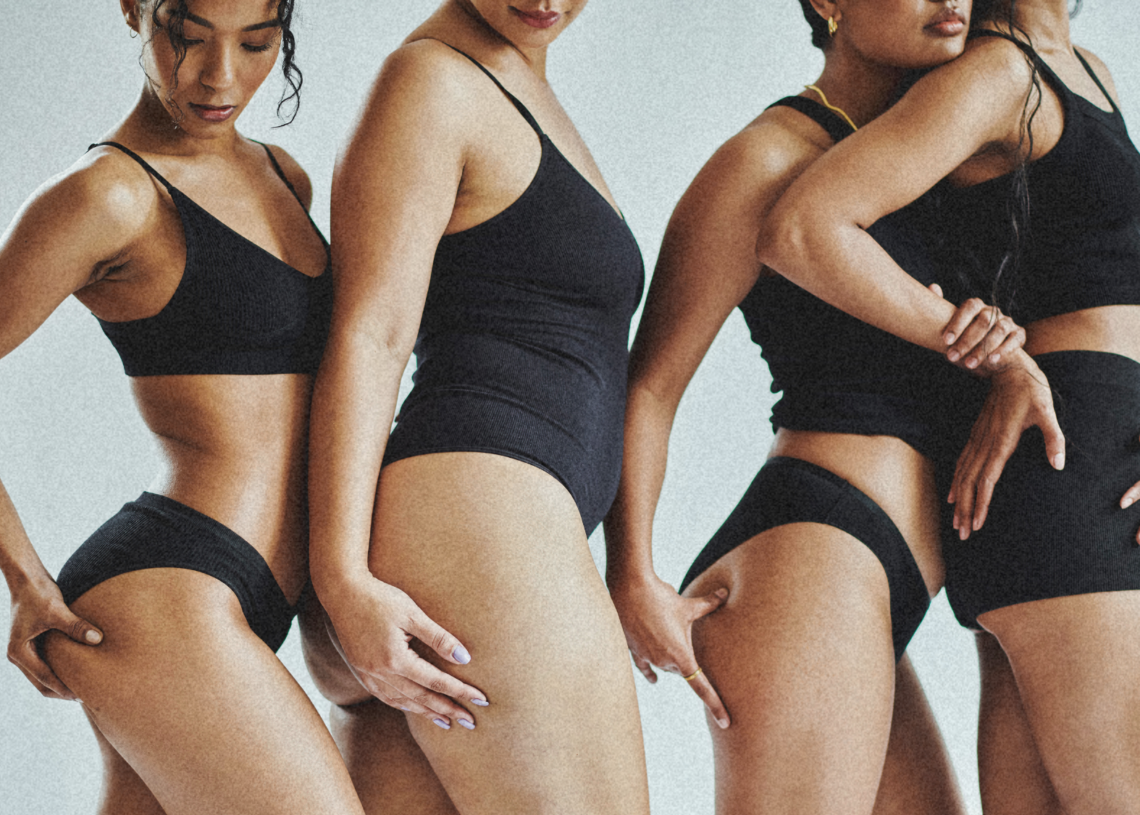
I think (or hope) most of us can agree that the concept of a body trend is damaging and, for lack of a better word, downright weird.
Yet, here we are, watching the media push the narrative that you must look a certain way to be considered beautiful or worthy of love and acceptance. Sometimes, the messaging is subtle, like in those moments when we’re praising a singer for representing a “healthy” body type, while she’s just existing in an athletic frame. Other times, it’s obnoxiously obvious, like when we witness bullying from a herd of social media users slamming an actress for having a stomach that folds when sitting.
What a concept!
If you haven’t realized it by now, women can’t win in today’s world: we’re either too skinny or too fat; too flat or too curvy; too frail or too muscular; too this or too that, but never, ever enough for people to leave us the hell alone and let us exist in our own bodies.
Body Types Should Not Be Trending
Now, most of us blame the harmful push of “body trends” on the systems that profit off our insecurities, and we’re right to do so. But unfortunately, the criticism doesn’t stop there. I see men spewing judgments as if they’re the son of Christ himself. I see women projecting their own shame onto other women. I see the media glorifying specific body types like they’re a fashion statement. I see influencers and celebrities morphing themselves into whatever beauty standard is hot that year. And it all perpetuates the harmful messaging of these toxic industries.
For many, it’s a survival instinct. We want to fit in, to belong, to be loved and accepted. In Hollywood, it might affect whether you land an acting gig or remain relevant as you age. On social media, it might mean the difference between staying small and going viral. In modeling, it can absolutely make or break your career.
“I think it’s easy to blame ‘society’ as this vague, faceless thing, but industries drive our habit of treating our bodies as trends, not society,” says Kelly Wakeland, LCSW, therapist at Equip. “It’s an intentional business model constructed by the diet and wellness industries to shape how we think. If society can convince us that our natural body types are ‘out of style,’ it creates this permanent, multi-billion-dollar market. When the cultural ideal constantly shifts from extreme thinness to hyper-muscularity to curves and back again, it forces us to buy into new ‘solutions’ to an artificially created problem.”
How We Fuel Exploitative Industries
In my own experience, it seems like a woman’s appearance—a woman’s body—has become the most important part of themselves to most people. For example, I’ve noticed that when someone disagrees with a female reality TV star’s behavior, they don’t just critique her personality or actions. They start attacking her looks, including her body. Now, for one, no one should ever comment on another person’s body in that way; and two, think about all the other women who share a similar body type to the one being attacked.
When we make harmful comments like this, we aren’t just criticizing one woman—we are tearing down all women by fueling a system that already preys on our insecurities.
Today, it is—unfortunately—an act of rebellion to love your body as it is, without feeling the need to skip meals, get surgery, take certain medications, or treat exercise like a full-time job. Not only is it rebellious, but it’s also nearly impossible when you’re conditioned to pick yourself apart.
Because of this, more women are dropping the idea of body positivity and are instead embracing body neutrality. This looks like less “I love my body and all its imperfections!” and more like “My body keeps me alive and allows me to experience life fully, and mt appearance is irrelevant.” Both attitudes are great, but the latter might be more attainable and helpful.
“In a culture that profits from self-doubt, telling someone to simply ‘love their body’ can actually bring on a lot of shame and cognitive dissonance,” says Wakeland. “If they don’t believe it, forcing body positivity feels like another standard they’re failing to meet. Instead, I guide people toward body neutrality: we shift the focus away from how the body looks and toward what it does—its utility, resilience, and capacity to help them experience the world. Focusing on this can help build confidence because it’s tied to something tangible.”
The post The Problem With Treating Women’s Body Types Like Fashion Trends appeared first on VICE.