As a backlash against data centers spreads across the nation, sparked by worries the giant computing warehouses will raise energy bills and increase pollution, voters in one California city have a clear message for Silicon Valley: Don’t bring your projects here. Ever.
Residents of Monterey Park, east of Los Angeles, decisively approved the nation’s first permanent ban on data centers in Tuesday’s election, with more than 86 percent of voters supporting the prohibition, according to data from L.A. County.
The ban in the predominantly Asian and Latino working-class city in Southern California’s San Gabriel Valley is a major setback for the tech industry as it races to build out the infrastructure that fuels artificial intelligence.
More communities are expressing frustration with the large developments, which consume huge amounts of energy. Dozens of cities and counties have passed temporary bans on data centers, and several states are weighing moratoriums.
Now Monterey Park officials say the community has created a template for resisting the facilities. “We hope others use our city as an example,” Mayor Elizabeth Yang said.
At least 67 other communities across the country have passed temporary bans, often lasting a year to 18 months, according to the U.S. Data Center Moratorium Tracker, a database maintained by the firm Interconnected Capital.
On Thursday, the New York legislature passed a one-year moratorium on large data centers. If signed by Gov. Kathy Hochul (D), it would be the first statewide ban. A similar ban passed by Maine lawmakers in April was recently vetoed by the state’s governor.
At least three counties in Maryland, including Baltimore County, have passed one-year moratoriums.
Voters in the small Milwaukee suburb of Port Washington, where Oracle and OpenAI are building a $15 billion, 1.3 gigawatt data center that is part of their network of “Stargate” compute campuses, overwhelmingly approved a measure this year that requires voter approval before developers can receive tax breaks for future data centers.
“The wave of anti-data center protest has exploded over the last six months,” said Miquel Vila of Data Center Watch, an AI security firm’s research project that tracks resistance to the facilities. “There are demands for moratoriums even in places where there are no planned data centers.”
Khara Boender, director of state policy at the Data Center Coalition, an industry group, said the vote in Monterey Park would “send a signal that the area is closed for business, both for data centers and for other significant economic development projects.”
“The data center industry will continue to work with California residents, communities and policymakers to support the responsible development of this critical infrastructure and ensure California remains competitive in the modern economy,” Boender said.
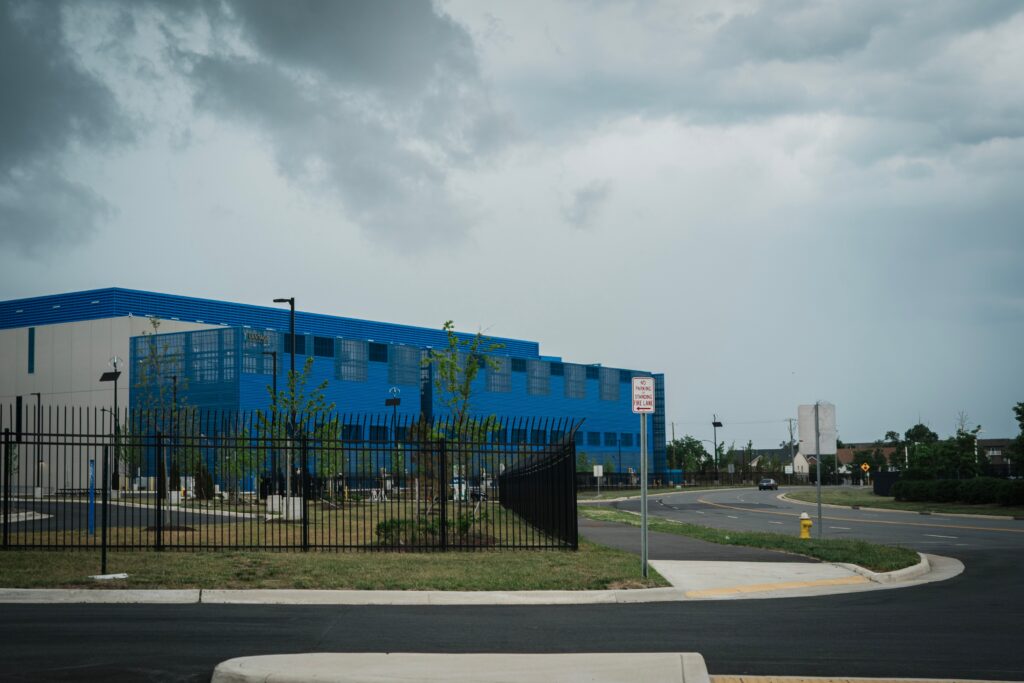
The Monterey Park vote was sparked by a 247,000-square-foot data center proposed for a largely empty business park. City officials said the facility would have been built hundreds of feet from some residents’ homes. It would have consumed three times the amount of electricity used by the entire city, population 60,000.
“People felt we were being targeted because this is a predominantly ethnic minority community,” said Jose Sanchez, a city council member who pushed for the ban.
Leading up to the Monterey Park ballot measure, community members jammed local hearings demanding the proposed data center be blocked. “They were hearing horror stories from other communities … These data centers have a bad reputation,” Yang, the mayor, said. Residents were concerned about noise concerns and excessive use of power and water, she said.
The city estimated that the data center could generate $3 million to $5 million per year for local services.
The city council ultimately blocked the project, Sanchez said, but residents wanted broader and more permanent action that could not be reversed by future elected officials.
Polling shows voters have turned sharply against data center projects even in places where they were previously welcomed. In 2023, 69 percent of Virginia voters said they would be comfortable living near such projects. Today that figure is 35 percent, a recent Post-Schar School poll found. Virginia hosts roughly a quarter of all data centers in the country.
The post Voters back first-in-nation permanent data center ban in city near L.A. appeared first on Washington Post.