It’s strange to see your life playing out on the big screen, but that’s what it felt like when I got an advanced look at TikTok Never Dies, a new documentary chronicling the high-stakes legal drama around banning TikTok in the United States. I’m not actually in the film, but as a China tech reporter, I’ve closely followed every twist and turn of the saga it covers, from when President Donald Trump first threatened to block TikTok in August 2020 to when he ended up brokering a sale of the app’s US operations in January 2026.
Directed by Emmy-winning documentary filmmaker Hao Wu, the film is premiering on Thursday at the Tribeca Film Festival. It captures six years in 90 minutes through the eyes of the TikTok creators whose lives were deeply entangled with the fate of the video app.
After former President Joe Biden signed a law in 2024 requiring ByteDance to sell TikTok or face a US ban, the company sued the government. It also recruited eight TikTok creators to join a parallel case, putting recognizable faces and names to the battle. Sensing that the drama would be a perfect plot line for a documentary, Wu immediately reached out to all the influencers involved in the lawsuit, eventually deciding to follow three of them: Steven King, Chloe Sexton, and Topher Townsend.
While they were all on the same side of the lawsuit, they are also quite different from each other and represent a diverse sample of the more than 200 millions Americans who use TikTok. They are from vastly different parts of the country—Arizona, Tennessee, and Mississippi. One is a hard-core Democrat, while another is a rising Republican influencer, and the third only makes funny, non-political content. “In some way, TikTok did the first round of screening for us,” Wu said in an interview.
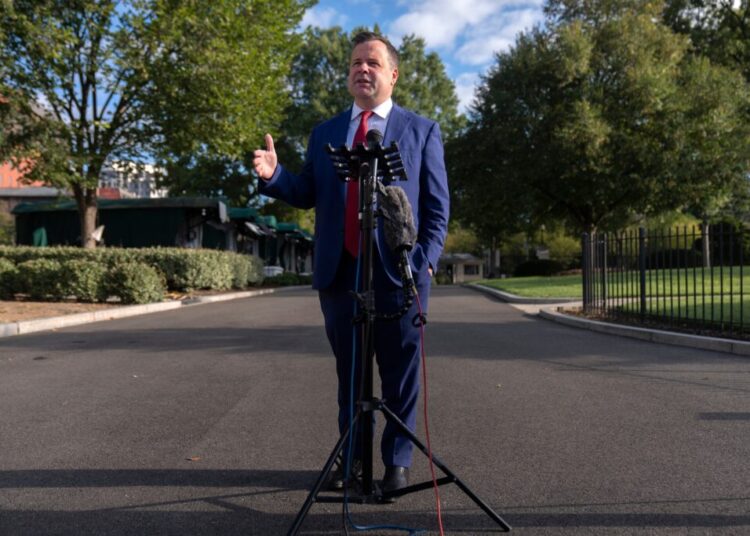
Wu’s camera was rolling during important moments, including the one day in 2025 when TikTok briefly went dark in the US to protest Biden’s imminent ban. Viewers of the film witness the exact second when the app disappeared for American users and the immediate reactions of the influencers.
The story of the TikTok ban was long and winding. It went through countless debates and battles when it passed through Congress, the Supreme Court, and the White House. The app went from being Trump’s pet issue, to a rare point of bipartisan consensus under Biden, to something Trump strongly opposed, before eventually becoming a bargaining chip in the US-China trade war. It was exhausting to follow it back then as a reporter, and the constant twists made it impossible to conclude what this whole saga meant for the US. But Wu’s documentary succeeds in finally making some sense out of the madness. “As a filmmaker, my intention is to make people go back and relive that experience, and think about what that experience revealed,” Wu says.
An All-American Tale
Wu previously worked in China’s tech industry before he began moonlighting as a documentary filmmaker. His earlier movie, People’s Republic of Desire, was an intimate look at China’s then-booming livestreaming industry, which predated the success of TikTok and short-form video in the US. Because of Wu’s personal and professional background, I expected his film to discuss TikTok’s Chinese origins in detail, but it doesn’t.
Wu says he made that decision because the story about the TikTok ban was more American than it is Chinese. To be fair, the narrative was shaped partially by the fact that TikTok didn’t give Wu access throughout the production process, despite his repeated outreach to the company.
“The film becomes how Americans, different types of Americans, argue with each other over this issue. It’s really not about what TikTok did or didn’t do. It’s about what Americans perceive TikTok to have done or haven’t done,” Wu says.
Even though TikTok’s Chinese ownership made it a political pariah in the first place, the US government never actually tried to prove in court that the app posed any concrete harm. The courts appeared to care far more about balancing the right to free speech with protecting national security. In many ways, TikTok became merely a vehicle (a very good one) for different groups in the US to project their anxieties about social media, child safety, disinformation, and extremism.
When Politics Trumps Truth
When Wu decided to make his TikTok documentary, he says he expected it to be another nerdy discussion of legal principles—much like one of his previous films about the Supreme Court case involving Harvard and affirmative action. But after the Supreme Court part of the TikTok story wrapped up, Wu explains, “I began to think about, what’s the story now? Why did Trump try so hard to save TikTok and sacrifice some of his political capital and anger some of his Republican allies in the process?”
Sexton, one of the protagonists of the film, was asking similar questions. She built a following by talking about her experiences being raised by a single mom and getting fired from her job while pregnant. After she fought tooth and nail to keep TikTok in the US, it seemed like the most powerful force on her side turned out to be Trump, a politician she vehemently opposes. At the end of the documentary, Sexton sounds nihilistic about the fight and questions whether the only thing that mattered in the end was Washington politics.
Wu says that including Chloe’s change of heart was a deliberate choice. “I think I would like to use those words to convey my warning to people who are so gung-ho in championing social media regulation. A lot of the decisions behind those are motivated by either money concerns, power concerns, or political concerns,” he says. “I want people to really think about how we still want to hold up the ideal of freedom of speech online or the marketplace of ideas. In some ways, I feel like through all this debate, we are letting go of those ideals. But that happened so gradually.”
This is an edition of Zeyi Yang and Louise Matsakis’ Made in China newsletter. Read previous newsletters here.
The post The TikTok Ban Was Never About TikTok appeared first on Wired.