One was arrested after allegedly threatening a person with a gun in a church parking lot. Another was convicted of felony charges of grand larceny and burglary. Still another was convicted of child molestation.
At least 97 of the nearly 1,600 people who were charged in connection with the Capitol riot have been accused of new crimes since Jan. 6, 2021, according to a study released on Thursday from Lawfare, the nonprofit legal issues publication.
The figure, which is larger than previously known, includes 19 cases that happened after Mr. Trump granted clemency to Jan. 6 defendants on the first day of his second term, according to the study’s author. The rest of the cases happened in the years after the riot.
Benjamin Wittes, a senior fellow at The Brookings Institution and the editor in chief of Lawfare, said his group researched names by mining court documents and calling county clerks’ offices.
“The pardons closed a chapter for these individuals politically. What I found is that for a significant number of them, the behavior that defined Jan. 6 didn’t stop when they left the Capitol,” said Katherine Pompilio, the study’s author. She said the report likely misses some cases of recidivism by the Jan. 6 defendants.
A previous study of Jan. 6 recidivism found at least 40 defendants faced other criminal charges, with 12 taking place after Mr. Trump’s clemency order. That study was done by Citizens for Responsibility and Ethics in Washington, a nonprofit legal watchdog group that has been critical of the administration. The Lawfare study found 19 criminal cases that occurred after the clemency.
In one of his first official acts of his second term, Mr. Trump issued a sweeping grant of clemency to nearly all of the people charged in connection with the attack on the Capitol, issuing pardons to most of the defendants and commuting the sentences of 14 members of the Proud Boys and Oath Keepers militias, most of whom were convicted of seditious conspiracy.
Trump Administration: Live Updates
Updated
- Republicans are toiling to defeat a proposal to stop Trump from creating a compensation fund.
- Trump’s contentious arch project will face questions at a planning meeting.
- Trump’s plan to nominate Blanche could set off a bruising confirmation battle.
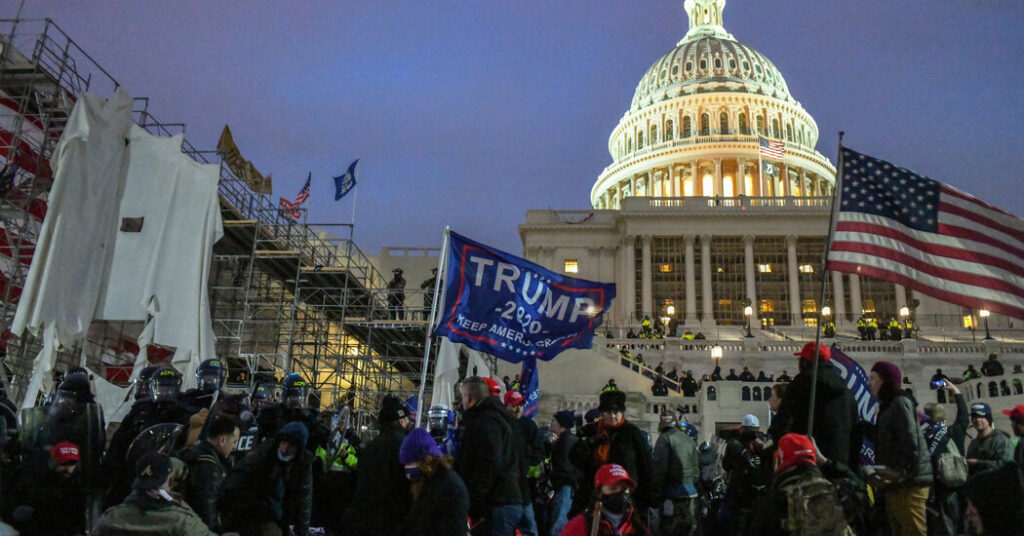
The president has repeatedly tried to revise the history of the deadly attack by a pro-Trump mob, who defaced the halls of Congress and attacked and injured more than 150 officers.
Although the administration has scrapped its plan to create a $1.8 billion fund to compensate allies that Mr. Trump believes have been politically persecuted, the president made clear on Wednesday that he still believes the rioters deserve a payout.
“These are great people that were destroyed, their families have been destroyed,” he said, adding, “They went there with love.”
But the study found that dozens of those involved in the riot have been less than model citizens since the mob violence.
The study found that Jan. 6 defendants had been charged with crimes that range from relatively low-grade offenses like property damage, possession of drug paraphernalia and trespassing to serious felonies like grand larceny, stalking, planning to assassinate law enforcement officials and prominent politicians, and defrauding government agencies. One was convicted in 2025 of reckless homicide.
At least 16 have been charged with sex crimes or crimes related to child sexual abuse material and at least six have faced domestic violence charges. Others have faced charges for physical assaults, illegal firearms possession, or other violent crimes. At least 20 have been charged with driving under the influence of alcohol or drugs or public intoxication.
The Trump administration has been eager to promote crimes committed by undocumented immigrants, often promoting posters and images with their names and offenses listed. But Mr. Trump and his allies have portrayed the Jan. 6 offenders as victims.
Luke Broadwater covers the White House for The Times.
The post Granted Clemency by Trump, Scores of Jan. 6 Rioters Have Been Accused of New Crimes appeared first on New York Times.