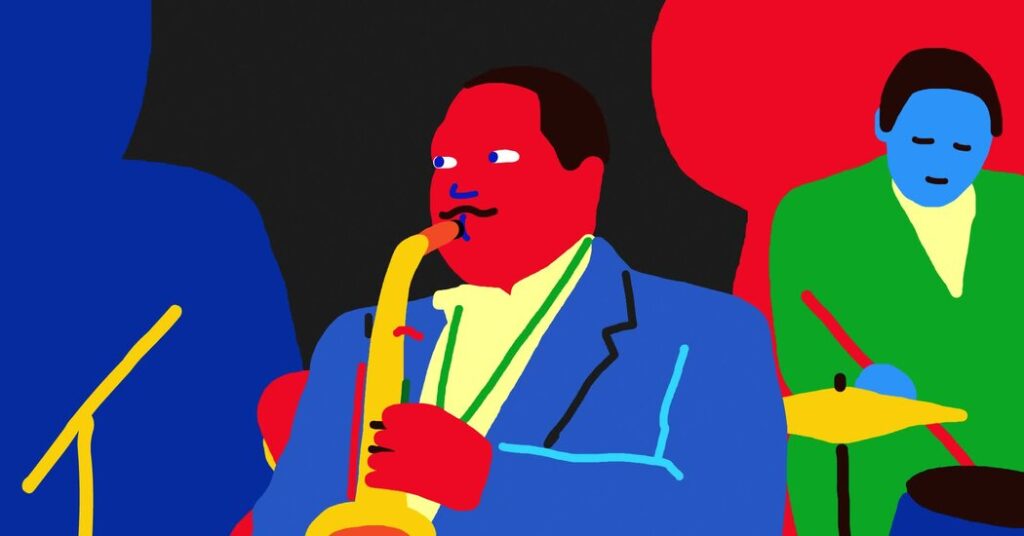
Charlie Parker arrived at a moment when jazz seemed poised to outgrow itself. Born in Kansas City, Kan., in 1920 and raised amid the thriving nightlife of neighboring Missouri, Parker absorbed the blues, swing and improvisation style that defined the era. But by the time he emerged on the national stage in the mid-1940s, he had become something else entirely: the engineer of a new musical vocabulary.
Nicknamed “Bird,” Parker transformed the alto saxophone into an instrument of startling possibility. His solos moved with uncommon speed and precision, weaving intricate melodic lines through harmonic structures that many listeners had never heard approached that way. Alongside innovators like Dizzy Gillespie, Thelonious Monk and Max Roach, Parker helped usher in bebop, a style that shifted jazz from popular dance music toward a more demanding and exploratory art form.
The impact was immediate, but the legacy proved even greater. Parker’s approach became a blueprint for generations of musicians, influencing everyone from John Coltrane and Ornette Coleman to countless artists working beyond jazz’s borders. His ideas traveled across genres and decades, reshaping how others thought about melody, rhythm and expression.
Though Parker died in 1955 at just 34 years old, his influence remains woven into the fabric of modern music. Listen closely to nearly any ambitious improviser, and you can still hear traces of Bird’s restless spirit: the pursuit of freedom, the embrace of complexity and the belief that music can always become something more. Read on and listen to our playlist for a primer on Charlie Parker’s enduring legacy, as told through the recordings, musicians and moments that continue to illuminate his genius, and be sure to leave your own favorites in the comments.
◆ ◆ ◆
‘Blue ‘N Boogie’
William Hill III, pianist and composer
Charlie Parker exemplifies what jazz music means to me, and that is joy and the freedom of expression. Hearing Parker play on “Blue ‘N Boogie” is almost as if he is dancing. His rhythmical phrasing and use of space allows the tune to flow and swing. The first time I heard Parker play this tune on this explosive live album at the historic jazz club Birdland, I was hooked. I listened to it over and over again, hearing something new every time I listened to it. In truth, Parker is a storyteller, and what better way to tell your story than playing the blues. To me, “Telling your story” means expressing your own life’s story. Where you’ve come from and the story of your own victories and challenges in life. Parker has laid a musical foundation for all musicians of any age to tell their story while playing this beautiful musical art form.
 Listen on YouTube, Spotify and Apple Music
◆ ◆ ◆
‘Hot House (Live)’
Lakecia Benjamin, saxophonist and bandleader
I picked this performance because it’s important not only to hear Charlie Parker, but to have the rare chance to actually watch him play. Seeing Bird in motion makes the genius even more undeniable — especially his flawless technique, effortless phrasing and precision feel, almost impossible in real time. Every line flows with such clarity and invention that you can understand why generations of musicians still study him. Beyond the virtuosity, there’s also an incredible sense of freedom and joy in the way he plays. Watching Bird brings the music to life in a way recordings alone sometimes can’t.
Listen on YouTube, Spotify and Apple Music
‘Laura’
Alan Braufman, saxophonist, flutist and composer
I was so lucky that my parents were jazz fans and music was constantly playing in the house in the ’60s. My mom’s favorite was the new music being made, so I had the sounds of Dolphy, Ornette, Jimmy Lyons and Jackie McLean in my head by the time I was 10. Soon I heard my first Charlie Parker album, a wonderful ear opener that showed the evolution from Bird to Ornette and the new music.
My favorite Charlie Parker tune? That’s so hard to say — it’s his body of work that’s so important. But if I had to pick one, it would be from the “Charlie Parker With Strings” album. What could have been a way to “commercialize” his music instead became one of his most beautiful albums. “Laura” has always been special to me, just such a beautiful tune and amazing performance.
Listen on YouTube, Spotify and Apple Music
◆ ◆ ◆
‘Embraceable You’
Somi Kakoma, vocalist and composer
What moves me most about Charlie Parker’s recording of “Embraceable You” is how dramatically he departs from the melody while preserving the emotional center of the song. As a vocalist and songwriter, I love the way he communicates longing without lyric, relying instead on tone, breath, timing and phrasing. Bird transforms the song without abandoning its heart. This recording reminds me that the emotional truth of a song resides both within and beyond language, and that often it lives in what is implied rather than stated. He teaches us that great improvisers don’t simply reinterpret a song; they reveal its essence. With every listen to this version, I keep waiting for Gershwin’s original melody to appear, then ultimately surrender to Bird’s startlingly intimate offering, one that confides something too tender for language alone.
Listen on YouTube, Spotify and Apple Music
◆ ◆ ◆
‘My Little Suede Shoes’
Cochemea Gastelum, multi-instrumentalist and arranger
Whether it’s “Charlie Parker With Strings,” his classic sessions with Dizzy Gillespie or the many live recordings we had in the house growing up, Charlie Parker continues to inspire me. Bird listened to and was influenced by everything from classical music to country-Western. His album “South of the Border” reflects that range: not only his virtuosic genius, but his versatility as a composer and collaborator with Latin big-band legends like Machito and Mario Bauzá. “My Little Suede Shoes” from that album is one I keep returning to. Starting with a percussion intro of congas and bongos (sounding reminiscent of Pharoah Sanders’s “Love Will Find a Way” years later), the melody unfolds, giving way to a solo that is by turns blissful and fiery, all with a sense of playfulness that sounds like pure joy.
Listen on YouTube, Spotify and Apple Music
◆ ◆ ◆
‘Parker’s Mood’
Monifa Brown, radio show host
The melancholy opening 12 notes of Bird’s definitive blues masterpiece are a clarion call that shakes me to the core. Recorded six and a half years before his passing, “Parker’s Mood” brings Bird’s tragically short 34-year life into sharp focus. The yearning, loss, hope and sense of love flowing from his alto transcend any requisite knowledge needed to absorb his genius. He manages to say more in a little over three minutes than most musicians dream of in a lifetime. Distilling the harmonic and melodic intricacies of bebop, his Kansas City roots, and time spent with Jay McShann, Bird’s earnest approach allows you to feel his heart. It’s a revelation to hear bebop’s progenitor conjure the same excitement on a ballad alongside the all-star rhythm section of John Lewis, Curly Russell and Max Roach. No wonder it’s a vocalese classic that has been sung by everyone from King Pleasure to Eddie Jefferson.
Listen on YouTube, Spotify and Apple Music
◆ ◆ ◆
‘Groovin’ High’
Jumaane Smith, trumpeter, vocalist and composer
Written by Dizzy Gillespie, “Groovin’ High” is widely regarded as one of the defining masterpieces of the bebop era. This recording is especially meaningful to me because it features a 19-year-old Miles Davis, whose centennial we celebrate this year and with whom I also share a birthday.
Growing up, this was one of the very first bebop tunes I learned, and to this day I remain captivated by its rare ability to feel both effortlessly accessible and astonishingly sophisticated at the same time. There is a playful elegance and hidden complexity within the melody that continues to reveal itself every time I hear it. Charlie Parker’s solo is pure genius — innovative, fearless and deeply expressive. To me, this performance embodies jazz evolving in real time, filled with brilliance, spontaneity and remarkable chemistry between these legendary artists.
Listen on YouTube, Spotify and Apple Music
◆ ◆ ◆
‘Yardbird Suite’
Naomi Extra, poet, writer and cartoonist
Here’s the scene. It’s upstate New York in the mid-1990s. A preteen Black girl with chicken legs and a slightly uneven Afro is singing and sashaying to the melody of Charlie “Bird” Parker’s “Yardbird Suite.” As a kid, I think I was drawn to the tune’s deceptively simple and danceable melody. “Yardbird Suite,” which was first recorded in 1946, has a playful lyricism that makes you want in on whatever the band is up to. In hindsight, it’s no wonder I felt the urge to sing along; Bird co-wrote lyrics to “Yardbird Suite” (also known as “What Price Love”) that were later sung by the vocalists Carmen McRae (who at the time went by the name Carmen Clarke) and Earl Coleman. Although Bird has come to be singularly known as one of the main innovators of the bebop sound, he cut his teeth in big bands of the 1930s and early ’40s. When I listen to “Yardbird Suite” I can hear Bird’s musical history — the rhythmic bounce that came from playing in swing bands alongside the jagged and energetic air of early bebop. It’s a listener’s delight.
Listen on YouTube, Spotify and Apple Music
◆ ◆ ◆
‘Just Friends’
Tania Feghali, filmmaker
This song reminds me of when — and why — I fell in love with jazz. As a teenager in Milan, jazz offered both shelter and a vision of how life might sound: Paris and New York, walking knowing why, Bird’s saxophone soaring. A decade later, late one summer night, I found myself in front of his house. In his cinematic arrangement of “Just Friends,” Bird carries far more than the suggestion of “just friends.” He transforms what was once written as a path backward into an opening. To me, the song contains the unnamed stages before love fully declares itself, a kind of prelude to love: the moment in which the possibility of it emerges. That trembling sensation — the unknown preceding an epiphany — the hesitance, the possible expansion. Bird adored this recording, considered experimental then as it pushed bebop into uncharted waters with strings. Ray Brown’s bass: the anchor from which Bird levitates. I wonder how it would sound with Max Roach on drums. Something in the recording remains suspended, difficult to fully grasp. Maybe that’s what I love most about it. “Just Friends” feels to me as though it encompasses all of Bird’s love songs, distilled into something subtler — the withheld sound of the possible itself.
Listen on YouTube, Spotify and Apple Music
◆ ◆ ◆
‘Scrapple From the Apple’
Joshua Jelly-Schapiro, author
In the pantheon of breakfast meats, it’s fair to say that scrapple — a fried-hard loaf of pig parts and cornmeal, once made popular in America’s Mid-Atlantic cities by Dutch and German immigrants — is a poorer relation to bacon. But for Charlie Parker, this savory mash was an apt metaphor and muse for a tune that distilled his art’s commitment to progress, and is now canon (for every high school jazz band).
Like many tunes Bird wrote for his band to play in the New York nightspots where they birthed bebop in the late 1940s, “Scrapple From the Apple” is built from chords that jazz hands already knew. His composition’s A section borrows the changes from Fats Waller’s “Honeysuckle Rose,” while the eight bars of its B section are from George Gershwin’s “I Got Rhythm.” The new melody Bird placed atop these changes, and that he and Miles Davis riffed on to record it, is at once angular and bright. Their horns dart and pause and twirl, giving us fresh ways to feel the notes that familiar chords held — or could. “Scrapple From the Apple” is the sound of jazz’s migration from ballrooms to basement clubs, and from dancing to intellect and vibe. But it also anticipated by decades the ways that hip-hop and dub made sampling and “cut-’n’-mix” definitional of (post)modern music. Charlie Parker may not have been a D.J., but like Q-Tip or Madlib, he exemplified how to at once inhabit the culture of one’s musical parents and make it fresh.
Listen on YouTube, Spotify and Apple Music
◆ ◆ ◆
‘Now’s the Time’
Trineice Robinson-Martin, vocalist and educator
A great mentor of mine, the jazz griot Donald Meade, would say, “If blues is the problem, jazz is the answer.” The genius of Charlie Parker was his ability to musically acknowledge the problem while offering answers. Parker amplified the historical and cultural meaning of the blues while revealing boundless possibilities for reinterpretation and resolution.
“Now’s the Time” exemplifies this genius. For me, Parker’s brilliance was never about the number of notes he played or the speed at which he played them. His genius lived in his ability to take a melodic concept and instantly explore, expand and reinterpret it while remaining deeply rooted in the cultural experience. Charlie Parker showed us that the answer to the blues lives in the possibilities jazz provides. His revolutionary approach has helped transformed our conception of reality into the enduring foundation upon which generations of musical innovation have been built.
Listen on YouTube, Spotify and Apple Music
The post 5 Minutes That Will Make You Love Charlie Parker appeared first on New York Times.