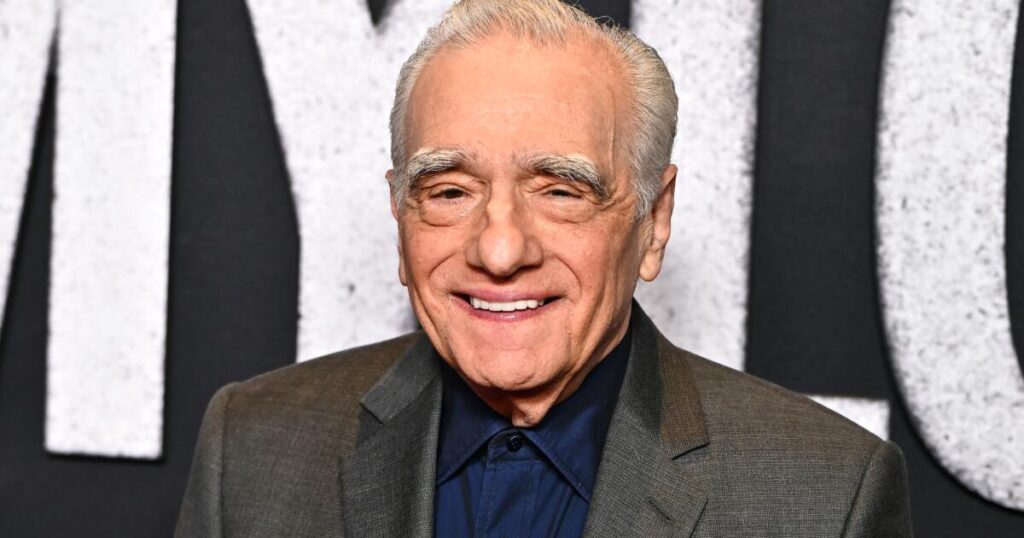
Oscar-winning director Martin Scorsese is joining the ranks of entertainment industry power players embracing generative AI.
Black Forest Labs, the German AI startup behind the text-to-image model Flux, announced Tuesday that Scorsese is joining the company as an advisor.
The company unveiled the collaboration on its website with a video of the auteur using Flux to storyboard scenes, which involves mocking up shots before filming.
“This conveys a cinematic intelligence,” he said in the video, discussing the program’s uses with Black Forest Labs co-founder and Chief Executive Robin Rombach and Creative Artists Agency co-founder Michael Ovitz. According to the New York Times, Ovitz, an investor in Black Forest Labs, helped bring Scorsese aboard, along with Rick Yorn, Scorsese’s talent manager, whose investment firm BroadLight Capital is also an investor.
In a statement, Scorsese emphasized the potential for AI to transform the storyboarding process.
“For 70 years, I’ve been creating my own storyboards. There’s always been this problem of how do you communicate what you see in your head to your cast and crew. There are some things you have to see and feel,” he said. “I’m interested in the intersection of technology and storytelling, and seeing how that can push the bounds of creativity to create deeper and richer experiences for audiences.”
Traditionally, storyboarding is done by hand or digital illustration through a collaboration between directors and storyboard artists.
Scorsese’s public espousal of this technology marks the latest shift in attitude about AI from powerful Hollywood creatives. Since generative AI became widely accessible in 2022, Hollywood has struggled to navigate its power to rapidly upend industry norms.
Scorsese is not the first decorated filmmaker to embrace AI. James Cameron, the Oscar-winning “Avatar” director, is on the board of directors for Stability AI, where Rombach worked before launching Black Forest Labs. In his keynote address at the AI on the Lot conference last week, director and screenwriter Paul Schrader expressed a mixture of admiration and caution toward the technology.
“AI does not create — it combines,” Shrader said. “If AI wants an idea, it has to go to where that idea already exists. Of course, you can make the argument that that’s all artists do anyway, and to a degree that’s a valid argument. But you still have to come up with something.”
Not everybody is on board with generative AI’s potential transformations. Guillermo del Toro and Seth Rogen spoke out against the technology at Cannes last month, and below-the-line wokers, screenwriters and actors have continued to express apprehension and even horror at the prospect of being replaced by generative AI.
Scorsese’s entry into the AI field might especially shock fans given his traditionalist approach to filmmaking. In 2019, he famously criticized Marvel movies, calling them “theme parks” and “not cinema.”
“It isn’t the cinema of human beings trying to convey emotional, psychological experiences to another human being,” he said in a 2019 interview with Empire Magazine.
Even if his filmmaking centers humanity, Scorsese’s partnership with Black Forest Labs demonstrates his willingness to incorporate non-human assistance.
“Remember, cinema is a young medium, only around 125 years old, so we have to be open to how it can evolve,” he said in the statement on Black Forest Labs’ website.
The post Martin Scorsese is betting on AI to transform the storyboarding process appeared first on Los Angeles Times.