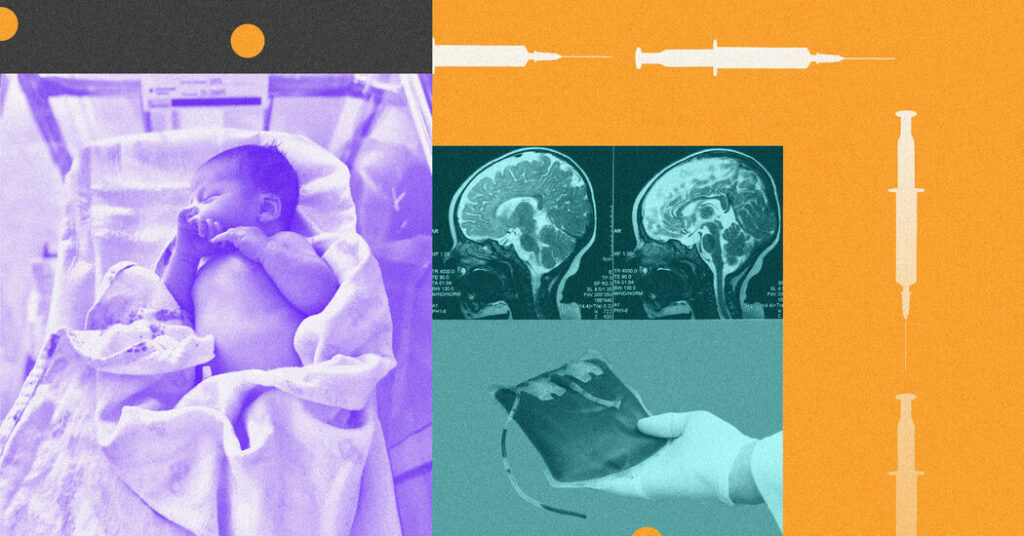
Doctors around the country say they are seeing more cases of serious, sometimes life-threatening illnesses that vaccines have long kept at bay, including whooping cough and bacterial infections that can cause pneumonia or meningitis.
The concern among doctors comes on the heels of a resurgence of measles nationwide, fueled by distrust in vaccines that grew during the Covid-19 pandemic, and that Health Secretary Robert F. Kennedy Jr. and President Trump have amplified. Public health experts have long seen measles as a harbinger: Because it is so exceptionally contagious, it can be the first disease to spike as vaccination rates broadly decline, and a sign of more to come.
For some of these diseases, national data show clear and substantial increases in recent years; for others, the increases are small, or there are anecdotal indications from doctors on the ground of increases that public statistics don’t currently confirm.
While most children recover, these diseases aren’t benign. Many children endure extended hospitalizations. Some infections can be fatal.
Dr. Meghan Hofto, a pediatric hospitalist at the University of Alabama at Birmingham, is one of the doctors who said she is seeing more illnesses that she used to encounter only rarely. This year, she and her colleagues have treated more children than usual with persistent diarrhea. A child with a run-of-the-mill stomach virus might need a day or so of IV fluids, but these patients were being hospitalized for three or four days.
The culprit: Rotavirus, which once caused tens of thousands of hospitalizations a year in the United States but was largely swept away by vaccines introduced 20 years ago. These vaccines were so effective that Dr. Hofto could recall treating only four or five children with rotavirus in the past decade. Now, she said she had treated about that many already this year, and none of them were vaccinated.
Dr. Jessica Kirk, a pediatric hospitalist in Fairhope, Ala., recently treated an unvaccinated toddler who was hospitalized with pneumonia from two simultaneous infections, Haemophilus influenzae and Streptococcus pneumoniae. Routine childhood vaccines can protect against both S. pneumoniae and a common form of H. influenzae, but vaccinations against both illnesses have declined in recent years.
The child that Dr. Kirk treated for both infections needed antibiotics and oxygen to get through the illness.
Some of these conditions can lead to serious complications. H. influenzae and S. pneumoniae infections can cause sepsis, meningitis and pneumonia. Dr. Hofto said she had treated 4- to 6-week-old infants with whooping cough, or pertussis, who seemed fine at times but then stopped breathing after a coughing fit. “It’s hard to know when they’re safe to go home,” she said.
Many children with whooping cough don’t have anti-vaccine parents, she said. They are just too young to have been vaccinated yet, and the disease has been circulating more in recent years as overall vaccination rates have declined. There were more than 28,000 cases reported last year, compared with around 7,000 in 2023.
Andrew Nixon, a spokesman for the Department of Health and Human Services, said in an emailed statement, “We reject the premise that providing Americans with transparent information about the benefits and risks of medical products undermines public health.”
Even when the worst doesn’t happen, emergency room doctors are having to subject some unvaccinated children with high fevers to more invasive testing, including spinal taps, to rule out life-threatening infections that vaccinated children are protected from. Infections like H. influenzae and S. pneumoniae can be hard to recognize because they can resemble less serious illnesses before rapidly leading to complications. And because near-universal vaccination prevented them for so long, many doctors have little experience diagnosing them.
The alternative to invasive testing, in some cases, is to start unvaccinated children on stronger antibiotics than doctors might otherwise use, which can have more side effects, said Dr. Robin Harrison and Dr. Taylor Rosenbaum, pediatric hospitalists in Miami.
Several doctors also said they had seen a growing number of adults refuse tetanus shots for themselves, and parents refuse them for their children, after injuries such as dog bites or lacerations from dirty objects. Roughly 1 in 10 people infected with tetanus die; a full course of vaccination is very effective at preventing infection.
Dr. Sonali Meyer, an emergency medicine physician in Minnesota, said she had treated a patient last year who refused a tetanus shot after slicing his hand open.
“Big pharma doesn’t need my money,” she recalled the patient telling her. She said another patient refused a tetanus shot by saying, “I know you get paid more the more shots you give, but no thanks.”
With each passing year, doctors said, the hesitation around vaccines seems to expand to new frontiers.
Two anesthesiologists said that, starting around 2022 or 2023, they had occasionally seen patients who refused to consent to blood transfusions before surgery because they didn’t want blood from vaccinated donors. And a growing number of parents are refusing to allow their newborns to receive vitamin K injections, which help prevent bleeding. Until recently, neonatologists said, these shots were accepted even by many families that rejected vaccines.
Five doctors said they had seen brain or abdominal hemorrhages in infants whose parents had turned down vitamin K, including one who died and another who was partly paralyzed.
The onslaught of preventable illness and other health risks can feel overwhelming, doctors said. So can navigating the medical misinformation some patients recite.
“It just feels like you’re a tiny little boat with a giant tidal wave coming at you,” said Dr. Erin Charles, a regional pediatric hospitalist at Seattle Children’s Hospital. “And you might convince one family here and there.”
Many parents continue to refuse vaccines even after their child has been hospitalized with a vaccine-preventable illness, doctors said. Dr. Kirk said she had never had a parent in that situation tell her they had changed their mind and would have their child vaccinated on the standard schedule. Dr. Hofto said she could sometimes persuade families, but often not.
Some “may view the illness as an isolated experience, especially if their child ultimately recovers,” Dr. Hofto said.
Doctors said they feared that, as vaccination rates decline more, illnesses now popping up sporadically would become more common.
Dr. Rosenbaum said she had been telling the medical residents training under her that they might have to learn together how to treat illnesses she’d never encountered during her own training because of vaccines.
For many such illnesses, “it’s going to be probably a low uptick,” she said. “Until it’s very fast.”
Maggie Astor covers women’s health and the health effects of government policies for The Times.
The post Hospitals See Diseases Resurge as Vaccinations Decline appeared first on New York Times.