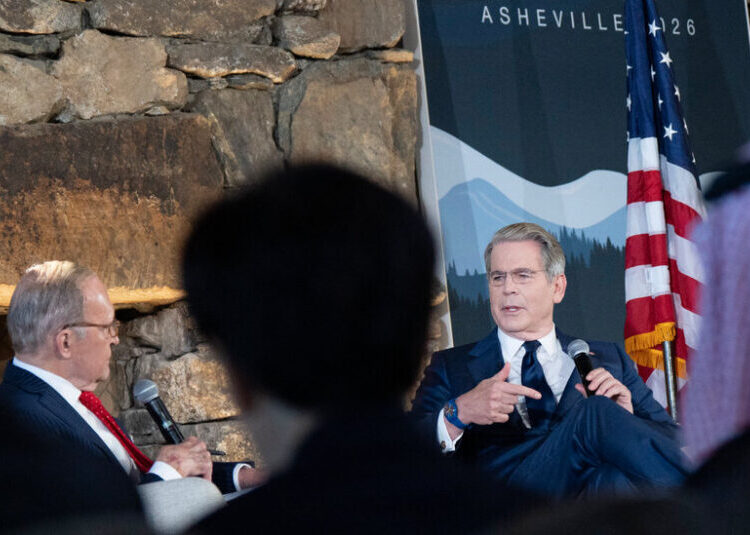
Paramount Chief Executive David Ellison has been circling the globe, meeting government regulators who will ultimately decide the fate of his controversial $111-billion takeover of Warner Bros. Discovery.
Last week, Ellison spent two hours answering questions from U.S. Justice Department antitrust lawyers in a bid to secure a key government approval — one that few people believe is in doubt because of President Trump’s strong support of tech billionaire Larry Ellison and his son’s ambitions to amass more power.
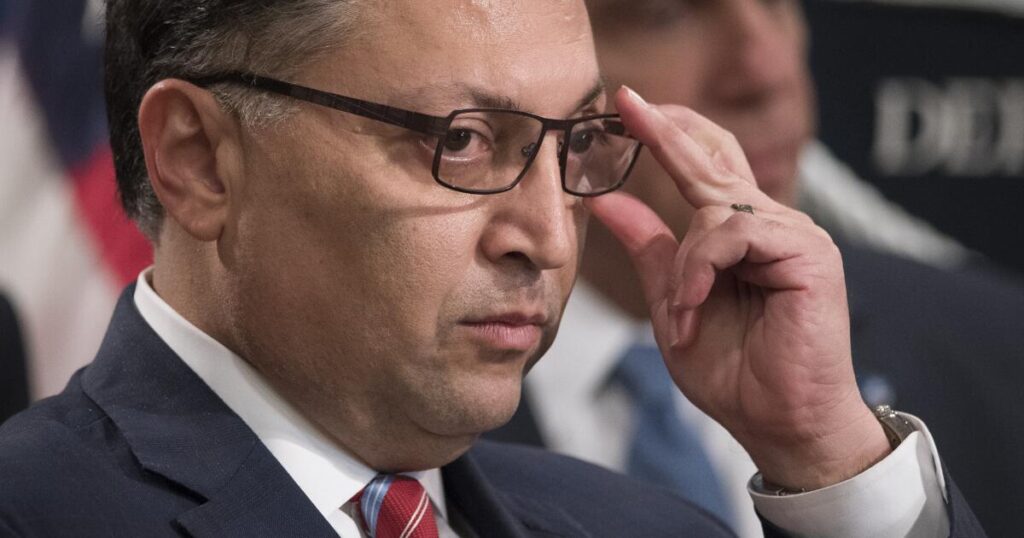
Throughout his travels, David Ellison has been accompanied by a savvy wingman: Makan Delrahim.
Delrahim, Paramount’s chief legal officer, served as the nation’s top antitrust regulator in the Justice Department during Trump’s first term. The 56-year-old Iranian American, who grew up in Los Angeles, is the architect of shrewd moves that have brought Paramount within reach of its blockbuster merger that would redefine Hollywood.
Politics have permeated the process — even before Trump announced he would get involved. Opponents have been suspicious of the Ellisons, given the family’s ties to Trump and programming changes to redefine Paramount’s CBS, including last month’s departure of late-night comedian Stephen Colbert and a shakeup at “60 Minutes,” CBS’ newsmagazine.
Buying Warner Bros. Discovery would give the Ellisons control of both CBS News and CNN.
Paramount’s bid for Warner Bros. has sparked dread in Hollywood for another reason, too: Thousands of jobs already have vanished through a string of media mergers.
More than 5,000 artists and entertainment industry workers have signed an open letter, calling on California Atty. General Rob Bonta to try to block the deal on antitrust grounds.
In an interview with The Times, Delrahim responded to concerns and criticisms. This interview has been edited for length and clarity:
Where does the regulatory process stand?
We are still going through the regulatory approval process. We actually started planning for the regulatory approval filings last summer. We knew we were going to be pursuing this transaction but it took a few months longer to sign the transaction than we thought. There were some interveners [Netflix, Comcast], but we planned ahead.
Do you have a commitment from Trump or his administration that you’ll get a thumbs up?
There are no deals with the president. We have a deal with the Warner Bros. shareholders. We’ve submitted [applications] to the governments of Europe, Canada, U.K. and the U.S., and that’s where it is.
You got a head-start because you filed a regulatory approval in December — months before Paramount had a deal with Warner. Why so soon?
We were always very skeptical [the Netflix deal] would ever go through. The only way to really show the [Warner] board that our deal would get through — because it doesn’t have antitrust problems — was to move as fast as we could.
One of the benefits being a former [DOJ] enforcer and having a team of outside lawyers who are also former colleagues and enforcers was that we anticipated what the government would ask for. Those were questions that we would have asked, and so we provided those answers.
Your timeline is aggressive. Some suggest Paramount wants this deal done before the mid-term elections.
I don’t think it’s aggressive. It has nothing to do with the midterms. The midterms do not change the officials at the Justice Department or the FCC — we have that minor application there. The midterms have no effect on the European Commission or anybody else. We’ve been very transparent and proactive with members of Congress and with the state attorneys general and the federal authorities.
Are you preparing to defend a potential antitrust challenge from Atty. General Bonta?
Well, no matter what field you’re in, whether it’s antitrust or whether you’re preparing for a football game, you always prepare the best you can for the worst, and you hope it never gets there. So, we’re preparing for challenges from anybody and everybody. But I don’t think any serious antitrust enforcer who looks at the facts, the law, the economics of this transaction will see an antitrust violation.
Why are you so confident?
There’s no element of this merger that is anti-competitive. Once you look at it, it’s incredibly pro-competitive. It increases output, it increases jobs, and it lowers the cost to the consumers. If you actually try to block this deal, you’re going to harm consumers, you’re going to harm creative talent, because you’re going to harm the creative ecosystem — the vision that David [Ellison] is trying to deploy here. It’s transformative from the efficiencies that it creates.
David Ellison has promised to release 30 films a year. Was that commitment to show that this merger will not be a repeat of Walt Disney Co.’s 2019 purchase of Fox?
I’m quite familiar with that one because I was at the Justice Department and reviewed it. Disney-Fox was a transaction with a different thesis. Disney wanted to get into streaming and they wanted to get scripted series. It wasn’t about studios trying to increase output.
Our transaction, as David has described, is motivated to create more content to feed the theaters, then streaming. We have a natural economic incentive to create more content. We’ll still be in fourth place after this transaction on the streaming side — almost half the size of Netflix.
David Ellison hasn’t made any commitments on the television side or pledged pledge to keep the various TV studios intact. Why?
I don’t think there’s much of an overlap on the television studios. Look, you have incredible studios in HBO, Warner Bros. Television, certainly our own studio. We’re not paying money to limit supply. It’s the exact opposite.
There is overlap between CBS News and CNN. How are regulators looking at that issue?
We’re very proud of CBS News and hopefully CNN, post-transaction. There is very limited overlap. Why? Because CBS News only airs a few hours a week of programming whereas CNN is 24/7, and it has international reach.
Antitrust regulators are going to see that it’s going to create synergistic effects. You might be able to cross-program and more people will be exposed to the incredible programming of CBS News. They’ll benefit from each other’s independent strengths.
During the first Trump administration, you said merger conditions were problematic because it’s difficult for the government to enforce behavioral remedies. Has your thinking changed?
No, I’ve been quite consistent. If there’s an antitrust problem, you need a divestiture [selling assets]. I don’t think there’s a remedy needed in this transaction. But having said that, we’re happy to engage with regulators to discuss where they see a problem and a possible solution. We’re always wanting to engage in constructive dialogue.
Would Paramount spin off CNN?
I don’t see that. I can’t see any antitrust reason to do so. That would be a weaponization of the antitrust law, and that would not be appropriate.
Many people in Hollywood view the merger with trepidation because of the prospect of more job losses. Others see it through a political lens. How do you evaluate the politics?
Politics is part of life. It’s part of the beautiful process of democracy. Generally, we are very empathetic to the folks in Hollywood, but this transaction will actually create more and better and exciting jobs. David is an absolute lover of films; he’s a filmmaker himself. For the first time, you are getting an owner who comes from the creative side.
Let’s be honest. There’s a lot of fear-mongering, particularly from people in Washington, D.C. They are running a political campaign. Some of these people are trying to inflict harm on this transaction really because of their own antisemitic views. Regulators and law enforcement officials will see right through that.
Do regulators share others’ concerns about the merger debt — $79 billion — for the combined company?
Some regulators appropriately have asked about it. They say: ‘This is what we have heard, that you guys are not going to be around because of this debt,’ which is just silliness. David and his family are owner-operators. They’re not rented CEOs. They have over 50% ownership. They put their money at stake and my money is on them.
The post Paramount’s Delrahim slams ‘fear-mongering’ and partisan politics clouding Warner Bros. deal appeared first on Los Angeles Times.