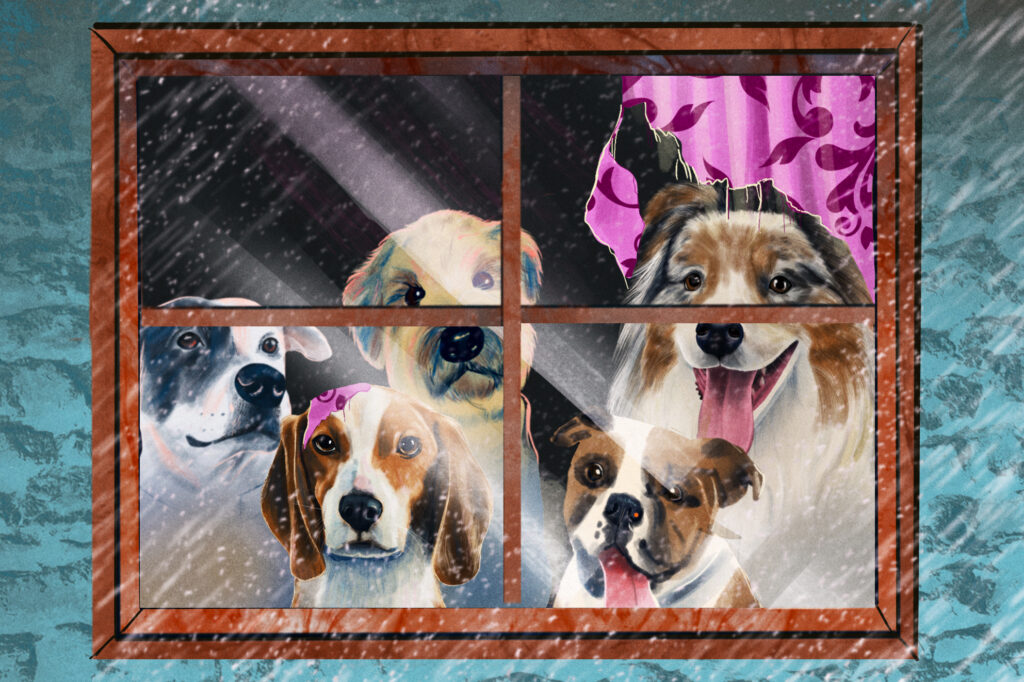
Extreme weather of any sort — too hot, too cold, too windy, too rainy, too icy, too snowy — has wide-ranging effects. It threatens our homes and communities, as well as our comfort and safety. It also can take a toll on our pets, especially dogs, who require daily walks and outdoor bathroom breaks.
So what’s to be done when the weather is too severe to go outside? Here are tips from animal experts about what to do if you and your dog are stuck inside for long stretches.
Signs that it’s not safe to take Spot outside
It can be tricky to determine whether it’s safe to take your dog for a walk, but there are some clear guidelines that vets say you should follow. It’s also worth noting that if your pet refuses to go outside, it’s okay to listen to him. You know your dog better than anyone and will be able to determine the difference between a stubborn “Nope!” and a legitimate “Maybe not today, human?” when the weather outside is frightful.
“Temperature and humidity are the best ways to determine if it’s too hot or too cold,” says Miriam Fink, a medical director at Bond Vet on Capitol Hill in Washington. Fink advises exercising caution when temperatures are over 70 degrees, particularly when the sun is blazing, which can make pavement too hot for dogs to walk on safely.
“If you’re unsure of temperatures, put the palm of your hand on the pavement,” she says. “If it’s too hot to keep your hand on for five minutes, then it’s too hot for your dog’s paws to be on.” When hot pavement is an issue, Fink recommends walking your dog early or late in the day, or moving their route to cooler, shaded or grassy areas.
“If you do choose to walk them outside, use booties or dog shoes to protect their feet,” says Fleur Jones, an emergency veterinarian at VEG in Clearwater, Florida. “Extreme heat or cold can cause damage to their paw pads, which could lead to an ER visit.”
When temperatures dip below freezing, Fink says, “your dog’s feet can be at risk of frostbite or irritation from salt on the road.” Snow, too, can be problematic, especially for low-slung dogs. “If the snow is deeper than your dog’s height, that is a reason to not walk them outside,” Jones says.
How to handle bathroom needs when the weather (or Rover) isn’t cooperating
“There can be so many reasons your pet does not go outside to use the bathroom,” Fink says. She recommends pad-training puppies to protect them before they’re vaccinated and to imprint that training in the event you need to rely on it down the line.
“Puppy pads are great for pets that have used them before,” Jones says. For dogs that are not pad-trained, Jones suggests using a fake grass pad with a tray underneath for indoor bathroom needs or simply letting them go on the floor.
“If potty time needs to happen, there is no shame in letting them go in the house,” she says. “Try to coax them to an area of tile or wood so that you can have sanitary cleaning and disinfection.”
It’s important to remember that dogs feel shame, so avoid scolding your pet for doing her business indoors when the weather makes outdoor breaks impossible.
“They know to go outside, so they feel bad when they are not doing the right thing and going outside,” Fink says. “Just ignore the behavior. The less attention to it, the less of an emotional response they will have from doing the wrong thing.”
If allowing your pet to relieve herself inside isn’t an option, Fink adds, “try to find periods throughout the day that are amenable to going outside.” Shifting feeding and watering times around breaks in the weather can also help. “Feed them, wait about 30 minutes and then take them outside. That is about the time they need to poop or pee,” she says. “Timing is key with this.”
Indoor activities that prevent Scout from going nuts
Bathroom needs are the most pressing concern, but dogs may also feel the effects of being stuck indoors in other ways.
“This can be tricky,” Fink says. “Mental stimulation is going to be key here — mental stimulation is always going to tire your pet out more than physical activity.” She recommends food puzzles, Kong toys and snuffle mats to wear your dog out when walks, romps and games of fetch are out of the question. “You can also teach your pet new tricks and reinforce old ones,” she adds. “Make them work for a treat. They will start to show signs of frustration, and then you can reward them.”
To really tire a dog out, Jones says, fill a Kong toy with peanut butter or Greek yogurt and freeze it. “It will entertain them longer,” she says. “Doing indoor training sessions or playing with toys with them will help keep them entertained and mentally stimulated.”
Safeguards to protect your dog (and your home)
Bored pets, like humans, can find themselves getting into trouble just to while away time. “When pets are stuck indoors, they tend to become mischievous, counter-surf and eat things they shouldn’t,” Jones says. When foul weather keeps you housebound, put away all human food, especially anything toxic to dogs, “and don’t leave anything on the counters. Close off areas of the house that have trash cans or loose items at risk of ingesting.”
Finally, if your dog is going really stir-crazy and posing a risk to himself or your household, call on a professional. “If they do become destructive, definitely consult with your veterinarian,” Fink says. “There is never shame in needing medical assistance to safeguard your pet when routines become shifted. It’s only temporary, and safety is key.”
The post How to keep pets from going nuts when the weather keeps you inside appeared first on Washington Post.