Three things you may not know about me: I am a big woman, 6 foot 2 inches in my stocking feet. My laugh is loud, if not to say piercing. And I never apologize to furniture.
That’s why I identified so strongly with Auntie Marsha, the hero from “The Serpent in the Grove,” one of five regional winners of the 2026 Commonwealth Short Story Prize.
“Big in the way of women who never apologise to furniture,” the story tells us, “she had a laugh that shook dust from joists and a voice that could soften to coax a child from a ledge.”
I’m joking, of course. No one could possibly recognize themselves in this rococo garble. It reads as if the author had consumed a bunch of novels and perhaps the Encyclopaedia Britannica, but somehow never interacted with humans in the real world.
Which may be the truth.
While the author’s name is listed as Jamir Nazir, Pangram, an artificial intelligence detector with strong external validation, suggested the story was 100 percent AI-authored. When science fiction author James Yu ran the other stories through Pangram, he found that two of them also came back as likely AI-written — wholly or substantially. They contain similarly almost-coherent metaphors.
The Commonwealth Foundation, which oversees the short story competition, seems to be standing by the prizewinners. Kelsey Piper has an excellent essay explaining why “the age when you can run a literary magazine on trust is over. You can either decide AI submissions are fine, or you can filter for them.”
Piper is right, and since I cannot improve on her conclusion, let me instead ask: Why should we care whether authors are carbon-based, rather than silicon?
Many writers and readers will assume the answer is obvious. But if Pangram is correct, Commonwealth’s judges, who were selected for their “expertise, passion for the literary community and strong backgrounds in writing,” awarded a majority of their prizes to machine-written prose. If that’s the case, presumably these certified experts rejected some human-written stories in favor of “AI slop” — as did the many New York Times readers who preferred AI snippets to excerpts from award-winning writers in a recent blind test.
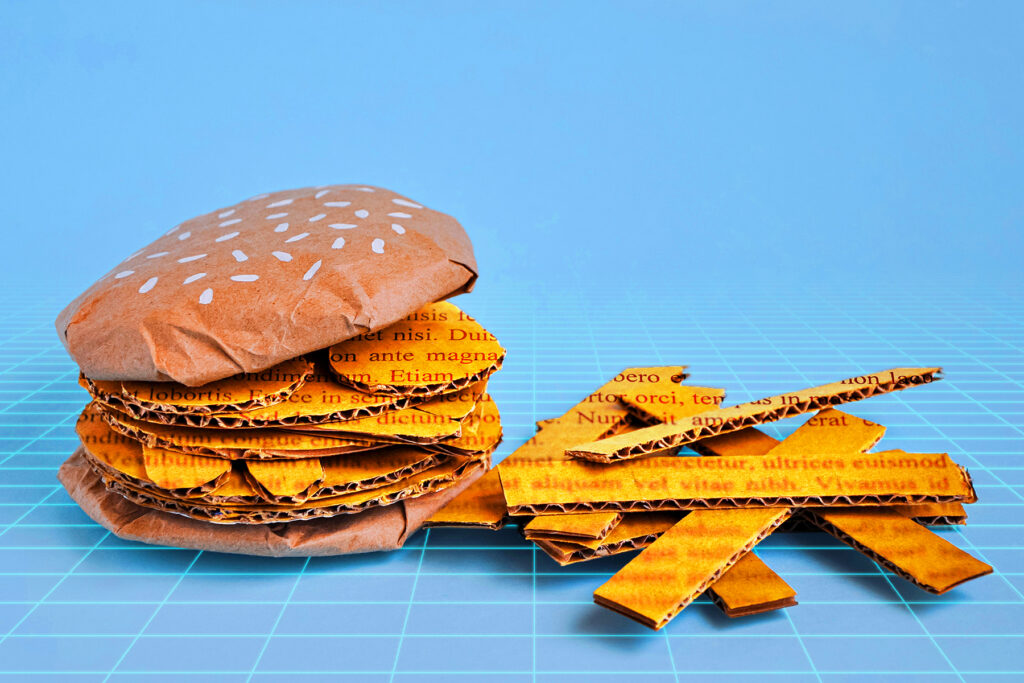
This suggests that many AI critics have it backward. If the proliferation of AI writing is a problem, it’s not because it’s terrible slop unfit for human consumption; it’s a problem because in some specific ways, it’s too good. It is the literary equivalent of fast food: convenient, cheap, hyper-consistent and relentlessly optimized to tickle our pleasure centers.
Sure, AI produces some crazy metaphors and weird hallucinations, because the models have all of our text and none of our context. On the other hand, AI is really good at optimizing for readability, both stylistically and structurally. AI fiction tends to be smoother, tighter and psychologically simpler than its human-written counterparts, explicitly stating themes, constructing “single-track narratives with fewer loose ends” and portraying fewer morally ambiguous characters.
This describes the three AI-flagged stories but not the two identified as human-written. It also describes what a lot of people want from their fiction — possibly even some who pride themselves on their literary sophistication. After all, AI didn’t evolve this style by accident; it writes that way because that’s what human readers rewarded. If so, one might argue that’s not a problem for anyone except (she said nervously) professional writers. What’s wrong with AI giving readers what they want?
Because as with fast food, what people want now isn’t necessarily good for them in the long run. It would be bad if new reading material mostly came from the same handful of models — a kind of intellectual monocropping, if you will.
Those who are familiar with the Irish famine know why monocropping is dangerous: The population of the island of Ireland still hasn’t fully rebounded from the potato blight that started in 1845 and wiped out its staple crop, killing more than 1 million people and forcing as many as 2 million to emigrate.
I’m not suggesting AI writing will result in mass death. I’m saying that just as it’s better to cultivate a variety of crops than to rely on one highly productive species, it’s better to cultivate a range of ideas from different sources. When you go all in on one big thing, you create a single point of failure.
Intellectual monocropping is not solely an AI problem, of course (see the recent headlong institutional rush into social justice politics). However, despite the best efforts of totalitarian movements, humanity has always maintained a healthy reserve of idiosyncratic thinkers. It would be a shame to lose that by ceding too much of our cognitive work to machines, which have been trained on the same broad corpus of human texts and tweaked to conform to the same narrow set of legal rules and cultural norms.
That’s the problem with AI fiction; when you’re taking a weighted average of prior human writing, without the leavening addition of personal experience, it’s easy to get something acceptable and hard to get something unforgettable. So, I fear a world where AI dominates fiction, think pieces and doctoral dissertations. We don’t need human writers because AI offers us too many wild metaphors. We need human writers because AI provides too few wild ideas.
The post AI fiction is the new fast food appeared first on Washington Post.