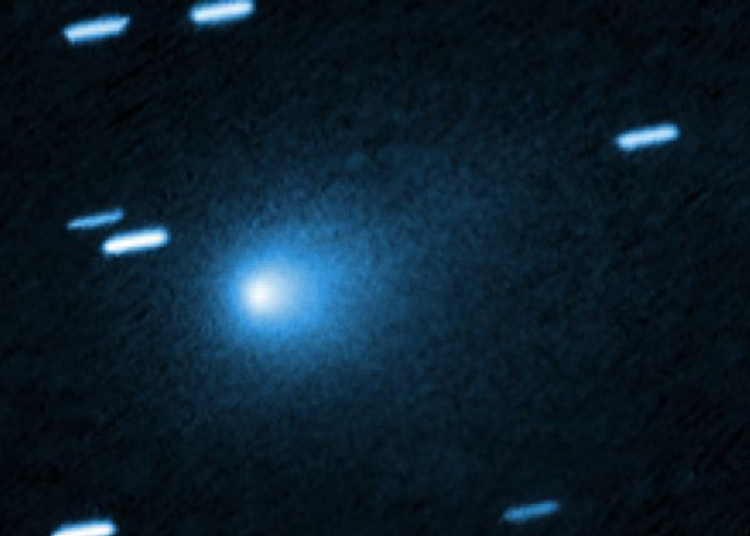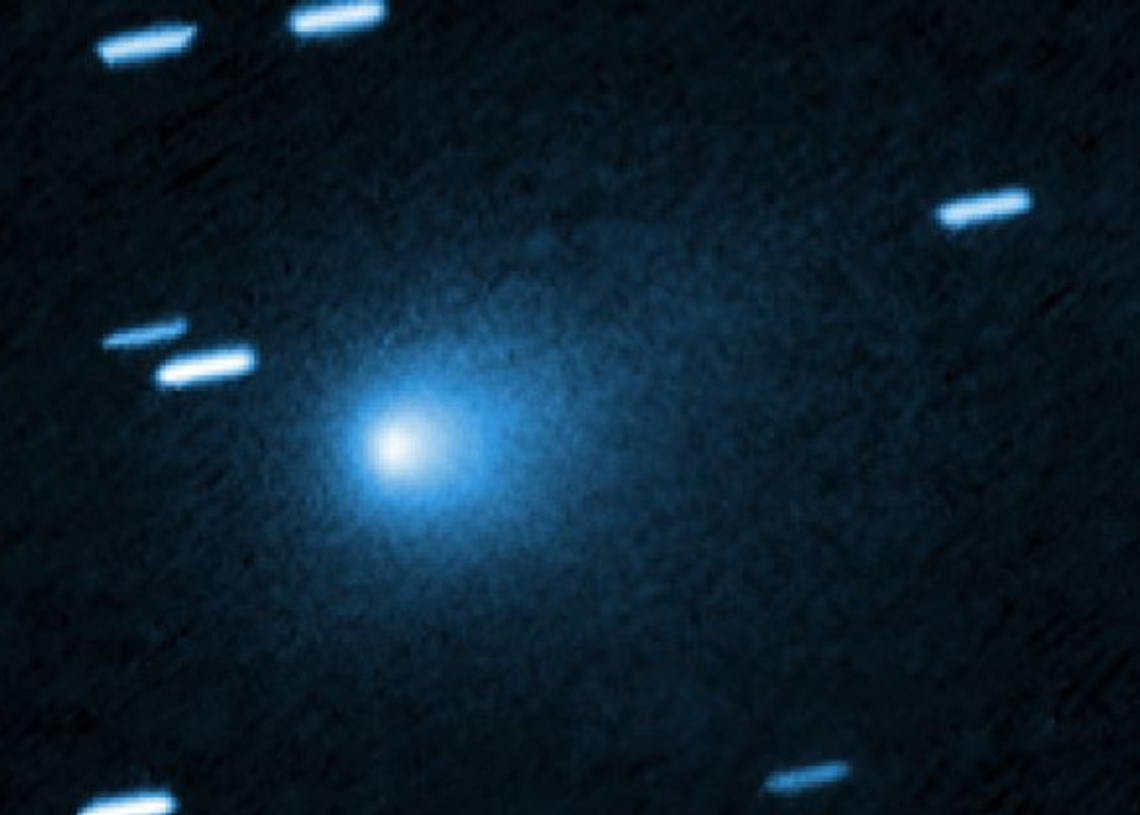
You might remember Avi Loeb from my breathless coverage of the interstellar object 3I/ATLAS last year. He’s the conspiratorial Harvard astronomer who dreamt up one fanciful possible reason for the asteroid’s existence after another, each one sillier than the last, each one falling apart as it proved itself to be just another space rock, but one that did some weird-o stuff here and there.
Loeb’s not done theorizing about 3I/ATLAS, even though it’s come and gone. In a recent post on his blog, he theorized that this mysterious cosmic visitor might be spreading the ingredients for life throughout the solar system as it passed by.
Loeb is now fully on board with an idea called panspermia, the long-debated theory that life, or at least its fundamental building blocks, can travel through space by hitching rides on asteroids and other space objects. Loeb, naturally, has taken it several steps further.
A Harvard Astronomer Thinks an Interstellar Object May Have Been Spreading the Seeds of Life
He suggests that 3I/ATLAS may have been shedding organic material as it traveled. He compared it to a dandelion scattering seeds in the wind. As expected, he also floated the idea that this process may not have been entirely natural, proposing that an “interstellar gardener” could have intentionally designed the object to distribute life-bearing material to habitable planets.
Sure. Why not? I mean, nothing about it seems to suggest it’s doing that, according to all the evidence, which suggests 3I/ATLAS was just a regular old comet made of regular old rock and ice, and not an alien probe seeding civilizations in distant solar systems. But sure, have fun with it.
Whatever floats your boat, pal.
The post A Harvard Astronomer Has a New Theory About 3I/ATLAS, and Yes, It Involves Aliens Again appeared first on VICE.