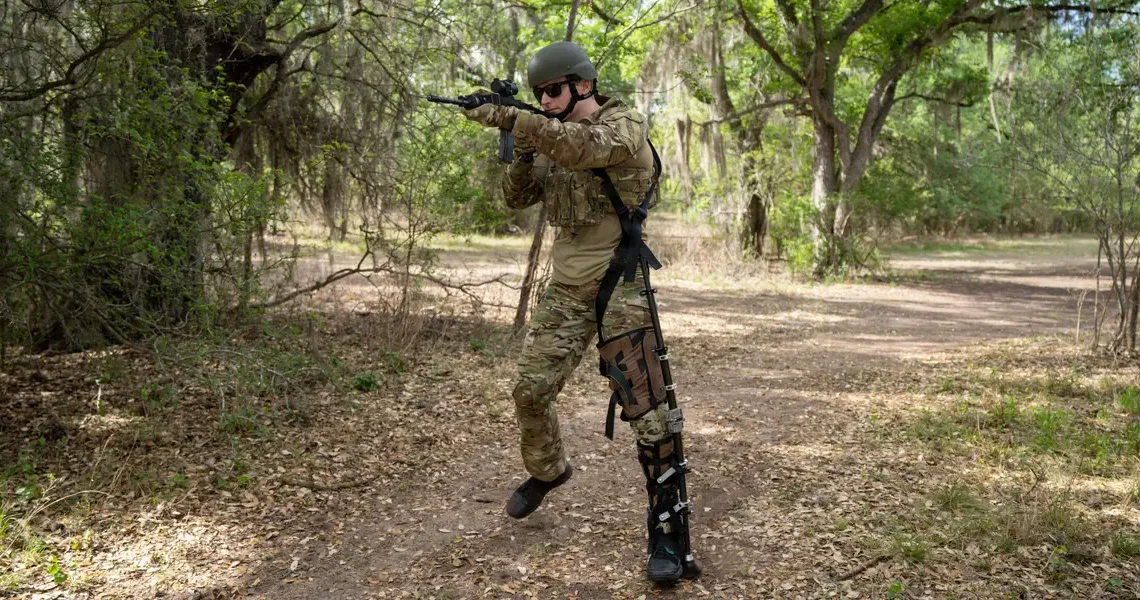
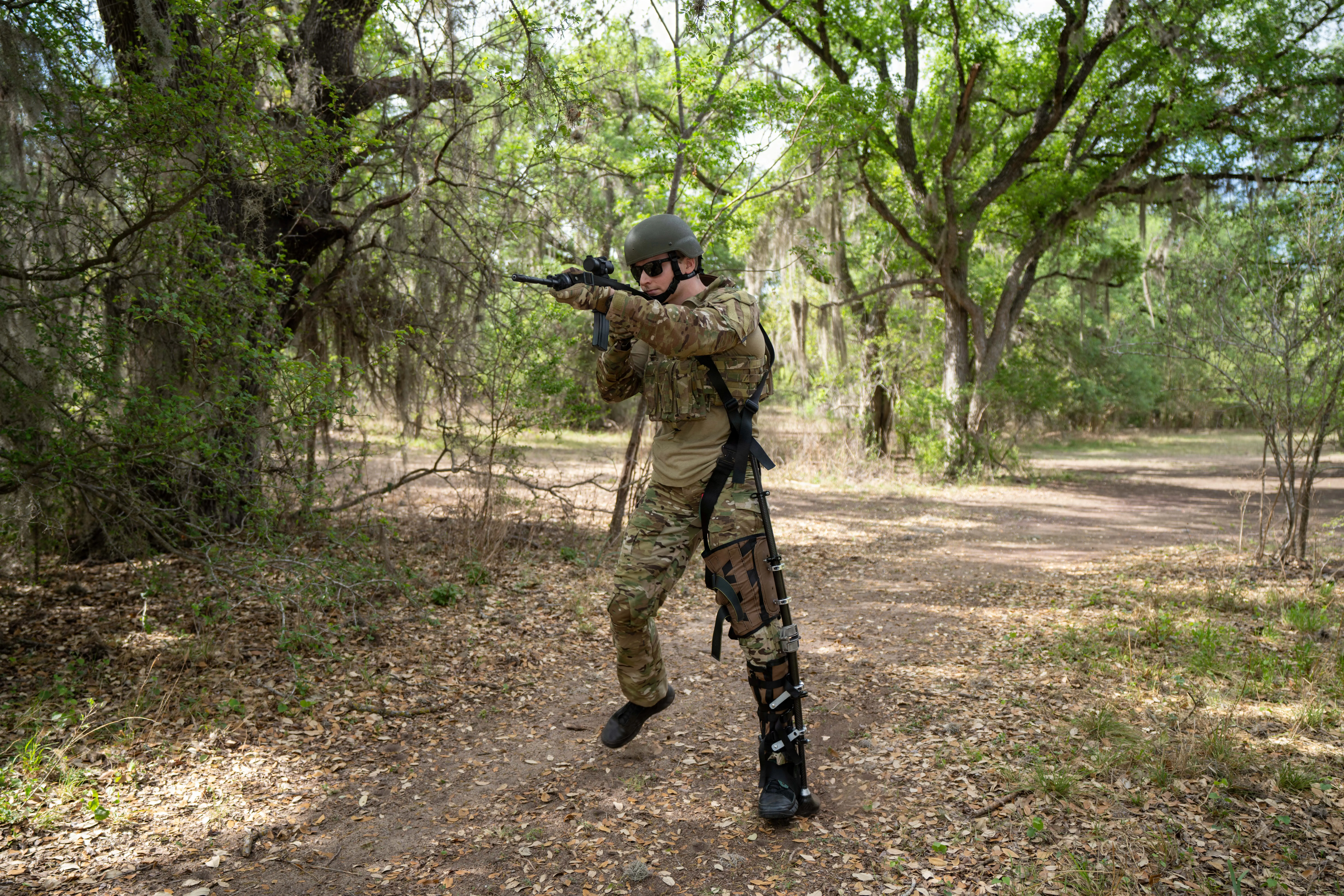
The US Army has developed and field-tested a new lightweight exoskeleton that could help wounded soldiers with leg injuries get back on their feet and walk themselves off the battlefield.
The invention is designed to stabilize common lower-leg injuries and help wounded troops keep moving when evacuation is delayed, dangerous, or unavailable.
The medical evacuation problem is already visible in Ukraine, where drones, artillery, and persistent surveillance have made evacuating wounded troops very dangerous and complicated. US military planners expect that challenge to grow in future wars as troops operate farther apart and under greater threat.
In a future fight across a remote, austere, or deeply contested battlespace, injured troops may not be able to count on evacuation teams to get them out.
The exoskeleton project, called the Intrepid Battlefield Exoskeleton (IBEX) and led by the Army’s Medical Research and Development Command, has been in field testing. The system is built to stabilize injuries like tibia fractures, torn knee ligaments, high-grade ankle sprains, and foot fractures and keep the soldier ambulatory.
Once attached, the device can help bear the wearer’s body weight and isolate the injury, Medical Research and Development Command said in a release.
The new exoskeleton “relieves pressure on soft tissue, nerves, and blood vessels to mitigate pain and prevent further damage. It is designed so the injured service member can also execute military actions such as dropping to, and raising from, a prone firing position,” the command said.
This system could keep a survivable injury from becoming a rescue mission or a delayed evacuation from turning into a more severe injury. By helping wounded soldiers continue to move and fight on their own, IBEX could reduce the number of service members needed to carry someone out and avoid creating a larger, more exposed target on the battlefield.
The exoskeleton’s development started in 2020 and has since gone through several iterations, each resulting in smaller and lighter prototypes. The device was invented to address decades-old problems of caring for survivable leg injuries on the battlefield, like gunshot wounds or blasts from improvised explosive devices.
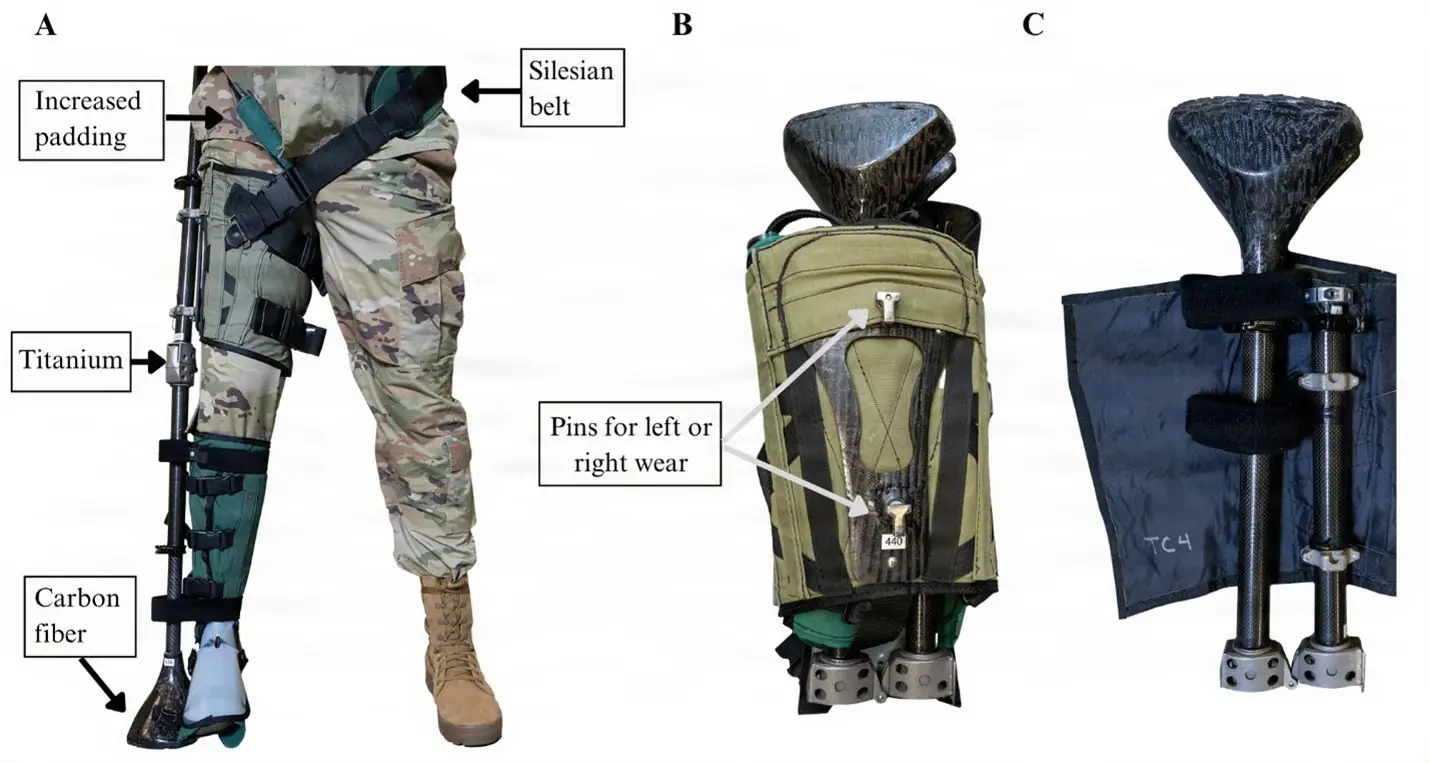
The system harnesses to hold the hip and wraps around the shoulder. It then fits around the foot and leg of the soldier like a boot.
IBEX was built for the kind of future battlefield the US military is preparing for: remote, austere, and particularly difficult to reach. In the Indo-Pacific region, for instance, troops could be scattered across far-flung islands, where distance, rough terrain, and bad weather could make evacuating the wounded far more difficult.
The exoskeleton is both collapsible and portable, and can be transported by medics, soldiers, or drones. The system’s durability was recently tested in a 400-foot drop by a cargo drone.
The US Army and the other services are rethinking battlefield medicine for future wars in which troops may be widely dispersed, casualties could be heavy, and rapid air evacuations may not be possible. If enemy air defenses, drones, or missiles make the airspace too dangerous, US forces could lose the “golden hour” medical evacuation window they often relied on during the wars in Iraq and Afghanistan.
Read the original article on Business Insider
The post The US Army built an exoskeleton for injured troops to stand and walk for themselves from combat appeared first on Business Insider.