Californians will face two competing tax measures this November. The first is the Billionaire Tax Act, a one-time, 5% levy on the accumulated net worth of the state’s richest residents. Lesser known is the Retirement and Personal Savings Protection Act, which would draw constitutional lines around what Sacramento can and cannot tax, prohibiting new levies on retirement accounts, personal savings and individually owned assets and banning retroactive taxation.
Everyone with even just a little bit of money set aside — not just the California billionaires targeted by the wealth tax — should understand what these two measures represent.
Start with the Billionaire Tax Act. The gap between what it promises and what it would deliver is stark. Joshua Rauh of Stanford University has run the numbers with his Hoover Institution colleagues, and the results cast doubt on the prospect of any revenue gain whatsoever.
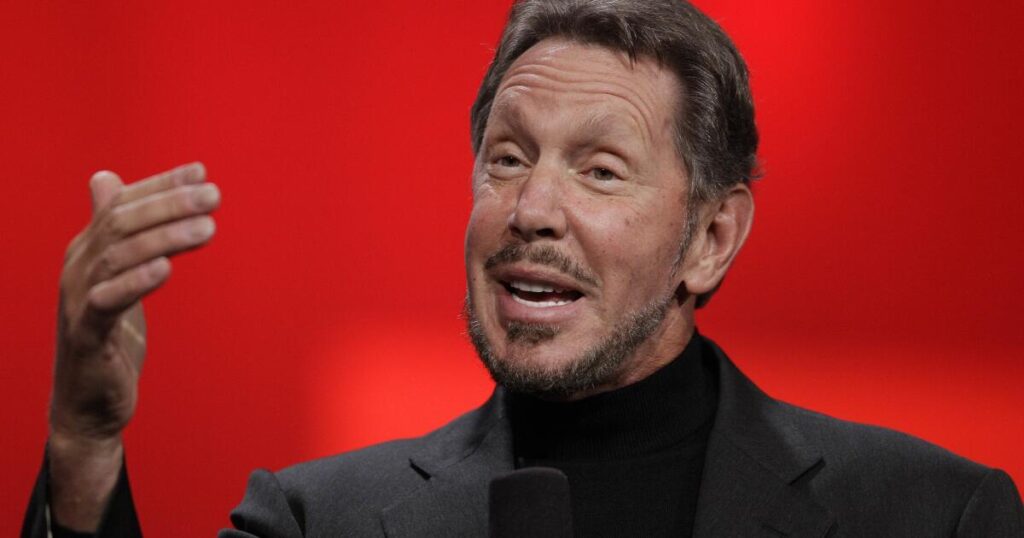
Proponents claim the tax would raise $100 billion. Rauh’s team found that billionaires have already been voting with their feet: Larry Ellison left California in 2020, and six others, including Google co-founders Larry Page and Sergey Brin, departed between the proposal’s announcement and Dec. 31, 2025 — the day before the liability would take effect.
These departures alone reduce the measure’s supposed tax revenue by nearly 40% before a single dollar is collected. Once migration patterns uncovered in the academic literature are applied to quieter departures, expected revenue falls to only $40 billion.
Now, factor in the normal state taxes that will no longer be collected from departing billionaires. Rauh’s team calculates that by shrinking the existing tax base, the measure’s “net present value” is at least a $25-billion loss for California.
Then there is the retroactivity problem. The proposal aims to tax billionaires based on residency and conduct that reaches back to Jan. 1, long before any vote was cast. Individuals who believe they lawfully established residency elsewhere might have to fight California in court for years (at the expense of the remaining taxpayers), based on details as arbitrary as where these billionaires kept their pets or held club memberships.
The “one-time” framing of the tax deserves equal skepticism. As Rauh points out, the measure includes a constitutional authorization to lift California’s cap on taxation of intangible personal property. Once that legal infrastructure exists, future wealth taxes can be imposed at any rate, at any threshold, at any time. It is, in other words, a permanent new power for the state.
The Billionaire Tax Act is so erratic and its precedent so problematic that it practically begs Californians to pay attention to the second ballot measure. All Americans’ savings should be safe from such confiscation based on three clear principles.
First, fairness: When a worker sets aside after-tax income to invest for retirement, the resulting balance is not untapped revenue. To treat this savings as a fresh tax base is to tax the same dollar twice.
Second, stability: A tax system that reaches into asset values rather than income flows is inherently volatile. A founder whose stock drops 40% in a downturn still owes wealth tax on last year’s greater valuation. An ordinary saver whose 401(k) is taxed would face the same absurdity.
Third, and most urgent, is California’s own track record. According to the state’s nonpartisan Legislative Analyst’s Office, state spending is poised to grow by nearly 70% between 2019 and the coming fiscal year, drastically outpacing a significant revenue hike over the period. The result is a cumulative deficit exceeding $50 billion over the next two years, a hole entirely of Sacramento’s own making, unrelated to Washington. Trusting politicians with that spending record to stop at taxing billionaires is reckless and naive.
When the wealth tax inevitably fails to deliver, the state will look for the next available pool of assets. Non-billionaires who remain after California’s billionaires depart will be the likely targets, and their retirement savings could be the new tax base. As Rauh wrote earlier this month in his ongoing exploration of the proposals, “While approximately 0.001% of California households are billionaires, approximately 62% have retirement accounts.”
If this prediction sounds far-fetched due to federal protections — or if you think billionaires will always be treated differently than normal savers who fill retirement accounts over a lifetime — consider what California already does to health savings accounts (HSAs).
Federal law treats HSA contributions and earnings as tax-exempt. But under California’s tax engineering, the interest, dividends and capital gains are treated as ordinary income, affecting roughly 4.5 million residents. These people are not billionaires or millionaires. Politicians simply decided this was revenue the state was entitled to tax. Doing the same with 401(k)s and IRAs would not require new principles, just the same willingness.
A wealth tax on billionaires is the first step, and it puts the retirement savings of ordinary Californians at risk. The HSA precedent suggests that the threat is real. The Retirement and Personal Savings Protection Act would erect constitutional barriers against exactly that kind of expansion.
Veronique de Rugy is a senior research fellow at the Mercatus Center at George Mason University. This article was produced in collaboration with Creators Syndicate.
The post You don’t have to be wealthy to worry about California’s wealth tax appeared first on Los Angeles Times.