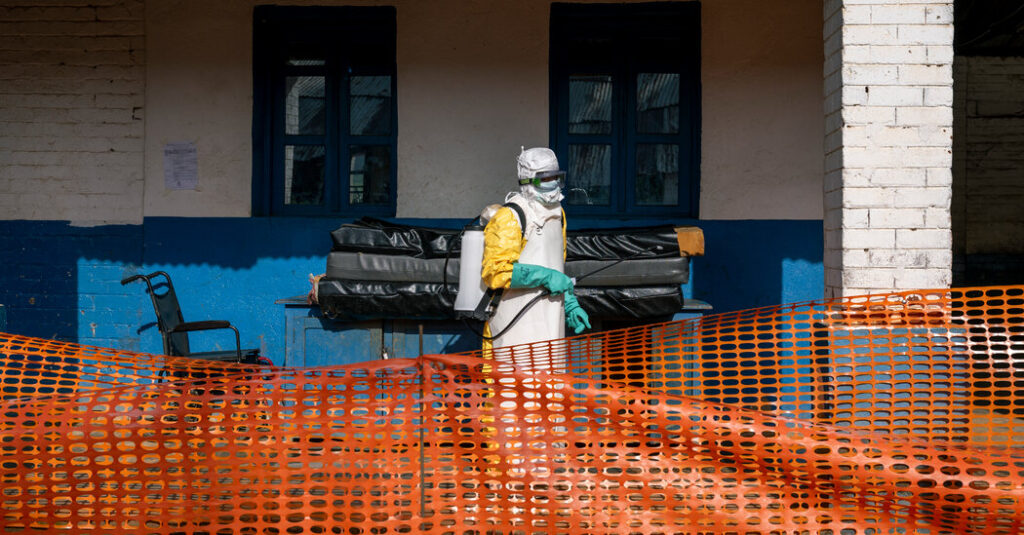
A 50-bed quarantine unit that the United States is setting up in Kenya to house American citizens exposed to the Ebola virus will be operational on Friday, according to senior administration officials, but it is still unclear where the administration plans to send those who test positive or become ill for extended treatment.
The facility, located at a Kenya Air Force base in Laikipia, is a joint effort between the U.S. Departments of State, Defense and Health and Human Services. It will be staffed by officers from the Commissioned Corps of the U.S. Public Health Service, the senior officials told reporters in a press call on Thursday. The team will include staff who were part of the U.S. response to the 2014 Ebola outbreak in West Africa, the largest ever recorded.
It will also include a number of isolation and biocontainment units to hold those who fall ill and transport them to more specialized facilities, though the officials did not say when those units would be operational.
But the U.S. Centers for Disease Control and Prevention and the State Department are still working to identify facilities in Europe to accept Americans who need advanced treatment for Ebola, seen as critical to improving odds of survival. The Trump administration has ruled out transporting them back to the United States.
The Ebola outbreak in the Democratic Republic of Congo is already estimated to have caused more than 1,000 cases and more than 200 deaths since it was announced May 15. Public health experts have warned that the dismantling of the U.S. Agency for International Development last year has crippled the surveillance systems and health care infrastructure that are crucial for snuffing out outbreaks.
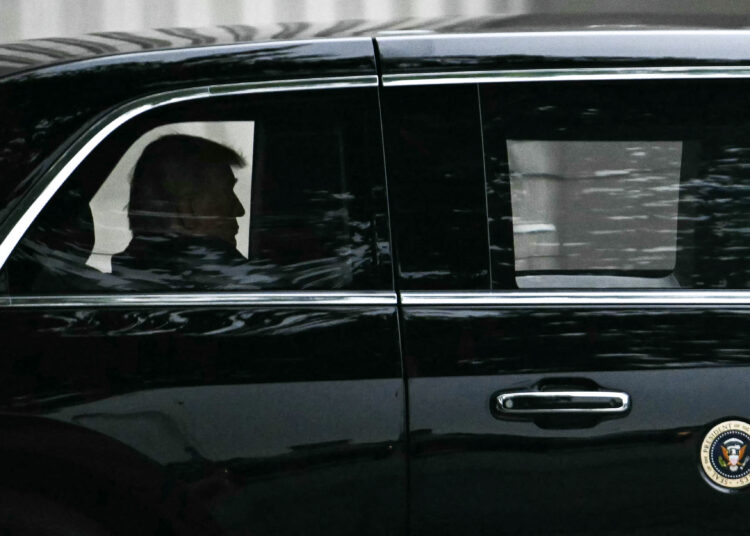
In prior outbreaks, health care workers and other U.S. citizens exposed to the virus were brought home to be treated at specialized medical units. President Trump made his views clear at the time, posting on social media in August in 2014 that “The U.S. cannot allow EBOLA infected people back.”
On Wednesday, Secretary of State Marco Rubio echoed that sentiment, saying, “We cannot and will not allow any cases of Ebola to enter the United States.”
On Thursday, senior administration officials argued the decision not to transport American patients back to the United States was driven by a desire to more quickly move patients to facilities where they can get more comprehensive care.
They did not explain why those who did not yet have symptoms would be better off quarantining in Kenya for three weeks, the incubation period for Ebola.
So far during this outbreak, the administration has moved one American physician who became ill with Ebola to Germany, where he has been receiving treatment with monoclonal antibodies. The administration also sent another American physician to the Czech Republic for monitoring.
Senior administration officials said patients who test positive for Ebola will be able to begin receiving monoclonal antibodies to treat the virus while at the facility in Kenya, though it was not clear when that treatment — or the units to house such patients — would be available.
“What they are trying to stand up in Kenya cannot and will not be comparable to the treatment they would get in the U.S.,” said Dr. Fiona Havers, an infectious disease physician who resigned from the C.D.C. last year.
Last week, the Trump administration invoked a public health law known as Title 42 to bar immigrants and legal permanent residents who had been in Congo, Uganda or South Sudan in the previous 21 days from entering the United States.
Karoun Demirjian is a breaking news reporter for The Times.
The post Quarantine Unit for Americans Exposed to Ebola to Open in Kenya Friday appeared first on New York Times.