Shravani Durbhakula is an academic anesthesiologist and pain medicine physician in Nashville. Jeremy C. Kourvelas is a substance use policy analyst in Knoxville, Tennessee.
A new synthetic opioid that is 10 times more potent than fentanyl has been identified in at least 50 fatal drug overdoses in eastern Tennessee. Sadly, the mounting death toll from this drug, cychlorphine, is the main reason there is awareness of this threat. But testing sewage might have raised the alarm much sooner.
When an overdose is suspected as the cause of death, a medical examiner or coroner conducts a toxicology test to determine what drugs were in the person’s system. But standard toxicology misses novel substances such as cychlorphine. And while expanded toxicology screenings can provide vital information, they are not always ordered or able to detect novel drugs.
Forensic labs spend months developing and validating a testing protocol for each new synthetic drug. But by the time a forensic lab has developed a testing protocol for detecting the presence of a drug, a new one may already be circulating. If communities only depend on data from the dead, they could miss the next threat to the living.
Hospitals encounter the same lag at the bedside. Medetomidine, a potent sedative increasingly found in the illicit drug supply, is not detected in routine point-of-care screens. Like an opioid overdose, a medetomidine overdose causes profound sedation and slowed breathing, but naloxone — the overdose reversing drug — has no effect on medetomidine itself. Clinicians need to know what is circulating and how to treat it before it arrives unidentified in the emergency department.
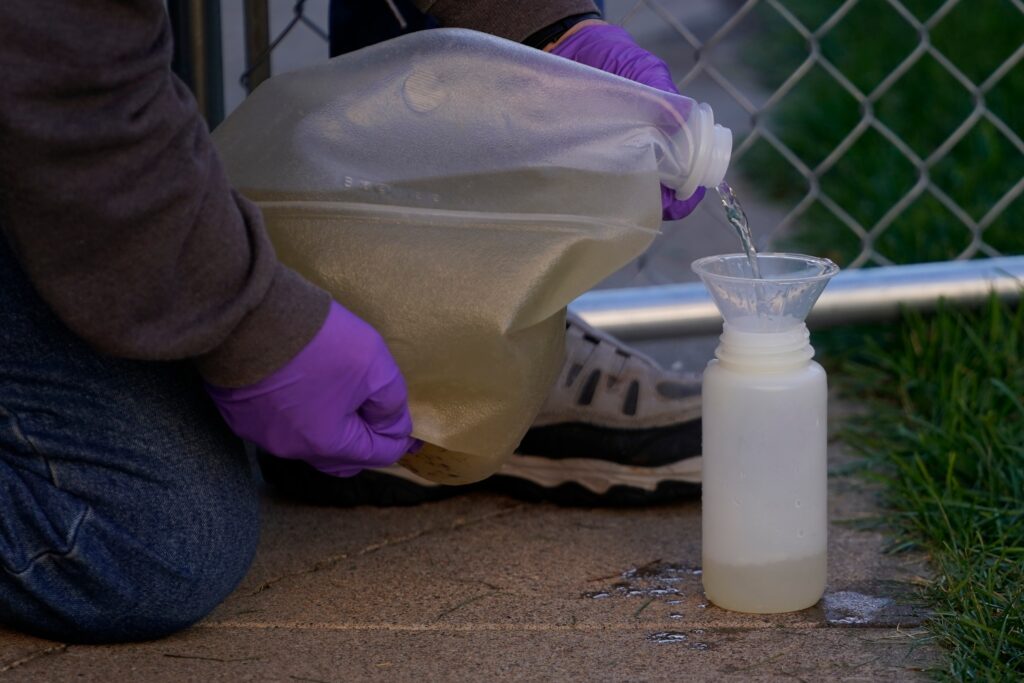
If communities want to stay ahead of illicit laboratories, they should test sewage water. Studying untreated wastewater allows researchers to detect drug residues and metabolites at extraordinarily low concentrations in what is in effect a community-wide drug test.
Wastewater cannot reveal who used a drug, where it was bought or what household it came from. But it can show that a dangerous substance is present in a community much earlier than hospitals, medical examiners and public health systems can.
This approach has already proved to be effective. From 2019 to 2023, researchers from the University of Kentucky and Murray State University detected the sedative xylazine in wastewater across a broad geographic region in western Kentucky. At the time, forensic and clinical labs did not regularly test for it, and public reporting in the overdose surveillance system showed there were only 1 to 4 xylazine-involved deaths during the period the water was tested. The sewage analysis indicated the true number of deaths was likely much higher.
Testing wastewater isn’t a silver bullet. Though a positive signal tells public health officials what to be looking for and where, it does not necessarily reflect the use pattern of local residents. For instance, a substance detected in a sewer network that includes an airport may reflect travelers, airport staff, nearby businesses and local residents, instead of only the latter. Similarly, when hospital sewage is mixed with community wastewater, testing may show that a drug was consumed, but not whether it came from legitimate medical use or the illicit supply.
Still, detection of a synthetic drug in wastewater requires a response. That means expanding toxicology panels, alerting emergency rooms and EMS, communicating with medical examiners and contacting overdose-prevention groups.
Work is already being done to make wastewater monitoring standard practice. In 2025, Tennessee launched a pilot program in Knoxville that focused on college dorms and high schools. The White House’s new National Drug Control Strategy includes a plan to establish a “national wastewater-based monitoring system.”
But federal recognition is only a first step. For this initiative to work, it needs funding from Congress. States and research groups must then decide where to collect testing samples, how to protect privacy and interpret results, and what to do when a new substance appears.
Overdose deaths have declined in recent years, and that’s a development worth celebrating. But fewer deaths are not the same as a solved crisis. Further progress requires knowing what drugs are circulating early enough to act. Wastewater may help provide that warning.
The post Want to detect opioids earlier? Test sewage water. appeared first on Washington Post.