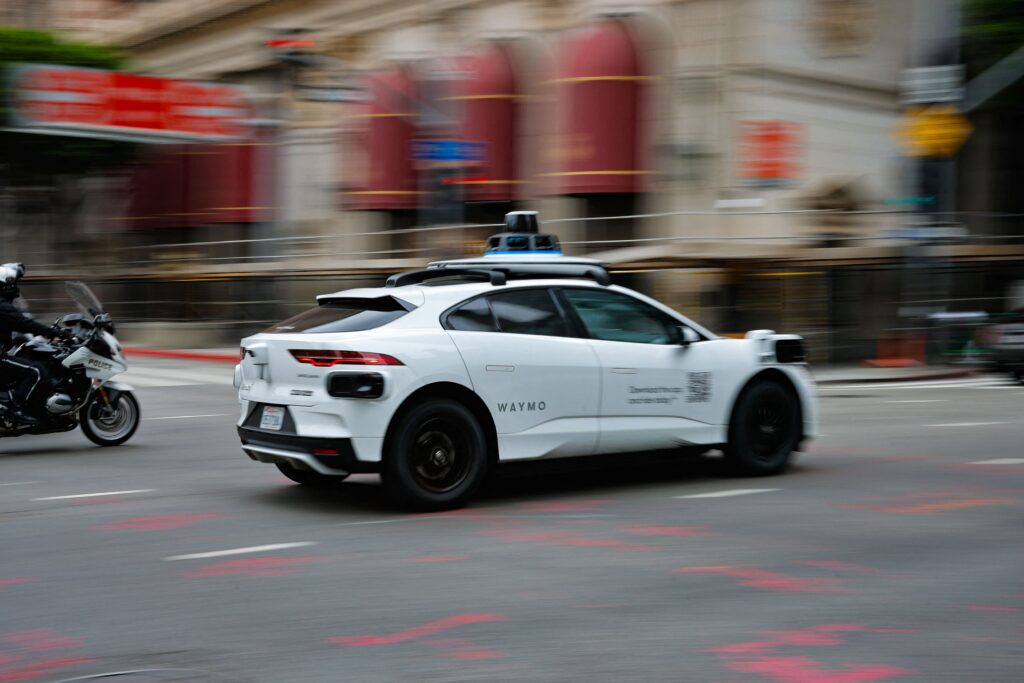
Autonomous vehicles have the potential to revolutionize the transportation industry and make U.S. roads safer. Yet unions are doing everything they can to keep them off the road.
This year, labor groups have managed to stall or defeat bills to advance driverless technology in Maryland, Minnesota, Missouri, Oregon, Virginia and Washington.
In Colorado, the Democratic legislature passed a bill this month to essentially ban driverless commercial trucks. That legislation was pushed by the Teamsters union, which fears that the technology threatens the jobs of its members.
This is rent-seeking, plain and simple. These unions represent an established industry looking to use state governments’ control of public roads to cut off competition.
Colorado Gov. Jared Polis (D) vetoed a similar measure last year, and there’s no reason the logic behind that decision wouldn’t apply this time around. He has noted that state law already allows the government to ensure that driverless vehicles comply with safety and traffic rules.
A similar fight is playing out in Illinois, where a coalition of unions is lobbying against a bipartisan bill that would authorize a pilot program for AVs in a handful of locations, including Chicago. The opposition has veered into absurdity, with one union rep emphasizing the need for “human connection” when providing transportation services for people with disabilities — as if allowing AVs to operate would somehow immediately halt all human driving.
Drivers whose jobs can be automated deserve sympathy. At the same time, countless lives are lost because of human error behind the wheel. While AV software systems are not perfect, studies consistently show that they dramatically reduce driving-related injuries and property damage.
Several companies are competing by constantly improving their services, including Waymo, Tesla and Zoox, a subsidiary of Amazon, whose executive chairman Jeff Bezos owns The Post.
AVs will ultimately be safer, cheaper, more efficient and friendlier to the environment than those driven by humans. But that can only happen if the technology is allowed to flourish and evolve.
States whose legislatures are not beholden to union bosses will open a lead in the autonomous revolution. In turn, that will push blue states to race to catch up, especially as improvements to road safety and economic growth become undeniable over time.
The question is how long will millions of people be deprived the fruits of progress simply to protect special interests?
The post Unions are on a roll blocking driverless cars appeared first on Washington Post.