KILLING SPREE, by Jorie Graham
“Go ahead,” Jorie Graham says in “Killing Spree,” her 16th collection of poetry. “Try to posit/the future.”
This challenge is addressed to the poet herself as much as it is to her reader; what follows are shocked, shattered elegies formed from “bloody hair” and “bodies torn to/pieces.” At the age of 76, the Pulitzer Prize-winning poet still carries the hopes of the 1968 student uprisings in Paris, in which she participated, and their long, often disappointing, aftermath. She writes from the dust cloud left by the collapse of the 20th century’s progressive narratives, her lines arriving in clipped, em-dash-laden bursts that can hardly believe these utopian dreams — “we were fascinated by hope” — have buckled under a crushing dystopia.
Consider these lines from the poem “Before”:
what is it that is coming—must come—unfathomable, unbreakable—you want it so, your future, no the future, so badly.
Graham transposes the 1970s punk slogan “no future” into “future, no,” commanding the future to stop; where the original slogan expressed a propulsive defiance, Graham’s inversion captures a stunned paralysis.
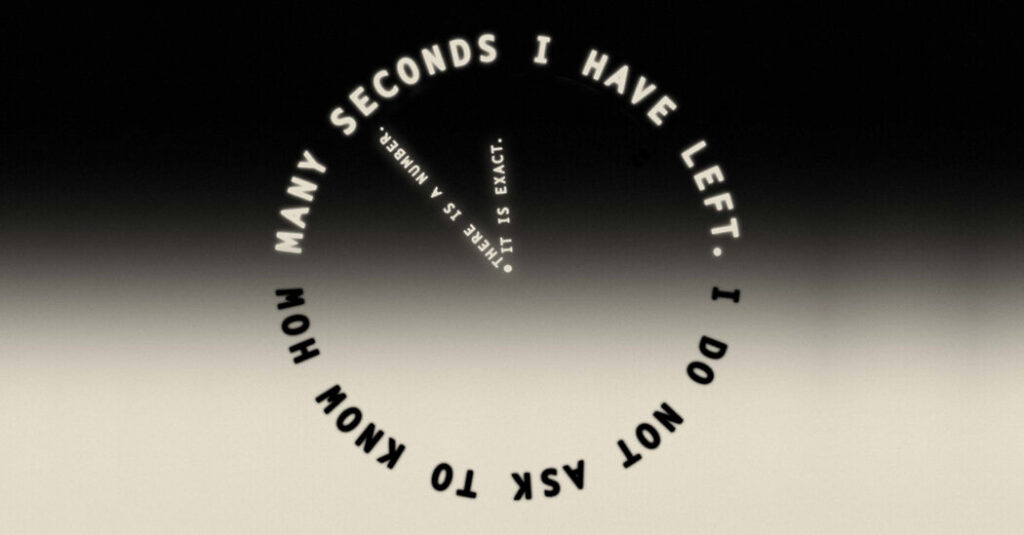
The book cover repeats the distortion at the level of form, its vertical typography inviting the eye to read from bottom to top, joining the “SPR” of “spree” and the “ING” of “killing” into “spring.” As the eye rises, “spring” is overtaken by the “ill” of “kill,” infecting any promise of renewal, echoing the blighted spring of Eliot in “The Waste Land.” Some of the poems are typeset in right-justified lines, subverting traditional left-to-right reading. These elements converge to create a feeling of vertigo that arrests any sense of forward motion.
There’s no reassembling the wreckage. The body parts can’t be put back together, the bombs undetonated. Graham’s poetry is not the “poetry of witness,” popularized by poets like Carolyn Forché or Yusef Komunyakaa. Bearing witness to the ruin, hoping for a restored humanist order, is too optimistic. The witnesses in “Killing Spree” are themselves undone, their minds “blown to bits.” In the polyvocal title poem, we are thrust into a school shooting where “bits of desk lay about/in the dust-filled amnesia.” Who can keep track of the atrocities when the days are “blown off the record”? In the “buried world” of “Killing Spree,” whatever finds itself “springing forth” is “followed by/nothing.”
Graham’s vision was not always this stark. Earlier collections like “The Dream of the Unified Field” (1995) are marked by a mixture of philosophical inquiry and moments of tenderness — as when a mother brings her daughter the leotard she forgot to pack. Even “To 2040” (2023) retained an intimate voice that was attuned to the mess.
So what happened? Perhaps, even within the last few years, the conditions of experience have been so transformed by algorithms that perception is now ruled by a warped sense of time and flattened voice, as we navigate the violence flowing seamlessly within everyday life. If the present is defined by an ever-increasing acceleration (“the spree”) and simultaneous stagnation (“this train can go faster than this track can withstand”), does contemporary subjectivity make our redemption impossible? Graham’s answer, in “Killing Spree,” is a resounding yes.
Two types of sprees dominate late capitalism: shopping and killing. In “When the End Starts” the title bleeds into its first line, “all of us are shopping.” Violence and consumerism are as intertwined as strands of DNA. “I feel for my/device,” the speaker says, displacing care onto the commodity, while “Massacres/happen during/express checkout.” The poem ends with the words “Anytime./Now,” compressing time into a perpetual present of imminent disaster.
Its twin poem, “When the World Ended,” also lets its title bleed into the first line, “everyone woke up,” with ending and waking blurring into an indistinguishable stasis. The literary theorist Fredric Jameson once said that it’s easier to imagine the end of the world than the end of capitalism. In Graham’s work, even the end of the world can’t quite be conceived — “Oh it is/frictionless. I will be yr/user.” The “user” is fully enclosed within the terms of capital, with catastrophe becoming less a dramatic rupture than a tedious continuation on a hand-held screen.
In our historical moment, the question is not only what poetry can do, but whether it can make experience legible at all. There’s a lineage of writers who have theorized literature’s limits under conditions of devastation, from Theodor Adorno (“to write poetry after Auschwitz is barbaric”) to W.H. Auden (“poetry makes nothing happen”). What makes “Killing Spree” remarkable is how it operates at that limit, even as bullets and drones whir by. It’s one of the few books of poetry that register the profound struggle of consciousness in our damaged world — poems grasping at what we still call “human experience,” as its horizon recedes from us.
KILLING SPREE | By Jorie Graham | Farrar, Straus & Giroux | 80 pp. | $27
The post Shocked and Shattered Elegies for a Lost Utopian Dream appeared first on New York Times.