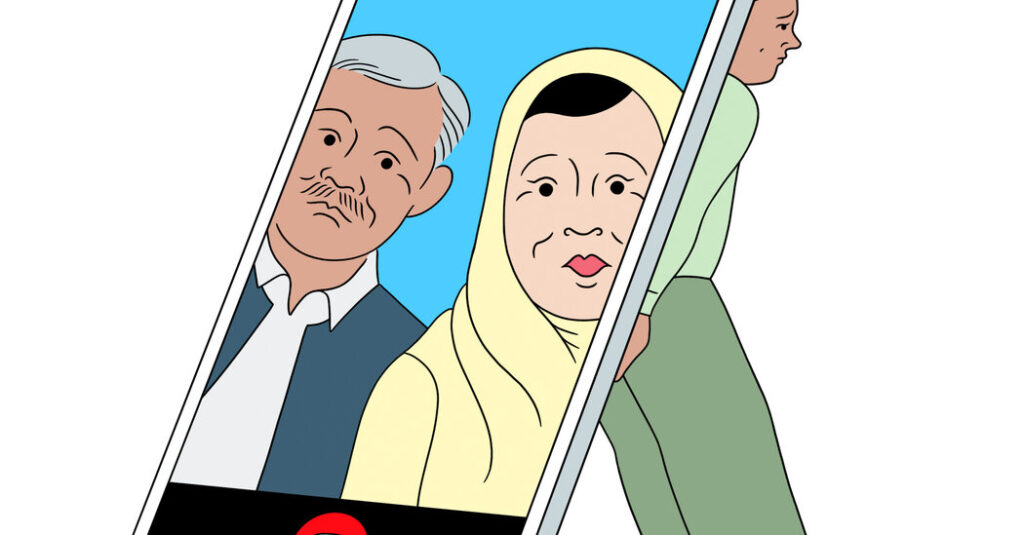
I’m in my late 30s and grew up in Pakistan in a devout Muslim family. My parents and sisters still organize their lives around faith. In our family, religion was the frame for everything. My father sees this life as a temporary test whose purpose is eternal salvation, and he feels responsible for guiding us toward that end. Most conversations with him eventually become lessons in how to be a better Muslim. Emotional openness was never part of our family culture; we rarely talked about feelings, doubts or personal struggles, partly because we feared disappointing him.
I left home at 17 for university and have lived independently ever since. I later moved to Europe and married a Christian woman, and I now have a 3-year-old daughter. Over the past 20 years, I have stopped practicing and no longer believe as my parents do. When they ask whether I pray or fast, I usually say yes, though it is untrue. I have told myself that honesty would cause pain and conflict without changing how I live.
Recently, my mother sent me a long voice message saying she believes I no longer pray, and that this hurts and disappoints both her and my father. She also implied that my wife may have led me away from Islam, though my beliefs changed long before I met her. My parents now outwardly accept my wife, but only after years of tension. Our conversations are polite and shallow, mostly about weather, daily life and my daughter. I rarely share anything of my inner life.
Should I finally be honest with them? My mother already suspects the truth, and the lie is harder to maintain, especially as my daughter grows older and my parents may try to shape her religious upbringing. What do I owe my parents ethically? Is protecting their peace of mind reason enough to keep lying, or do I have a responsibility to be honest about who I am, even if it hurts them? — Name Withheld
From the Ethicist:
So for two decades you’ve been drifting apart on a matter that, at least from your parents’ perspective, couldn’t be weightier. You feel guilty about deceiving them, regretful about the hollowing-out of a relationship that was always a little guarded and anxious about how all this may affect your daughter and her religious upbringing. Inevitably a number of ethical pressures are at work, not least the familiar tension between candor (we don’t want to mislead others, especially those we love) and kindness (we don’t want to hurt others, especially those we love).
There’s a meaningful distinction between deception and withholding, between actively misrepresenting yourself and simply not volunteering certain details. In ordinary life, artful omission often helps smooth things over. But your mother, mistrustful toward your wife, is searching for clarity. That doesn’t mean you need to deliver it. As an adult with a family of your own, you don’t owe your parents an accounting of your beliefs, let alone conformity to theirs. Indeed, as your daughter grows older, you may find you need to be more explicit with your parents about boundaries around her upbringing.
What you won’t find is any easy or painless solution to the problem you describe. Your parents clearly believe, as mainstream Muslim tradition teaches, that apostates will not enter paradise, and so they’re naturally distressed about your fate, precisely because they love you. You think they are mistaken in this belief. But it’s just as unlikely that you could persuade them of this as that they could persuade you to return to the faith of your ancestors. Your distance from them in religion is only part of a larger distancing that comes from living in very different circumstances. You might be tempted to lie about your faith — pretending that you’re fasting on Ramadan, going to mosque and so on. That’s a temptation to resist. Every moment with them would be steeped in dishonesty, and you would be manipulating people you love. But I’d also resist the temptation to blow things up in the name of transparency.
A middle way may be best, if it proves possible. That entails avoiding discussion of religion as much as you can, and not flaunting your skepticism. (Emotional openness isn’t everything.) Anxiety about your commitment to Islam may well cause your parents less suffering than the certainty that you are on the road to eternal punishment. The bonds you have with them may never be the ones either of you imagined. They’re partial and imperfect in all sorts of ways. That doesn’t mean they aren’t worth tending to.
Readers Respond
The previous question was from a reader who wondered if she could press her partner about whether or not she would be able to stay in their home if he died. She wrote:
I sold my home 16 years ago and have been living with my partner in his house ever since. He is 76 and I am 77. We have a loving, stable relationship, but I am increasingly anxious about my future. He has refused to register as domestic partners, which means that if he is hospitalized, I may not have the legal right to advocate for him. He also will not discuss his plans for the future. … The house is paid for and is in his name alone. I have no idea how the bills or taxes are handled, or what arrangements — if any — he has made for me to remain in what he always calls “our” home. I love his family and would ultimately be happy for the house to pass to them after I die. What I need is the security of knowing that I will not be forced to leave the home we have shared for so many years. … What is the ethical way to balance respect for his privacy and autonomy with my need for basic security and clarity about the future? — Name Withheld
In his response, the Ethicist noted:
You fear being guilty of a “breach of trust.” Isn’t that a fair description of what your partner’s stonewalling amounts to? After 16 years together, your need for security is entirely legitimate; his cavalier refusal to offer reassurance is not. There are all sorts of ways of providing both of you a measure of protection via a life tenancy, medical authorizations and the like. (The details will depend on your jurisdiction, so you might want to consult an elder-law attorney.) … Let him know that the uncertainty is causing you real anxiety. If he still refuses to engage, suggest a lawyer, mediator or broadened family conversation. A loving partner should not leave you guessing about whether you have an ownership stake in your shared existence or are merely renting it, subject to eviction when his lease on life expires.
(Reread the full question and answer here.)
⬥
What I see is a controlling person who is using a lack of information as a weapon. I’d be shocked if this was the only “issue” in the relationship. I agree that more conversations are needed. And if he refuses to discuss it? Perhaps that’s a sign that the relationship isn’t as loving as the letter writer believes. — Sarah
⬥
I have two friends in their 70s who also have partners who are mum about the future. This seems cruel to me. What loving partner would do this, and why? My late husband, whom I was married to for a short time, made it clear that our house would go to his children, but only after I die. He made provisions so that the mortgage and property taxes would be paid from the family trust. That seemed a good deal. Why would a loving partner withhold this kind of information? There’s something fishy and disrespectful here. — Tara
⬥
This is so wrong on many levels. When my sibling died suddenly in his 40s with the house only in his name, it resulted in years of hardship for his partner and their child. But to do this in your 70s is irresponsible and unnecessary. Love means digging deeply and planning ahead. You can, should and must do this now. Try to pull your emotions out of it and consider it logically, with a professional estate planner and your partner’s family. Transparency can keep relationships clean and healthy as you age. Tomorrow isn’t promised. — Douglas
⬥
The house is his. He bought it before she moved in. She does not have a property interest in the house, and since she is not aware of the bills, it implies she is not paying them. She should have the money from the sale of her house and should have considered her future care needs. His family should inherit the house if he passes, and she should graciously leave. I find it presumptuous that she believes she should be able to remain there. — Jen
⬥
The Ethicist’s response was helpful. However, it doesn’t take into consideration the children of either partner. I am an only child of divorced and re-partnered parents. When my mother died, she didn’t have a will. The house was solely in her name and she was taking care of all of the financial responsibilities for her and my stepfather. I tried speaking with her about these things on numerous occasions, but she would brush me off. Now I am paying for an attorney to make sure that my stepfather can live in the house until he dies, and then I will get it afterward. It has been a nightmare for me to try to manage the finances of two households and keep up with regular life responsibilities. If she had just written something down on a napkin or sent me an email or a text laying out what she wanted, that would have made this legal process so much easier. Her disorganization and unwillingness to face reality has robbed me of the opportunity to grieve. Instead I find myself laden with stress and anger. — Marnie
The post My Parents Suspect I’ve Lost My Faith. Should I Tell Them the Truth? appeared first on New York Times.