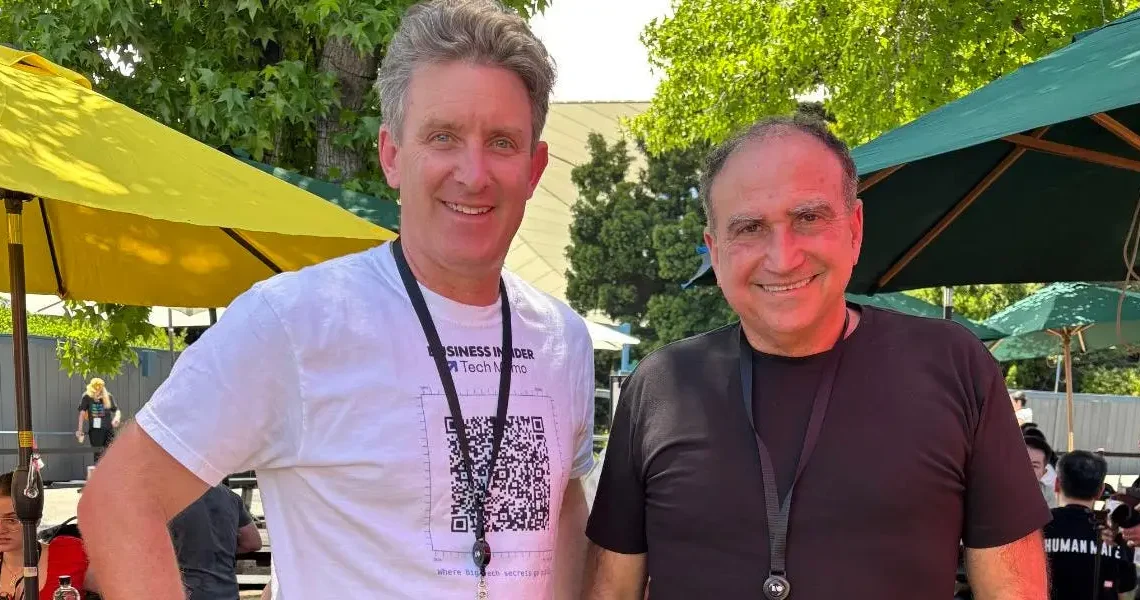
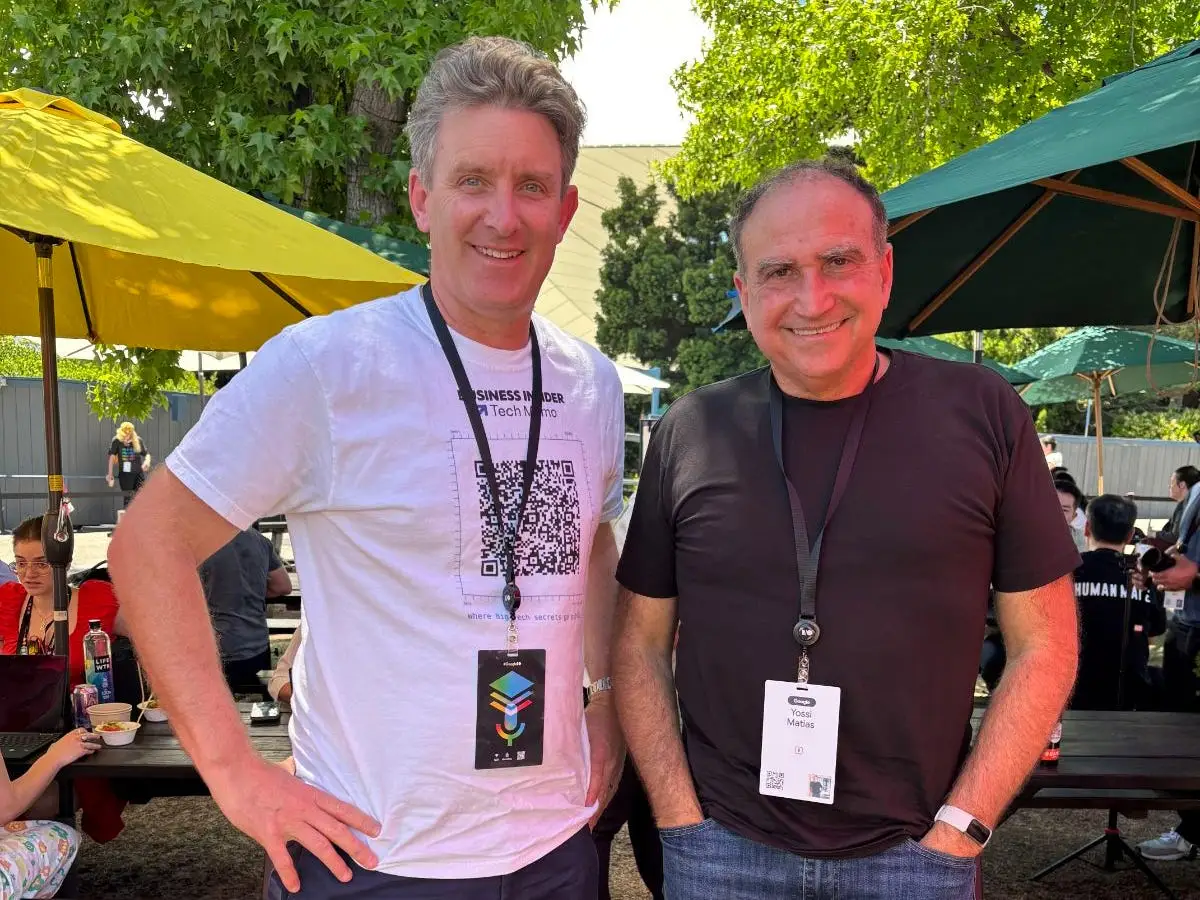
AI progress is increasingly framed around automation and job displacement. But Google executive Yossi Matias thinks the technology will be most important as a tool for helping humans make scientific breakthroughs.
As head of Google Research, he’s worked on many projects over a distinguished career, including Google Trends, autocomplete, and Duplex. Matias’s interest has always been to explore what’s next and then apply that to reality. He calls this the “magic cycle,” and sees AI accelerating the process.
Lately, he’s been working on two ambitious AI systems aimed at accelerating scientific discovery: Co-Scientist and ERA, short for Empirical Research Assistant. Co-Scientist is designed to help researchers generate and rank new scientific hypotheses. ERA helps automate the painful process of building computational models and testing those ideas.
The systems are already producing intriguing results. According to a new Nature paper, Co-Scientist identified potential new drug repurposing candidates for acute myeloid leukemia and helped uncover a mechanism related to antimicrobial resistance.
I sat down with Matias during Google’s recent I/O conference to talk about why he believes AI will help humans more than hurt them. This conversation has been edited for clarity and length.
What excites you most about these AI science systems?
“The notion that we can actually use AI to build these tools that help scientists in their research process, accelerate the science, ask bigger questions, and make bigger progress to me is really exciting.”
He said Co-Scientist can sift through huge amounts of scientific literature, generate hypotheses, rank them, and help researchers decide what to test next.
“Imagine a world future where every junior, every scientist, including even students, are going to have their own virtual lab that can help them sift through endless literature,” he said. “It’s like having a polymath in your pocket.”
Why are hypotheses so important in science?
“When you ask a question, like ‘find me a new drug’ or drug repurposing for a different condition, the way to actually address this is to create a hypothesis about something that might actually do the work and then refine it, and validate it,” he said.
The danger, he noted, is spending years pursuing weak ideas, so if Co-Scientist can help create and rank the right hypotheses, then researchers should be pointed in the right directions sooner.
“Eventually that would lead to possibly a new drug or a new treatment,” Matias added.
Could this eventually help cure diseases like cancer?
Matias thinks so, though he stressed the process will take time.
“Cancer and other treatments, rare diseases, ALS. Now that we have a system that can look through data which is more global, then there’s going to be a lot more opportunities,” he told me.
Matias cited a study Google did with the NHS in the UK on using AI to improve breast cancer detection using the technology as a “second reader” of mammograms.
“We learned in that study that AI can actually identify 25% of the misses and can give back 40% time to the doctors,” he said.
And this was AI technology that’s now five years old. “This was a study. Now the question for society and for the healthcare system is, how do we incorporate these learnings? And it takes time, it takes effort.”
“The potential of accelerating scientific research is significant, and as AI is becoming more powerful, I think that we’re going to be in a better shape to actually keep reducing, keep addressing, and eventually perhaps eradicate. I’m quite optimistic that we are going to get to a state where we can actually identify everything that needs to be identified about diseases and find whatever solution that can be found.”
Does AI replace scientists?
“I see AI as an amplifier of human ingenuity because it empowers the research scientists to ask bigger questions, pursue bigger impact, and to do it at a much earlier stage in their scientific career,” he said.
He compared future scientists to research lab leaders managing teams of AI collaborators, just as more junior software engineers are taking on broader architectural and strategic roles while coordinating coding agents to do much of the grunt work.
Traditionally, it takes many years for scientists to run their own lab with teams of researchers, but AI could make this opportunity available to more scientists, he explains.
“What was previously only available for very established and actually a small fraction of scientists, I believe, is going to be available to practically every scientist,” he said. “The power, the effectiveness of every researcher is going to be multiplied, and we’re not even close to answering the important questions that we need to answer.”
Sign up for BI’s Tech Memo newsletter here. Reach out to me via email at [email protected].
Read the original article on Business Insider
The post AI curing cancer has become a meme. This Google researcher is actually trying to do it. appeared first on Business Insider.