The Trump administration wants to roll out a uniform nondisclosure agreement across the federal government that would bar employees from sharing internal government information, citing the need to stop leaks to media organizations.
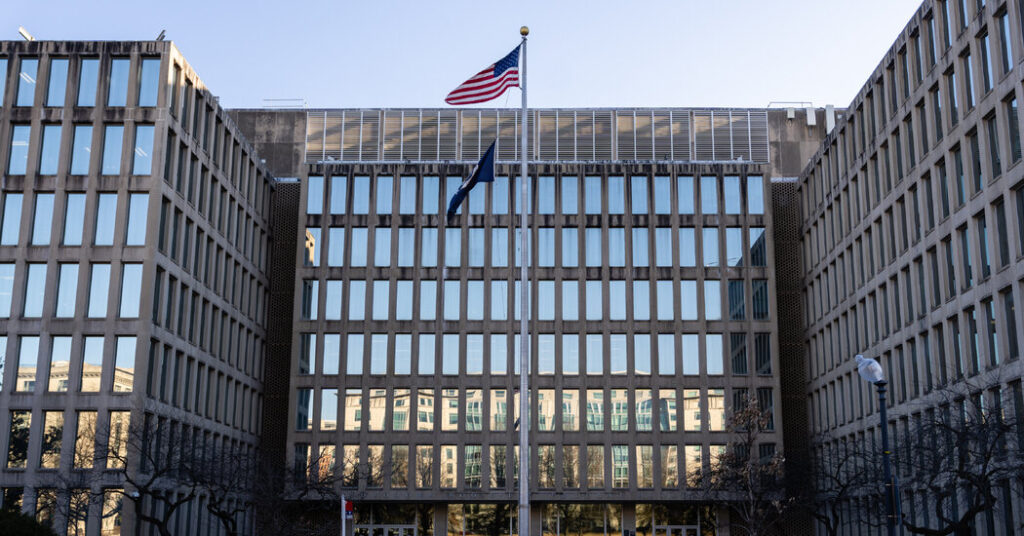
Each agency could determine whether to adopt the agreement, which would require federal workers not to disclose “nonpublic, confidential or proprietary” information and to notify the agency of any theft or loss of such information, according to a proposal released on Tuesday by the Office of Personnel Management. Agencies could ask both current employees and new hires to sign the agreement.
Employees who breach the terms could face potential disciplinary action, as well as civil and criminal penalties, according to a draft agreement, although it did not state which civil and criminal statutes would apply to disclosures not already covered under federal law.
The Trump administration said the proposed nondisclosure agreement would not add additional restrictions on employee speech or disclosures. But the broadly worded agreement could go beyond laws that already govern the improper release of classified information and protected personal details held by the government.
Lawyers who represent public workers said the requirement could be vulnerable to legal challenges on First Amendment grounds, noting that a government employee’s speech is protected if the person is speaking as a private citizen.
The push to impose the agreement on federal workers comes as the Trump administration has sought to crack down on unauthorized disclosures to journalists, including through leak investigations. Advocates for federal workers said it could create additional fear among government employees, who have already been buffeted by major job cuts and other changes since President Trump returned to office.
In its proposal, the administration said that authorized whistle-blower disclosures to inspectors general, the Office of Special Counsel and Congress would remain intact.
The nondisclosure agreement “is designed to provide agencies with a standardized mechanism for employees to acknowledge and agree to comply with obligations that already exist under law and regulation,” the personnel office wrote. The public has 30 days to comment on the proposed draft.
Scott Kupor, the office’s director, said the policy is similar to how employees are treated in the private sector, an argument he has made for several of the administration’s rules for the federal work force.
“In much of the private sector, employees handling sensitive business or customer information are routinely required to sign confidentiality agreements, and the federal government should not be held to a lower standard,” Mr. Kupor said in a statement.
Esha Bhandari, the director of the Speech, Privacy and Technology Project at the American Civil Liberties Union, called the move an attempt to restrict press freedom.
“The First Amendment applies most strongly to government employees’ speech when the speech in question is in their private capacity and about matters of public concern,” she said in a statement.
She added, “Such broad gag orders would leave the public in the dark about how the government works, preventing the kind of informed debate that is critical to democratic accountability.”
Kevin Owen, a lawyer with Gilbert Employment Law who represents federal workers, said the agreement appeared to be devised to stop them from speaking with the media and to prevent the spread of “politically inconvenient speech that bothers the administration, or significant whistle-blower disclosures, which also are a problem for the administration.”
It is already a crime for federal employees to improperly share classified information. Federal employees are also bound by the Privacy Act, which prohibits the disclosure of personal information held by the government, such as Social Security numbers or medical records. There is also a federal law that bans the release of a company’s trade secrets, such as information that is shared with the government as part of a regulatory requirement.
And some agencies already have policies in place to restrict employees from speaking without authorization. During the first Trump administration, some agencies issued widespread gag orders. Last year, the Labor Department threatened employees with legal consequences if they spoke to journalists, ProPublica reported at the time.
Mr. Trump, who has used nondisclosure agreements throughout his business career, has also had campaign staff members sign such pledges, and he has sued people who violated them. In some cases, courts have ruled in favor of his former employees.
In its notice Tuesday, the personnel office cited specific examples of unauthorized disclosures that the government says underpin the need for the new policy, including news accounts detailing planned immigration operations and the secret military raid that led to the capture of Venezuela’s leader, Nicolás Maduro.
The notice asserted that reporting obtained by The New York Times and The Washington Post about the Maduro raid put members of the military at risk, and that the news organizations delayed publication until after the operation to protect American lives.
Joe Kahn, the executive editor of The Times, has previously said that The Times did not have verified details before the raid and did not withhold publication of a story at the request of the Trump administration. The Post did not respond to a request for comment.
Orly Lobel, a law professor and director of the Center for Employment and Labor Policy at the University of San Diego, said there were already laws and regulations that prohibit federal employees from disclosing such information.
“The concern is that these kind of overly broad provisions create chilling interim effects, both in silencing employees when they see unethical or simply wasteful or incompetent government behavior,” she said.
As part of its rationale for the new policy, the personnel office pointed to the Supreme Court’s decision in late 2024 to require staff members to sign nondisclosure agreements.
Chief Justice John G. Roberts Jr. instituted the policy after a series of leaks, including when a draft opinion on the landmark abortion law Roe v. Wade was shared with a media organization in 2022.
“The problem is so widespread that the Supreme Court itself has instituted the use of nondisclosure agreements to attempt to dissuade staff from the harmful practice of disclosing confidential government information and as a means to hold individuals accountable for such behavior,” the personnel office wrote.
Eileen Sullivan is a Times reporter covering the changes to the federal work force under the Trump administration.
The post Trump Administration Wants Federal Employees to Sign Nondisclosure Agreements appeared first on New York Times.